The wreck of the SS President Coolidge is one of the most iconic and accessible World War II shipwreck dives in the world. Once a luxury ocean liner and later converted into a troop transport, she now rests off the coast of Espiritu Santo in Vanuatu—transformed into a massive underwater time capsule filled with vehicles, equipment, and wartime relics.
She is over 200m long and sits on a sandy slope, with the bow in around 15m of water and the stern dropping to approximately 70m. This creates a wide range of diveable depths and natural levels of exploration, depending on certification and experience.
While deeper sections of the wreck require advanced deep and technical diving certifications, divers with an advanced certification still have an enormous amount to explore. The Coolidge is simply huge, and even within recreational limits there is enough structure, history, and varied penetration—from wide, open holds to more confined passages—to keep multiple dives interesting.
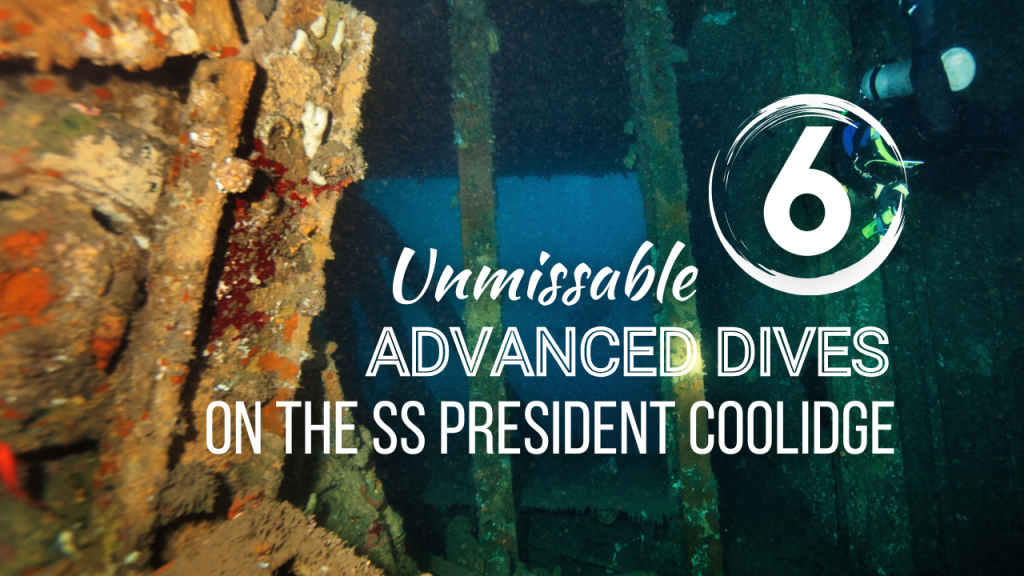
These are our top picks for the most unmissable dive plans on the SS President Coolidge for advanced certified divers—dives that give you a real understanding of the wreck’s scale, story, and layout.
To Explore dive plans for the whole wreck then check out our SS President Coolidge Dive Guide.
Dive 1) Cargo Hold 2
The cargo holds on the SS President Coolidge are some of the most open and expansive spaces on the wreck. Originally a luxury passenger liner and later converted into a troop transport, she was designed to carry large amounts of cargo including vehicles, field equipment, ammunition, and even Coca-Cola.
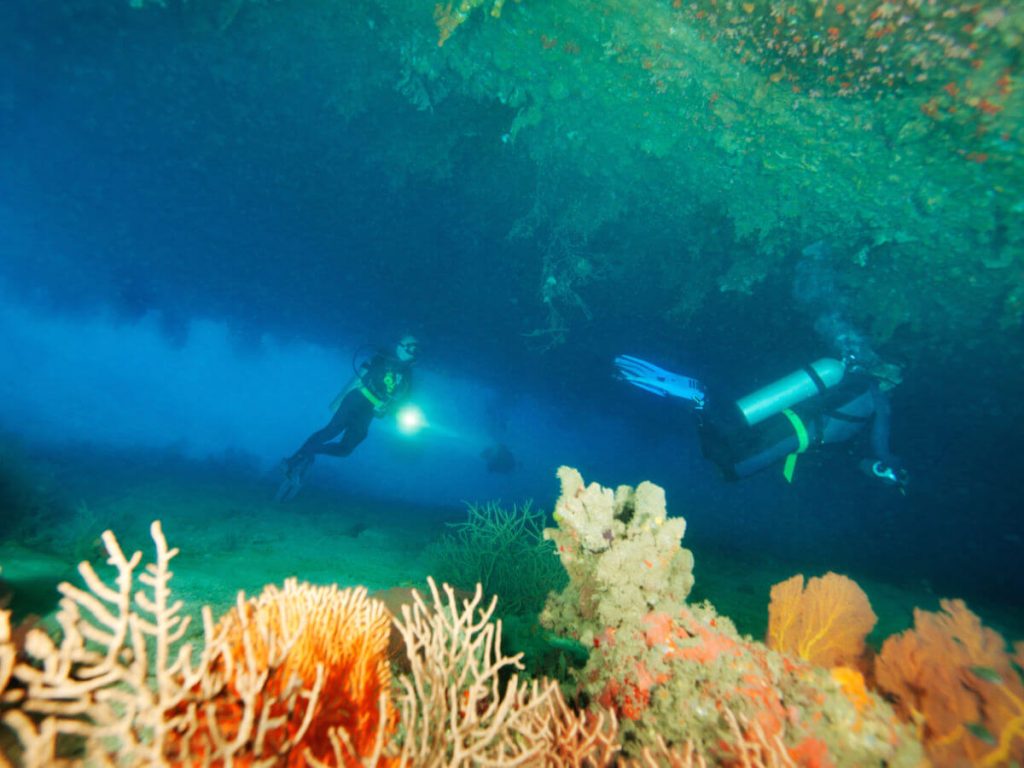
Cargo Hold 2 is often a great first penetration dive on the Coolidge (aside from an initial orientation dive on the starboard side and the salvagers’ cuts), as it is one of the largest and most spacious areas. This means there is plenty of natural light, and thanks to the large salvage cuts along the starboard side, multiple entry and exit points.
Depending on your comfort level, team, and dive plan, it may be possible to finish the dive with a swim-through into Cargo Hold 1. However, no-decompression limits (NDLs) usually don’t allow for much exploration at that point, so it’s often better to plan a separate dive specifically for Cargo Hold 1.
For more detailed information on this dive, please refer to our dive plan for Cargo Hold 2.
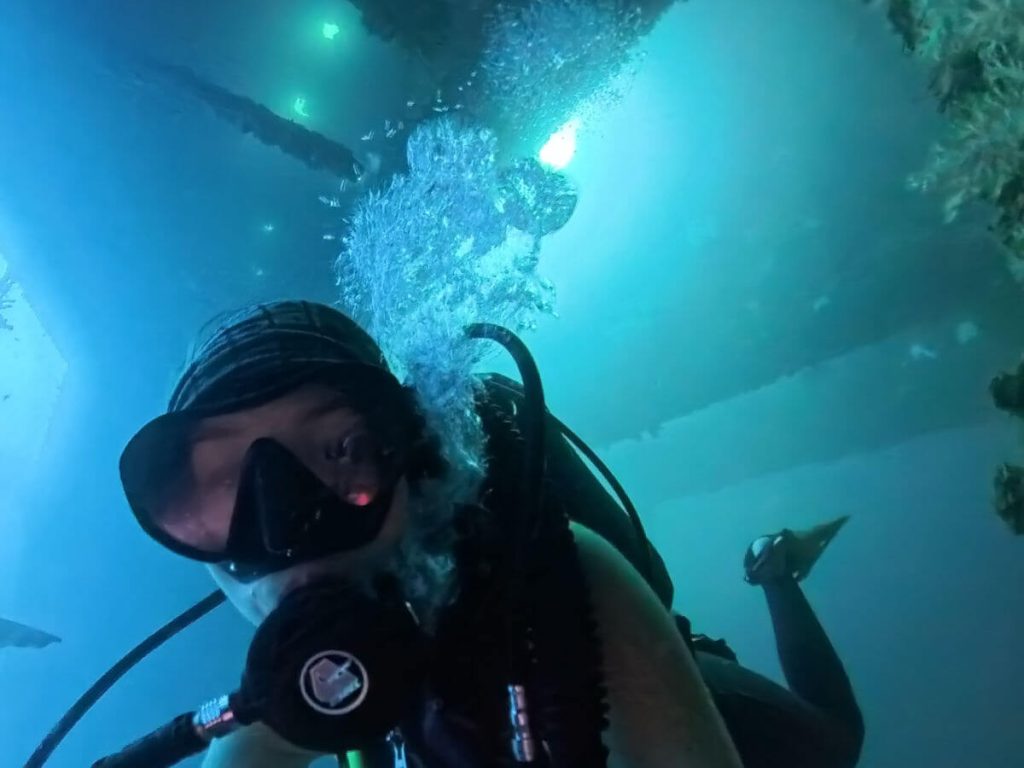
Dive 2) Cargo Hold 1
Although slightly shallower than Cargo Hold 2, Cargo Hold 1 is usually dived as a second dive, as it is smaller and darker—but still offers plenty of space to move through comfortably.
Because less was salvaged from Cargo Hold 1, there is a lot more to see here. The main highlights are the military jeeps, some still flat-packed in their original crates as they would have been shipped from the factory.
Towards the bow, you’ll also find the stewards’ bathroom sinks, a reminder of the ship’s original passenger liner design before her wartime conversion.
For those comfortable with tighter spaces, a great way to end the dive is with a swim-through and exit via the chain locker. Good buoyancy control is essential here, as this area silts up very easily and can quickly reduce visibility.
For more detailed information on this dive, please refer to our dive plan for Cargo Hold 1 & Chain-locker.
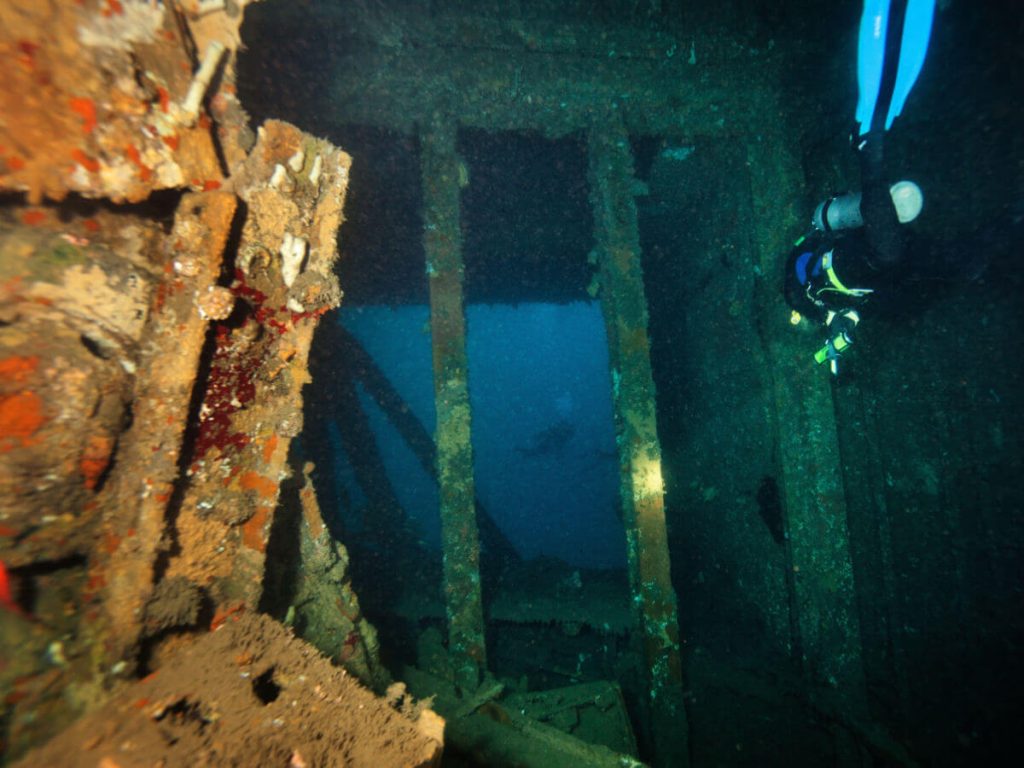
Dive 3) Night Dive with Flashlight Fish
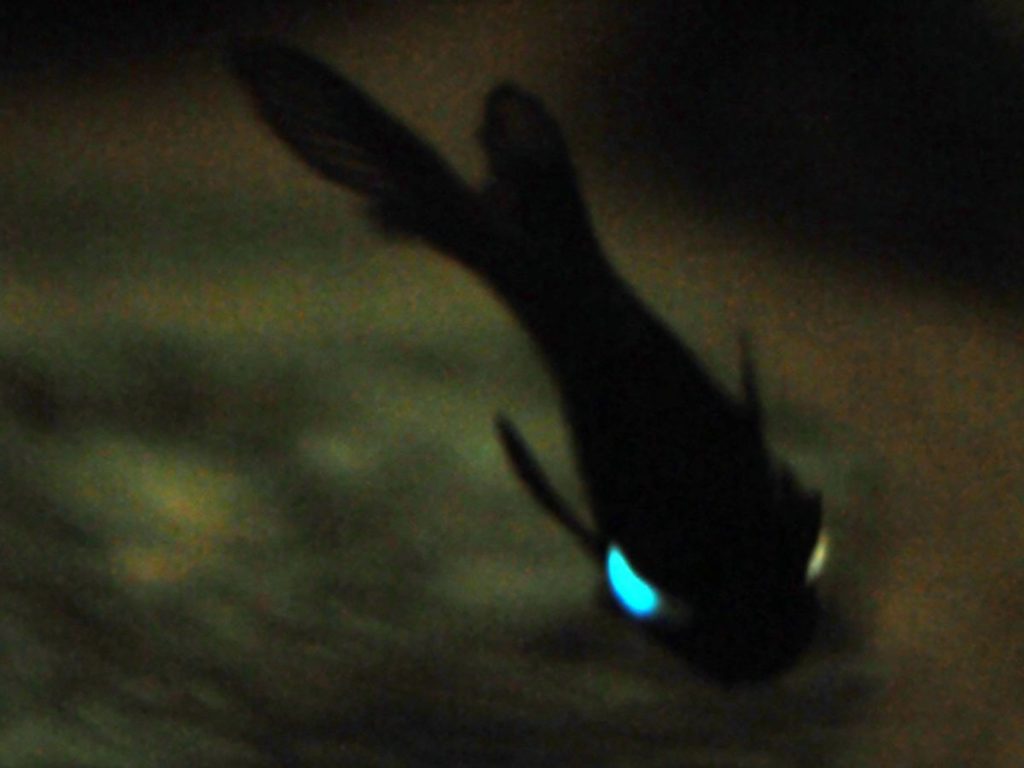
One of the most famous residents of the SS President Coolidge are the flashlight fish. These small, unassuming fish are present during the day, but it’s at night that they truly come alive.
They glow beneath their eyes, creating a cloud of underwater fireflies—like drifting through space surrounded by stars. It’s a truly unique experience.
This dive is not for the inexperienced. We usually dim torches to avoid scaring the fish, and at around 25m depth, inside a wreck at night, visibility and orientation can be limited.
For this reason, divers must complete at least one daytime dive in the cargo holds beforehand to become familiar with the environment, and so your guide can assess readiness for the night dive. If a diver’s skills or comfort level aren’t quite suitable for this environment, they may be advised to sit this dive out for their own safety and enjoyment.
Dive 4) Medical Supplies
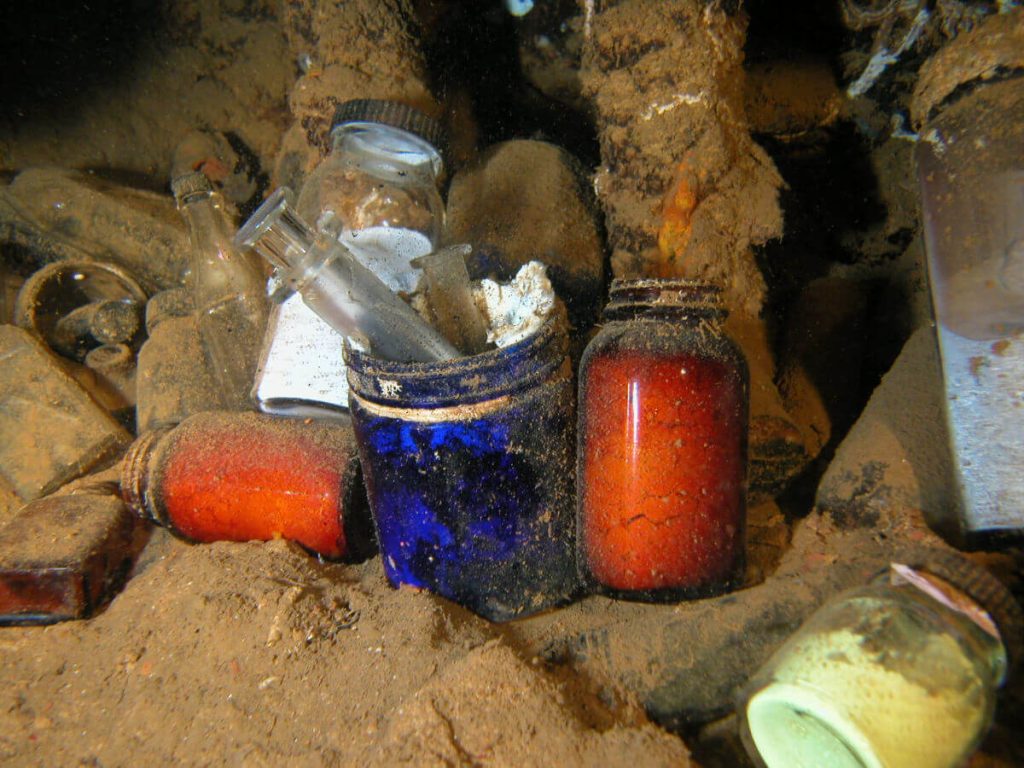
One of the most fascinating dives on the SS President Coolidge is the Medical Supplies Hold. Here, you can still find various powders and liquids that would have been used in the Pacific theatre during WWII.
After spending time in the hold, you can do a swim-through of the wreck along Deck E. Hidden along the ceiling are tiny glass vials, believed to contain quinine. These small capsules still hold air, causing them to float—divers can gently pull them down to inspect and take photos before releasing them, where they will float back up to the “ceiling” of the wreck.
Depending on air consumption and no-decompression limits for the group, you can continue the swim-through and exit via Cargo Hold 2 or even Cargo Hold 1.
For more detailed information on this dive, please refer to our dive plan for Medical Supplies.
Dive 5) Drop Tanks & Deck F
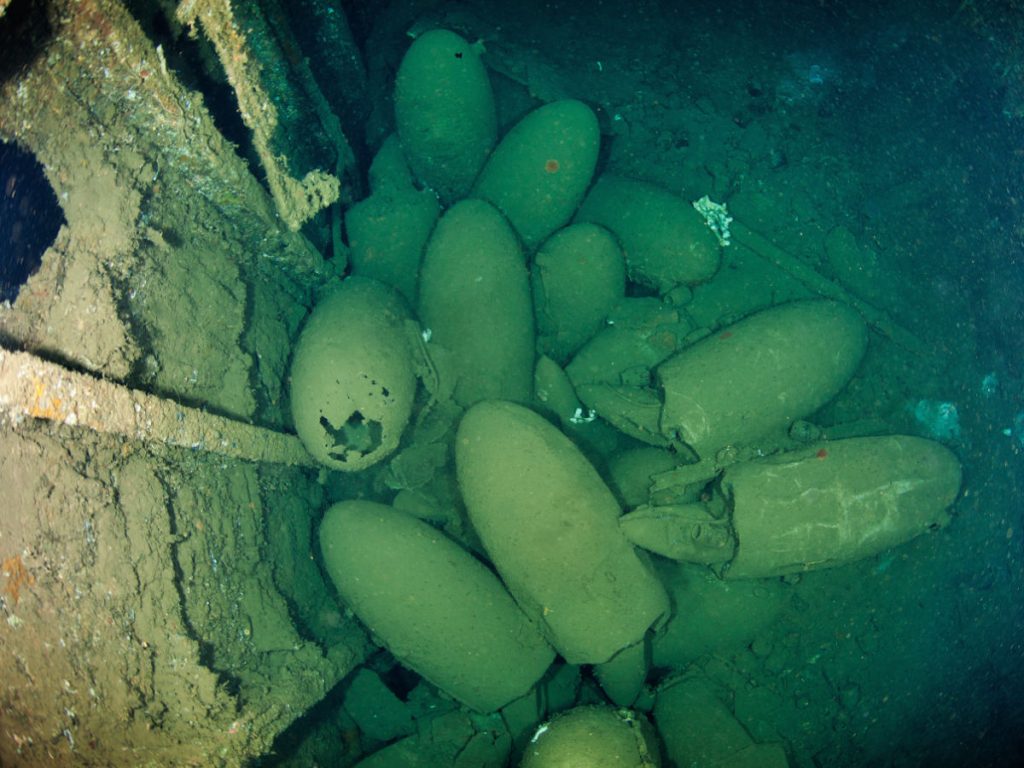
The very bottom deck of the SS President Coolidge contains a fascinating remnant of WWII aviation history—drop tanks. These large, alien-like, egg-shaped structures are scattered across the floor of Deck F.
Drop tanks are auxiliary, removable fuel tanks that would be attached to aircraft (usually on the belly or wings) to extend their range and allow them to fly further. The fuel would be used first, and the tanks then “dropped” before combat or landing to improve manoeuvrability and safety.
Deck F is the most secluded part of the wreck, meaning it can be quite dark, but it is also very open and spacious, creating a unique atmosphere compared to the upper decks.
For more detailed information on this dive, please refer to our dive plan for Deck F & Drop Tanks.
Dive 6) Beneath the Bow
Lastly, the SS President Coolidge rests on a sandy slope, but due to the curvature of the ship, the area beneath the bow makes for a fascinating dive. Sometimes you can spot large grouper or stonefish hiding in the sand, adding to the atmosphere of this quieter, less-visited section of the wreck.
Perhaps the most memorable feature—if you are comfortable in tighter spaces—is the ship’s original “Coolidge” lettering, still visible beneath the bow.
For more detailed information on this dive, please refer to our dive plan for Beneath the Bow.
SS President Coolidge Dive Schedule
Since most of these dives will reach a maximum depth of around 30m, we recommend limiting yourself to around 2 dives per day on the Coolidge to allow your body adequate time to decompress. This also leaves space for optional afternoon reef dives or a night dive experience.
If you’re planning to complete all six dives on the SS President Coolidge, we recommend a 2–3 day itinerary.
You could also choose to swap the sixth dive (Beneath the Bow) for a dive at Million Dollar Point, which is shallower but offers a fantastic all-round WWII highlights experience.
An example itinerary would be:
Day 1: Cargo Hold 2, Cargo Hold 1 & Night Dive (Flashlight Fish)
Day 2: Medical Supplies, Drop Tanks & Million Dollar Point
Deeper Dive Plans & Additional Certifications
For those with more advanced certifications, there are additional options to expand and tailor your diving experience on the SS President Coolidge.
For divers with a Deep certification, we would recommend adding or swapping out Dives 5 and 6 for two deeper sites: the infamous “The Lady” and a dive into the Engine Room.
For those who would still like to complete these dives but do not yet have the required certification, we can also arrange a Deep Diver course (which qualifies you to dive to 40m anywhere in the world). This course takes two dives, which we can complete on the Coolidge, but not in any overhead environments.
To structure the perfect package for you—whether it’s fun dives or courses—get in touch with us today and we’ll tailor your diving experience.
As an added bonus with Triton Explorers, when you book 5 dives, you receive a 6th dive free!