Marine Life: Turtles, Octopus, Eels, Electric Clams, Scorpion Fish, Clownfish
Starboard Side & Salvage History
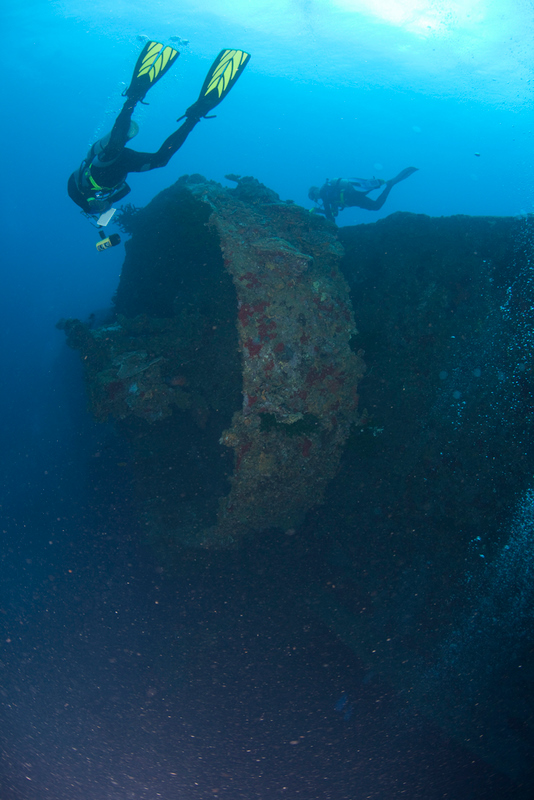
The SS Presdient Coolidge's Starboard Side
After the SS President Coolidge struck two mines on 26 October 1942, water quickly flooded the ship and caused her to list. As she sank, she eventually settled on her side with the starboard side facing upward — the orientation that now makes much of the wreck accessible to divers.
Following the sinking, Navy divers and later salvors accessed the wreck to recover mail, medical supplies and other valuable equipment. Over the following decades, salvage work created many of the large openings and cut-outs that now provide access to the wreck, including those around the cargo holds.
For the full story of the SS President Coolidge, including her sinking, salvage and discovery as a world-class dive site, read our complete history of the SS President Coolidge.
How to Get Started ...
Ready to Dive this Site With Triton Explorers?
If you’d like to dive this site with Triton Explorers, get in touch with your preferred dates and the dives you’d like to do. If you don’t yet have the certification required for a particular dive, let us know — we can advise you on your options and, where possible, arrange the training you need.
Once we’ve confirmed your dives and availability, we’ll send you a digital check-in to complete before your arrival. A 50% deposit secures your dive slots, with the remaining balance payable before or on your arrival.
Then, all that’s left to do is turn up, gear up and go diving.
Explore More
Dive Plans on the ss president coolidge
Dive the Medical Supplies area on the SS President Coolidge and discover bottles, equipment, and fascinating WWII artifacts.
Dive Cargo Hold 2 on the SS President Coolidge and discover the barber’s chair, doctor’s office, and iconic WWII wreck artifacts.
Explore Cargo Hold 1 on the SS President Coolidge. Discover trucks, wartime supplies, and one of Vanuatu’s best wreck dives.