The SS President Coolidge was powered by a turbo-electric propulsion system, a sophisticated arrangement for her era in which steam-driven turbo generators — built by Westinghouse — produced electrical current to drive separate propulsion motors connected to her twin propeller shafts. Steam for the system was supplied by twelve oil-fired Babcock & Wilcox boilers.
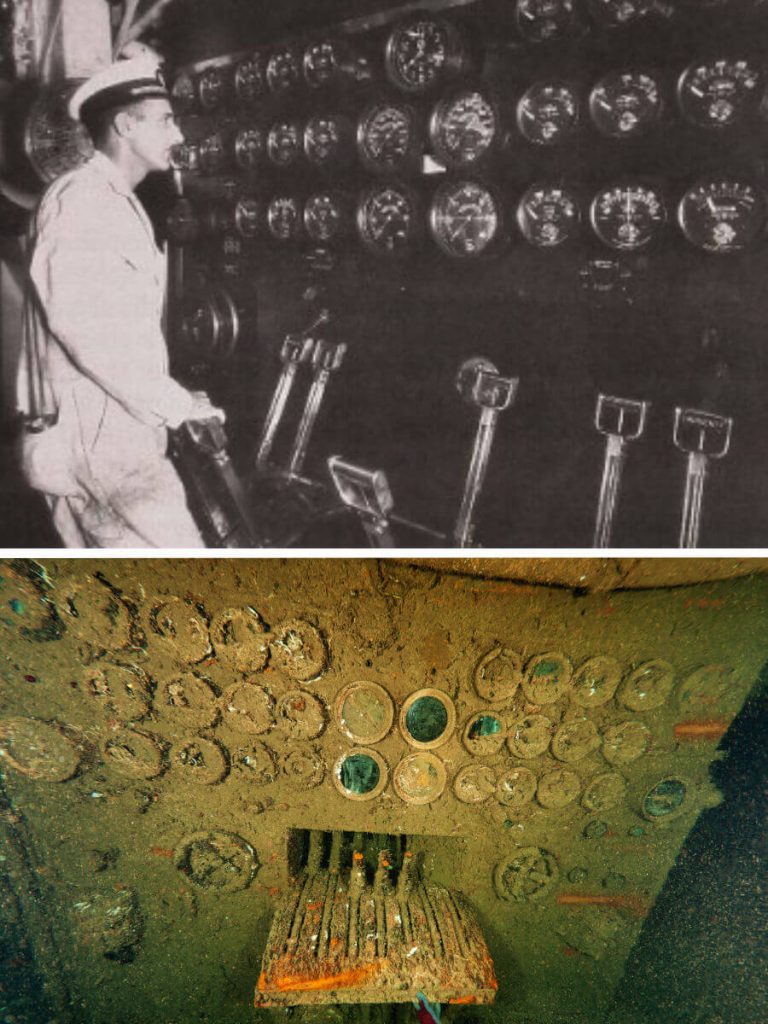
The engine control room served as the operational nerve centre of this system, the space from which engineers monitored steam pressure and electrical output, relaying commands received from the bridge via engine telegraph to keep the ship running at the correct speed and heading. During her time as a troopship, maintaining precise control here was critical, particularly given the demands of wartime transport across the Pacific.
Today, this compartment remains remarkably intact. Divers can still see the original glass-faced dials, some frozen at the steam pressure readings recorded the moment the Coolidge sank, alongside the large engine telegraphs marked with commands such as “Stop,” “Slow” and “Full Ahead” — silent instruments that once relayed the final orders passed down through the ship’s engineering chain.
Every dive to the engine control room is planned according to the divers’ certification, experience, gas supply and the conditions on the day. This dive is only suitable for suitably experienced and qualified divers, given the depths involved.
Entry
The dive begins with a descent down the midship mooring line, into the engine room. From here, divers continue down past the condenser before entering the engine control room through a small opening at approximately 45 metres.
Engine Control Room
After passing through this small restriction, the room opens up into a wider space. On the left, divers will see the wall of glass-faced dials, some still showing the steam pressure readings recorded at the moment the ship sank, along with the large engine telegraphs once used to relay commands such as “Stop,” “Slow” and “Full Ahead” from the bridge to the engineers below.
Exit
Divers exit back out through the engine room hatch, ascending onto A Deck and continuing to the starboard side of the wreck. The return to the surface is made either via the mooring line or by following the sandy slope, where decompression stops are completed.
Dive Cargo Hold 2 on the SS President Coolidge and discover the barber’s chair, doctor’s office, and iconic WWII wreck artifacts.
Explore the SS President Coolidge engine room dive—easy access, historic machinery, and advanced penetration routes for experienced wreck divers.
Dive the Medical Supplies area on the SS President Coolidge and discover bottles, equipment, and fascinating WWII artifacts.
Explore Cargo Hold 1 on the SS President Coolidge. Discover trucks, wartime supplies, and one of Vanuatu’s best wreck dives.
Dive to The Lady on the SS President Coolidge. Visit the legendary statue on this world-famous WWII wreck dive.
Explore the best dive sites in Espiritu Santo, Vanuatu with our expert dive plans. Delve into the detail of The SS President Coolidge and start planning your Pacific adventure today.