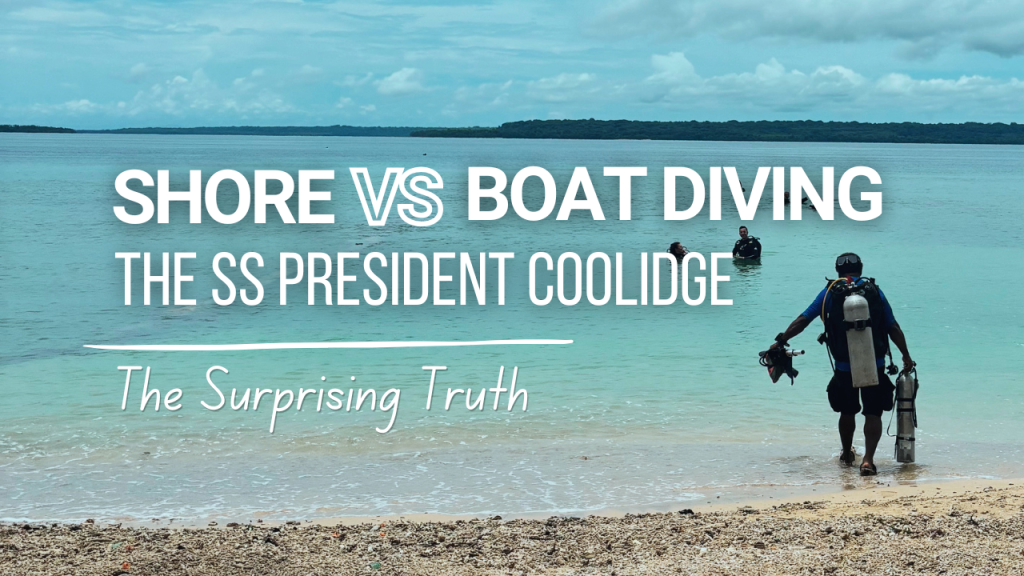
The SS President Coolidge is world famous for being one of the largest and most accessible wreck dives on the planet. Unlike many iconic wrecks that require long offshore boat journeys, the Coolidge lies just off the coast of Espiritu Santo, Vanuatu. Its close proximity to land is what has earned it its reputation as one of the world’s premier shore dives.
For decades, divers have walked into the water and explored this incredible ocean liner from the shoreline. But while shore diving is part of the Coolidge’s history and appeal, many visitors are surprised to learn that it can also be explored by boat (and that this offers some surprising advantages).
So which option is best?
The answer depends on what kind of diving experience you’re looking for.
Diving the SS President Coolidge from Shore
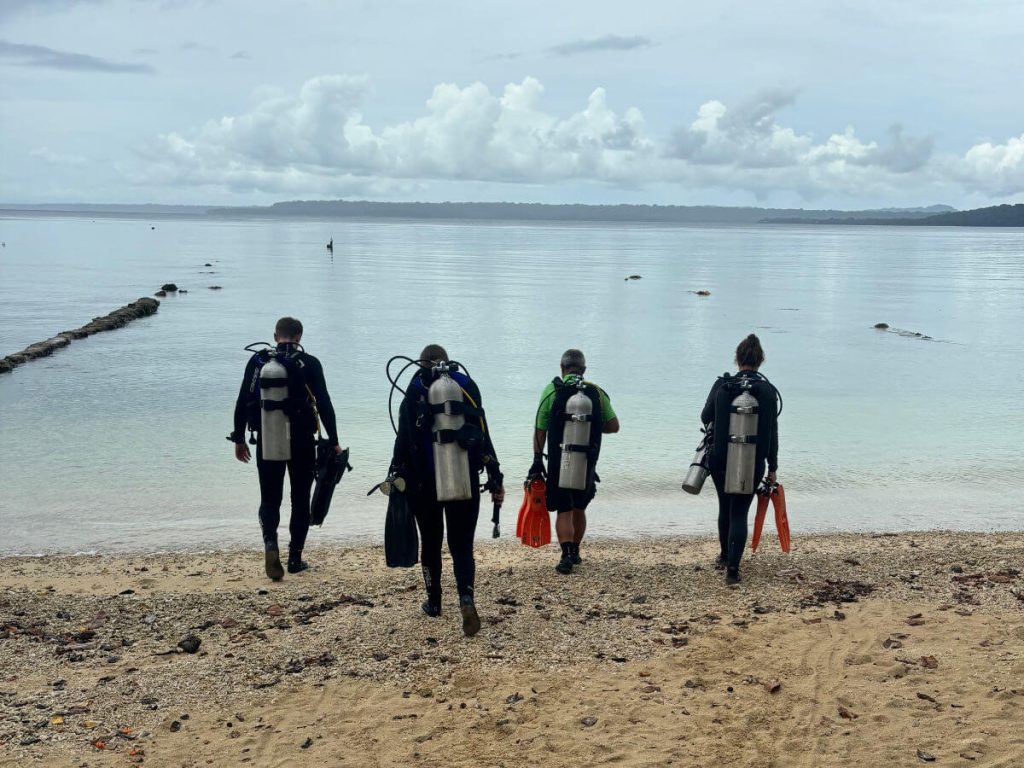
Shore diving is how most people first imagine diving the Coolidge. You gear up on land, walk into the water, descend the reef slope and eventually arrive at one of the most famous shipwrecks in the world.
Advantages of Shore Diving the SS President Coolidge
- Set up and check your equipment on land with plenty of space and no rush.
- No boat ride, making it ideal for divers who are prone to seasickness.
- Relax and enjoy your surface interval on land between dives.
- Experience the tradition of swimming out to one of the world’s most famous wrecks.
Disadvantages of Shore Diving the SS President Coolidge
- Carrying scuba equipment to and from the water can be physically demanding, particularly for divers with mobility or accessibility concerns.
- A long surface swim is required to reach the wreck, with additional swims needed to access deeper sections.
- More energy and breathing gas are used before reaching the wreck, resulting in less time exploring it.
- Increased physical exertion, especially in current, can make the dive more tiring and may contribute to greater decompression stress.
- Night dives involve a longer swim through open water before reaching the shelter of the wreck.
- An experienced guide is still recommended due to the size and complexity of the wreck.
- Shore dives are often priced similarly to boat dives despite requiring considerably more physical effort.
Diving the SS President Coolidge by Boat
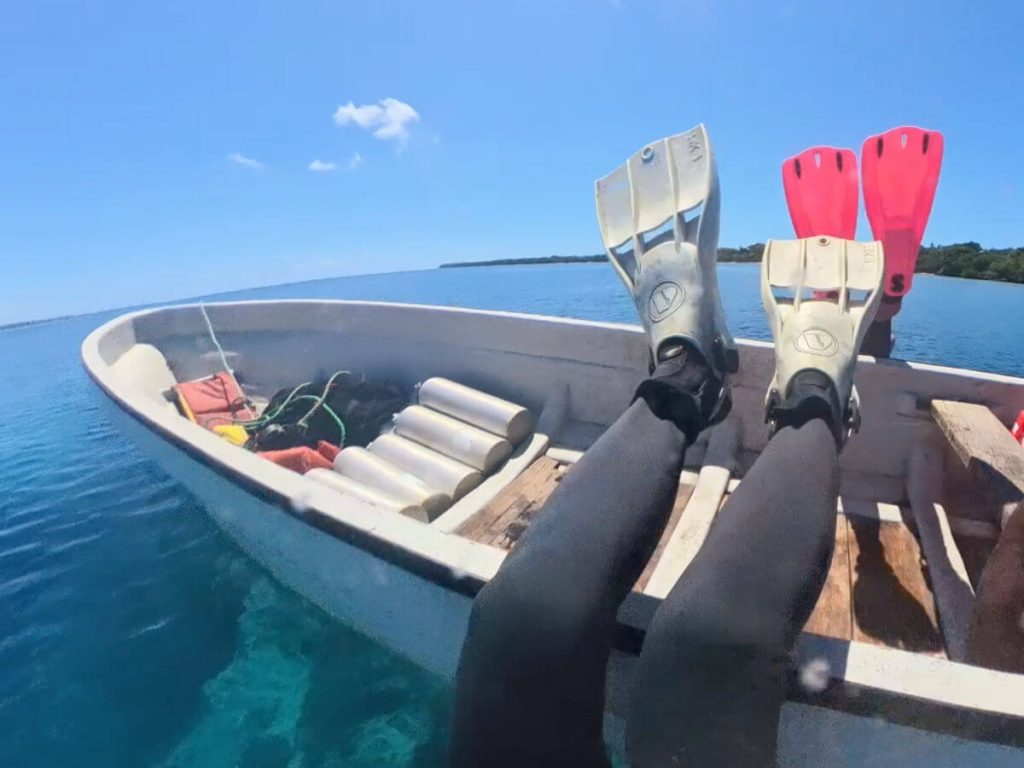
Boat diving offers a different experience. Instead of swimming out from shore, divers are dropped directly onto one of the wreck’s mooring lines, allowing them to spend more of their dive exploring the Coolidge.
Advantages of Boat Diving the SS President Coolidge
- Be dropped directly onto the section of the wreck you want to explore, such as the bow, midships, or stern.
- Spend more of your dive exploring the wreck instead of swimming to it.
- Conserve energy and breathing gas by avoiding long surface swims.
- Easy entries and exits make the experience more comfortable.
- Descend and ascend using mooring lines, which is especially helpful in current.
- Ideal for photographers and technical divers carrying heavy or bulky equipment.
- Better suited to divers with limited mobility or those wanting a more relaxed experience.
Disadvantages of Boat Diving the SS President Coolidge
- Divers who are prone to seasickness may be concerned about travelling by boat.
- Boat operations may be limited during periods of very rough weather.
- You don’t experience the tradition of entering the wreck from the shoreline.
Which Option Should You Choose?
There is no wrong way to dive the SS President Coolidge—both shore and boat diving offer incredible experiences on one of the world’s greatest wrecks.
However, there are some important differences to consider before deciding which option best suits your diving goals.
Diving the Coolidge from shore is part of what has made the wreck famous. Walking into the water and swimming out to such an iconic shipwreck is certainly a memorable experience. The trade-off is that you’ll spend more time and energy reaching the wreck, and have less gas and bottom time to actually explore it.
Diving the Coolidge by Boat requires a little more planning and logistics, but in return you’ll typically enjoy more efficient dive profiles, greater flexibility in your dive plan, and significantly more time on the wreck itself. By conserving energy and breathing gas, you’ll often finish the dive feeling less fatigued while getting more from the experience.
One thing to note is that if you’re planning to explore the midships or stern, boat diving is generally the only practical option unless you’re using a diver propulsion vehicle (DPV/scooter). At over 200 metres long, the SS President Coolidge offers countless unique dive plans, and the long surface swims required to reach the deeper moorings make these sections impractical for most recreational divers. Even the original Allan Power Dive Tours, who pioneered shore diving on the Coolidge, regularly accessed these areas by boat, which you can read more about in this article.
Ultimately, the best option depends on what you want from your dives. If experiencing the traditional shore entry is high on your list, shore diving is an excellent choice. If your priority is maximising your time exploring the wreck, reducing physical effort, or accessing a wider range of dive sites on the Coolidge, boat diving offers clear advantages.
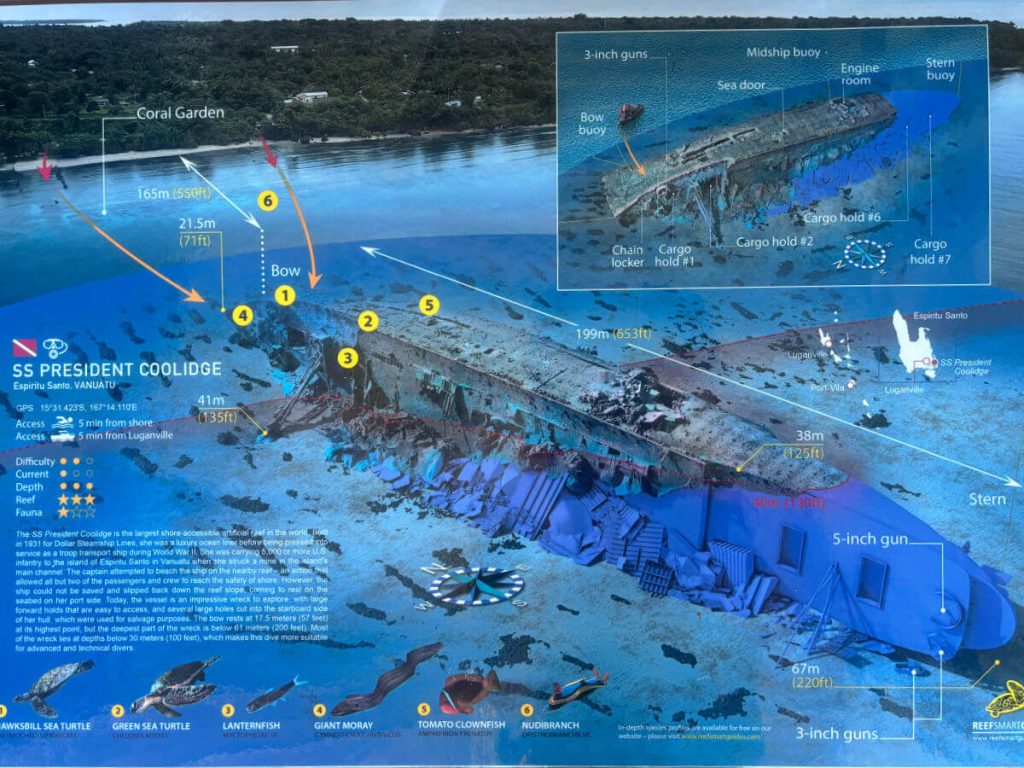
Dive map of the SS President Coolidge by Reef Smart Guides
With Triton Explorers it Gets Better …
Now one factor worth considering is that many of the traditional disadvantages of boat diving are virtually eliminated when diving with Triton Explorers.
Our dive centre is located at Million Dollar Point, just a two-minute boat ride from the SS President Coolidge. Because the journey is so short, the likelihood of seasickness is greatly reduced compared with longer boat trips.
Unlike many boat-based operations, your surface intervals are still spent on land. Between dives, you can relax on the beach with complimentary coffee and cookies, while friends and family can snorkel or unwind at the historic Million Dollar Point.
This means you enjoy the comfort and convenience of a land-based dive centre while still benefiting from direct boat access to the wreck.
Finally, remember that your choice of shore or boat diving also determines which dive operator you’ll be diving with. Every operator has a different philosophy, group size, level of service, and approach to guiding the Coolidge. It’s worth choosing a dive centre whose style, experience, and dive plans align with your own goals, as this can have just as much impact on your overall experience as the method of accessing the wreck itself.