If you’ve spent any time in the dive community, you’ve probably come across the age-old debate about sticking to scuba certification limits.
Some argue that certifications are unnecessary bureaucracy — that experience matters more than the card you carry. Others follow the rules to the letter.
And while we fully support divers extending their limits, we also believe it should only be done under the right circumstances — such as a supervised scuba course — where instructors can guide you and risks are safely managed. Not on a whim. Here’s why.
1) The Hidden Risks of Diving Beyond Your Scuba Certification Limits
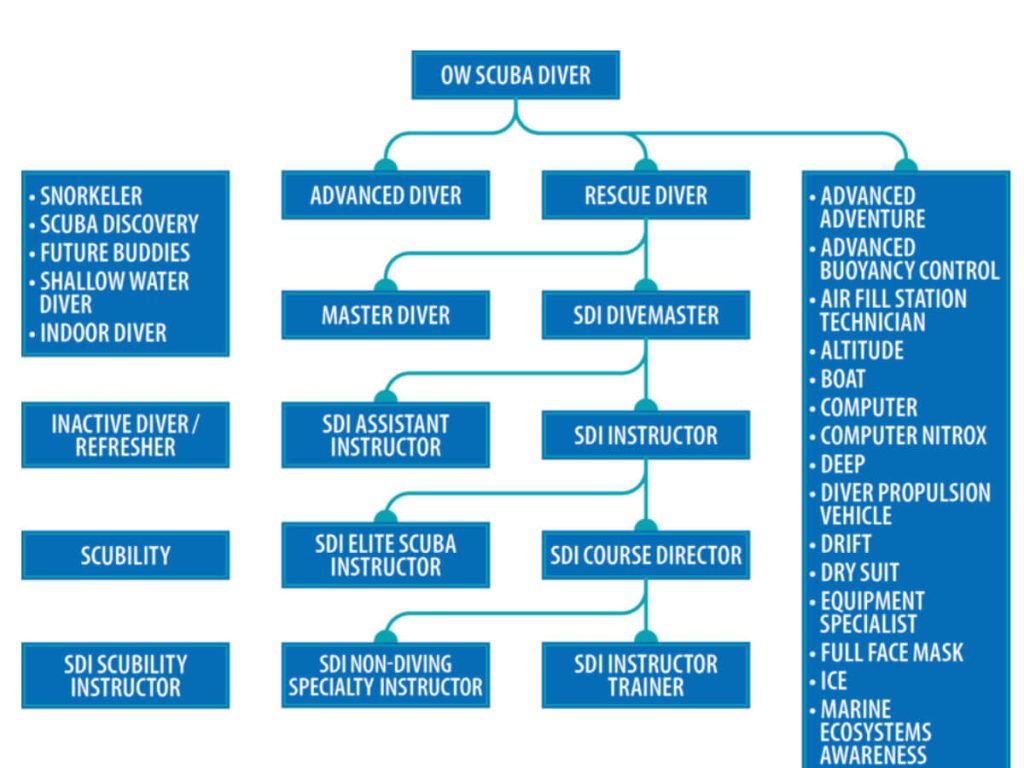
If we tried to teach you everything about scuba diving in a single course, it would take years and overload your brain. That’s why scuba training is structured into levels and specialties — giving divers the opportunity to choose when and how they expand their skills.
Lower-level courses intentionally omit advanced concepts that aren’t relevant to your certification. These include:
- Gas toxicity and oxygen exposure limits
- Nitrogen narcosis
- The effects of CO₂ buildup
- Complex decompression planning
- Overhead environment protocols
- Use of specialist diving equipment
Skipping these lessons doesn’t make the dangers disappear — it simply means you are not trained to recognize or manage them.
2) Diving Outside Your Scuba Certification Limits Could Void Your Insurance
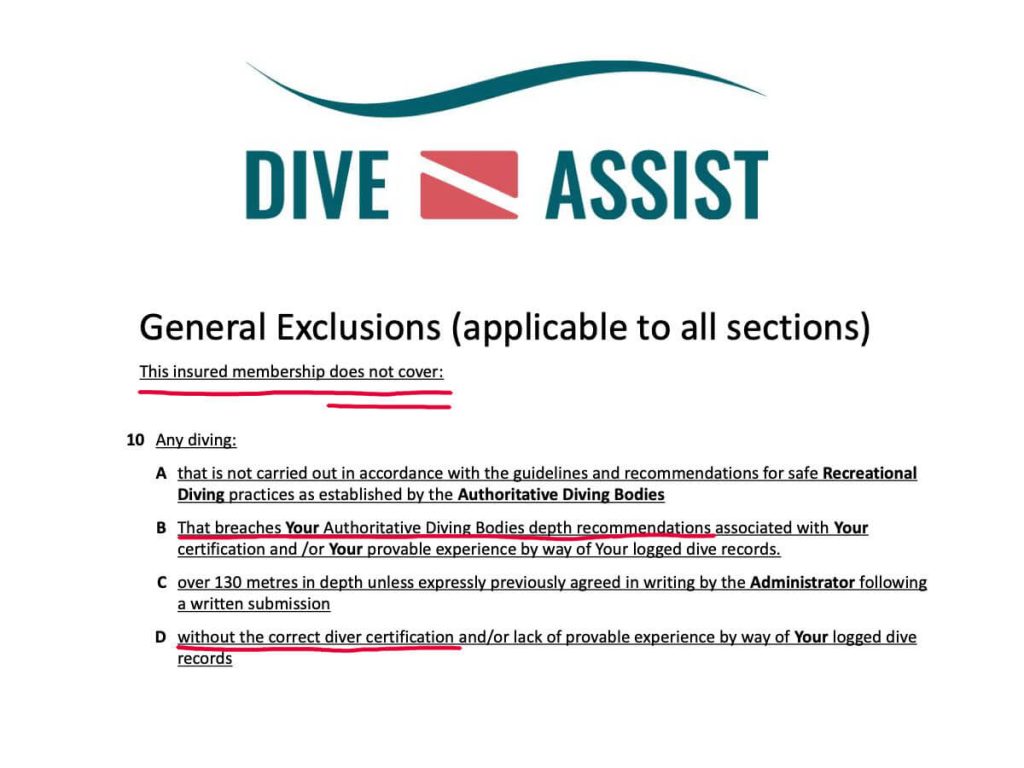
If you’ve read the fine print of diving insurance policies, you’ll notice coverage is often only valid within your experience and scuba certification limits.
Some policies even impose their own depth limits regardless of your certification.
The risk? If you need evacuation or hyperbaric chamber treatment after diving beyond your training, you may be paying tens of thousands of dollars out of your own pocket.
3) Certification Can Limit Access to Dive Sites & Services
Most reputable scuba diving operators and dive shops require proof of certification before renting equipment, filling tanks, or joining guided dives.
Dive guides must plan dives according to scuba certification limits. If your training or experience doesn’t meet the requirements, they may refuse to take you.
This isn’t them being difficult — it’s protecting themselves professionally. Diving beyond internationally accepted standards could jeopardize a divemaster or instructor’s license, career, and even lead to legal action.
Yes some dive professionals do risk it, but they may not even realize what is at stake until the worst happens.
4) Diving Safely Is a Shared Responsibility
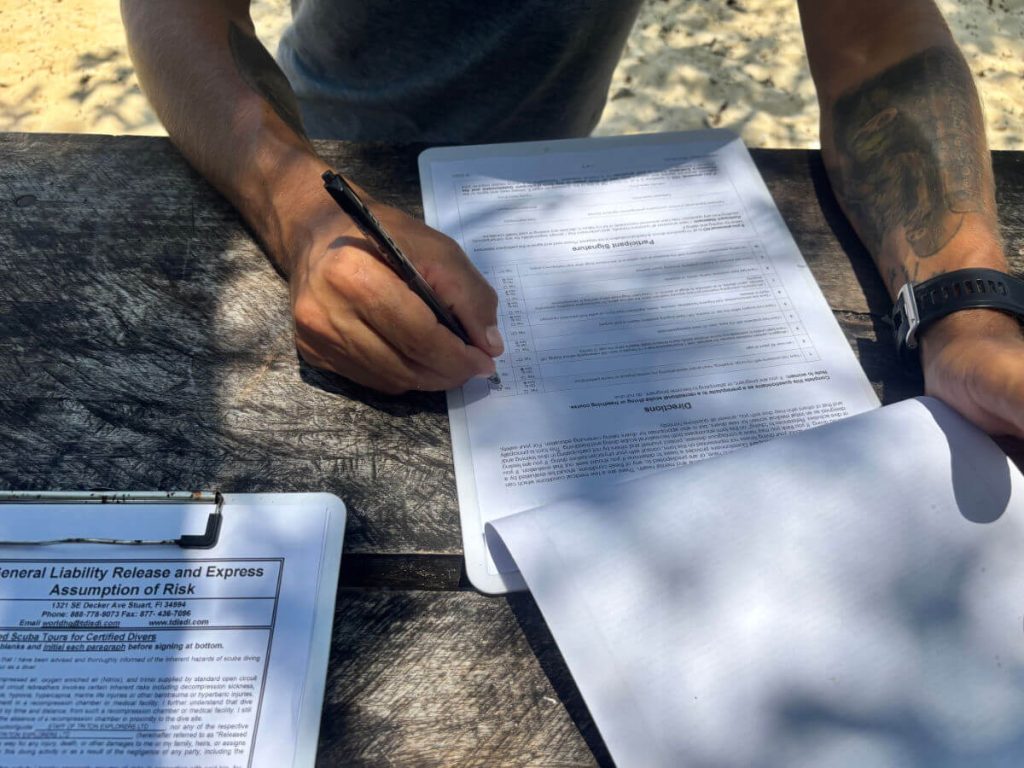
When diving with others, safety is shared. Pushing limits without proper training puts both you and your buddy at risk.
I have personally refused to dive with reckless divers — not because I doubted my own skills, but because I didn’t want to risk my life correcting their mistakes.
Is Anything Stopping Me From Diving Beyond My Scuba Certification Limits?
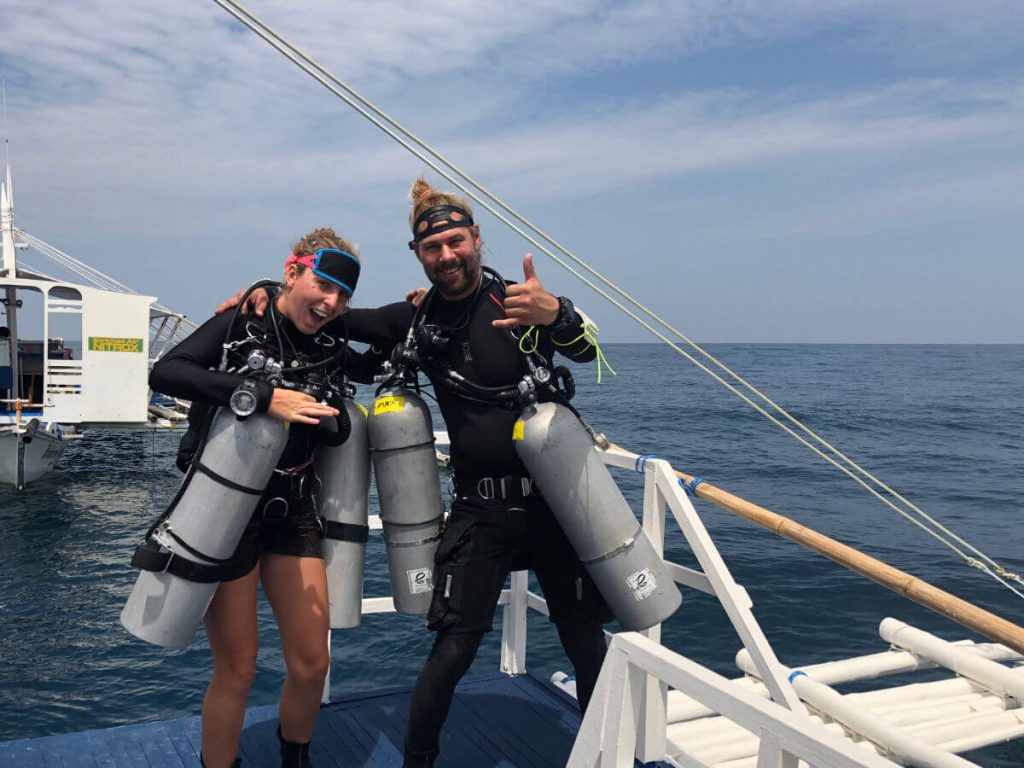
At the end of the day, there is no “scuba police.” Unless you’re diving with a reputable operator, nothing physically stops you from going beyond your scuba certification limits.
Scuba certifications exist for a reason — they provide a structured progression, a simple rulebook for safely developing your skills. If you choose to ignore it, you must accept the risks.
So is it possible to go scuba diving without the proper certification? Yes.
Is it a good idea? No.
What happens when you continuously push your limits?
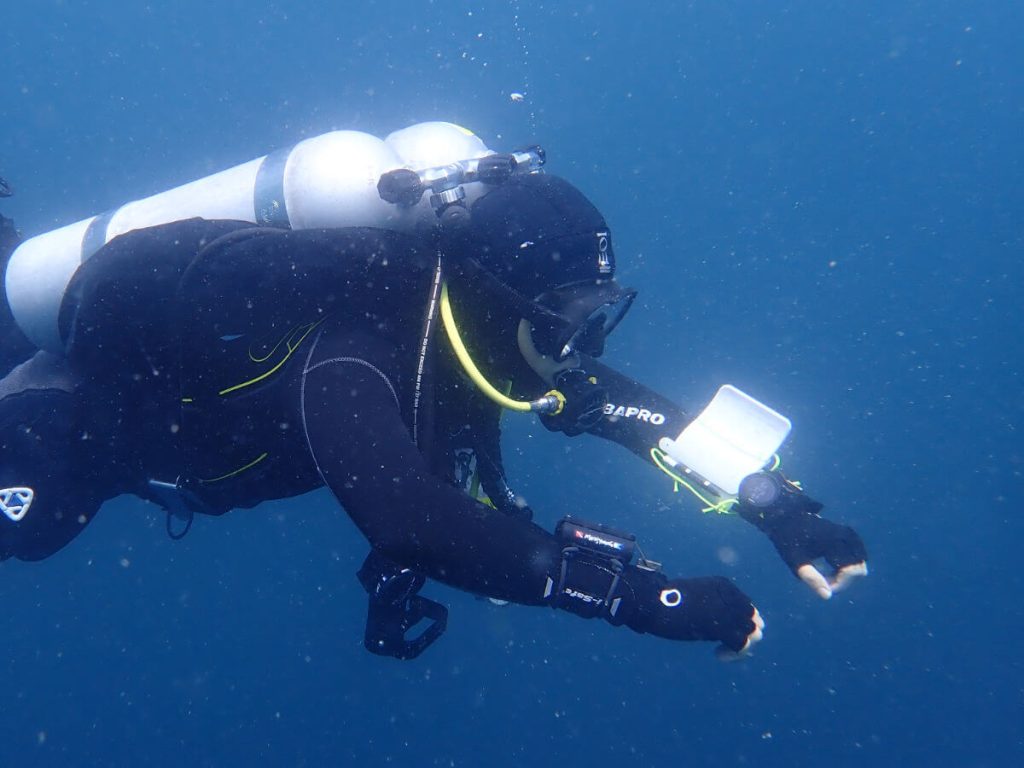
Over the years, I’ve had divers argue that slightly exceeding limits — for example, an Open Water diver going to 25m instead of 18m — isn’t a big deal.
In isolation, it might not be. The problem isn’t the extra seven meters — it’s the mindset.
It’s not about where the boundary is set — it’s about the fact that we need boundaries, and we need to respect them, even when we don’t want to.
Once you justify pushing limits a little, it becomes easier to justify pushing them again, and again, until you are completely out of your depth — literally and figuratively.
I’ve witnessed divers:
- Attempt decompression dives they weren’t trained for
- Penetrate wrecks in high-silt conditions without laying a line
- Push oxygen limits without understanding oxygen toxicity
- Ignore narcosis symptoms because “they felt fine last time”
Each small overstep reinforces false confidence. And false confidence underwater is one of the most dangerous things a diver can carry — because it only takes one dive, one variable, one unexpected problem for everything to unravel.
Certification Does Not Equal Competence
Of course, the caveat to all of this is that certification does not automatically mean you have the comfort or competency to complete every dive within your training limits.
Your ability as a diver is shaped by many factors:
- The quality of your dive school
- Your instructors and mentors
- The conditions you trained in
- Your personal comfort and confidence
- How often you dive
- How deliberately you practice
I’ve met divers whose skills clearly didn’t meet the minimum standard of their certification. And I’ve also met divers with only basic certifications who demonstrate better buoyancy and gas management than some qualified Divemasters.
A certification is a minimum benchmark. True competence is built through consistent practice, humility, and a commitment to improving every time you get in the water.

To Conclude
If you want to extend your limits, take the course.
If you want to be a better diver, get the practice.
The ocean is magnificent, but it doesn’t forgive mistakes. Follow your training, practice consistently, and push your limits only in controlled, supervised environments. That’s how you become a confident, competent, and safe diver.