When you think of Espiritu Santo, you probably picture white sand beaches, diving and the blue holes. And they’re all amazing. But up north there’s a kind of magic that hardly anyone talks about. Honestly, you haven’t truly seen Santo until you’ve been up to Big Bay Bush.
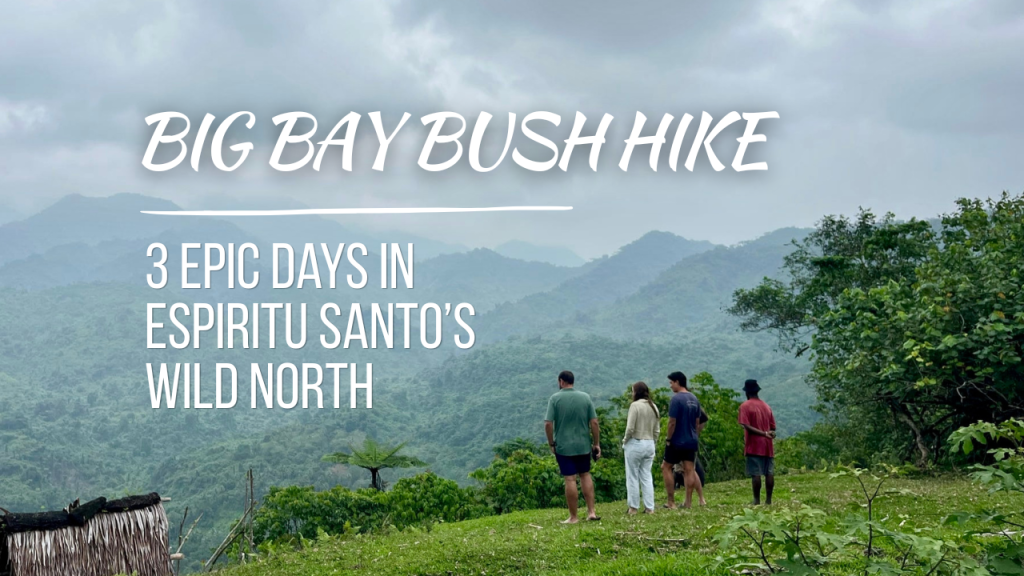
The Big Bay Bush hike is a 3 day trek through the north-west of Espiritu Santo, where the white sand beaches make way for beautiful mountain valleys. Along the way you’ll sleep in village nakamals, swim under waterfalls, wade through the Jordan River and eat dinner with the people who live there.
If you’re thinking about doing it, here’s everything you need to know: the day by day itinerary, exactly what to pack, and how to book.
Big Bay Bush Hike Itinerary: Day by Day
Day 1: Ankoro to Mataibof Village
Distance: approx. 5.4 km | Ascent: approx. 580 m | Walking time: 2 to 4 hours
To start off your Big Bay Bush adventure, between 6 and 7am your transport picks you up from Luganville and you begin the 3 hour drive north. It can take a bit longer if it’s been raining and the roads are bad.
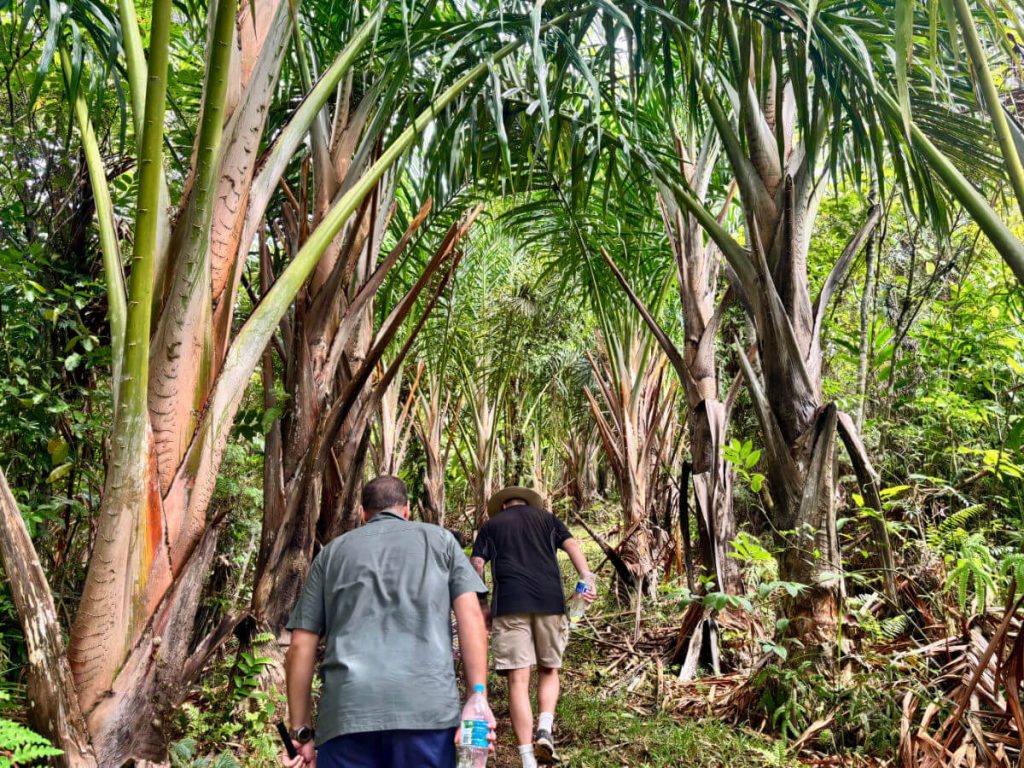
Around 9 to 10am you’ll roll into Ankoro on the Jordan River, where you meet your guides and porters. Then you’re off. Day 1 is mostly uphill, but it’s worth it: you wind your way up through guava trees and cattle pens toward Mataibof Village.
Along the way your guides might climb a coconut tree and bring you down a fresh coconut to drink. One of the porters can even open a coconut with his teeth!
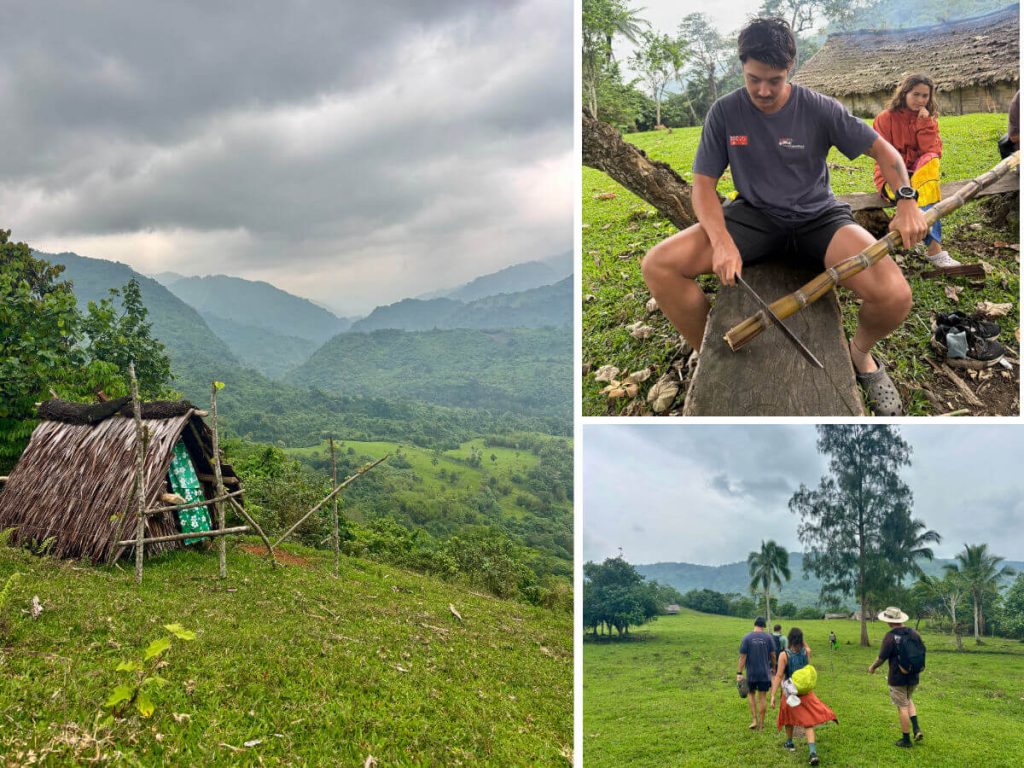
You’ll usually reach Mataibof around midday or early afternoon, and the village sits near the top of a hill with views over the Jordan River and Big Bay. Lunch comes first, then you drop your bags and get unpacked. You’ll be staying in the nakamal, which is like a community hall where a lot of the cooking and socializing happens. The nakamal in Mataibof has a phenomenal view.
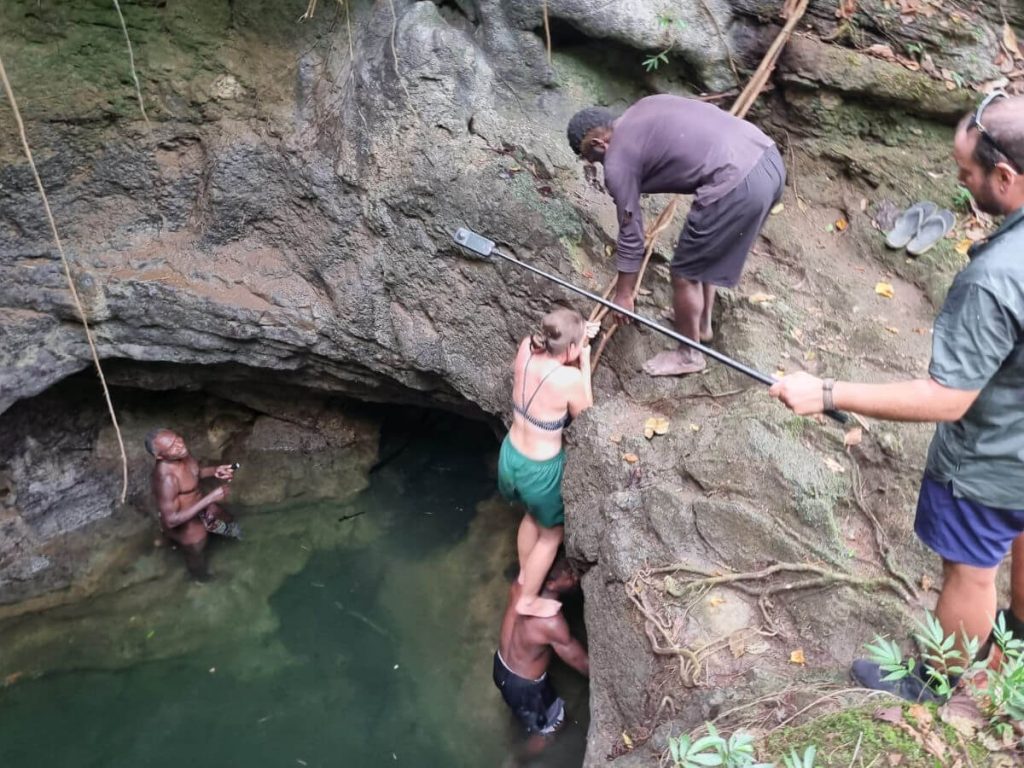
Optional afternoon adventure: jump into Lendeyeh Cave
Lendeyeh is a wet cave accessed through a hole in the ground. From the outside it’s not particularly impressive, but if you’re fit and adventurous you jump 2 metres down into the water, then swim and clamber over small waterfalls inside before heading back out the way you came. Getting out is the hard part because the walls are vertical. The guides make ropes out of vines for you to pull yourself up, and they can give you a boost, but I wouldn’t recommend it if you’re quite heavy or have poor upper body strength.
It was a fun experience, but if you’re not going to go inside I don’t think it’s really worth the walk. There’s a better cave and waterfall on Day 2.
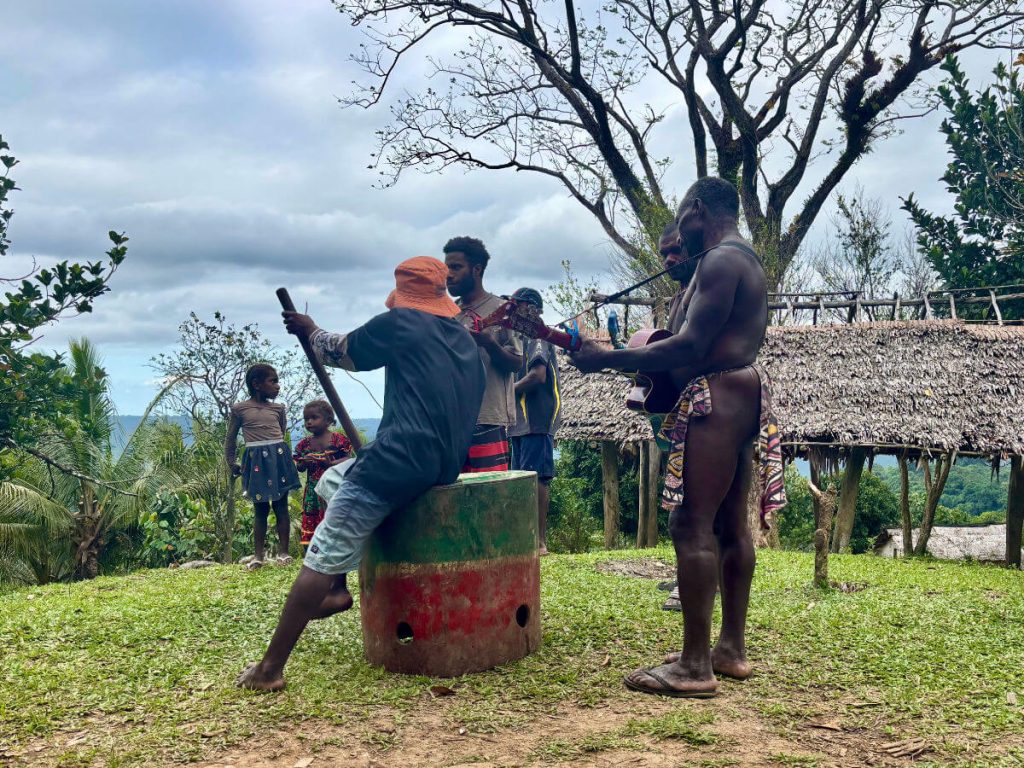
Evening: kava, string band and a fire-cooked dinner
Between 4 and 6pm you can join the kava ceremony, watch or help make the kava and try drinking it. If you’ve never tried kava before there’s no better place to do it, although it may take a few shells to take effect.
Form more information read our other blog post: How to drink Kava in Vanuatu.
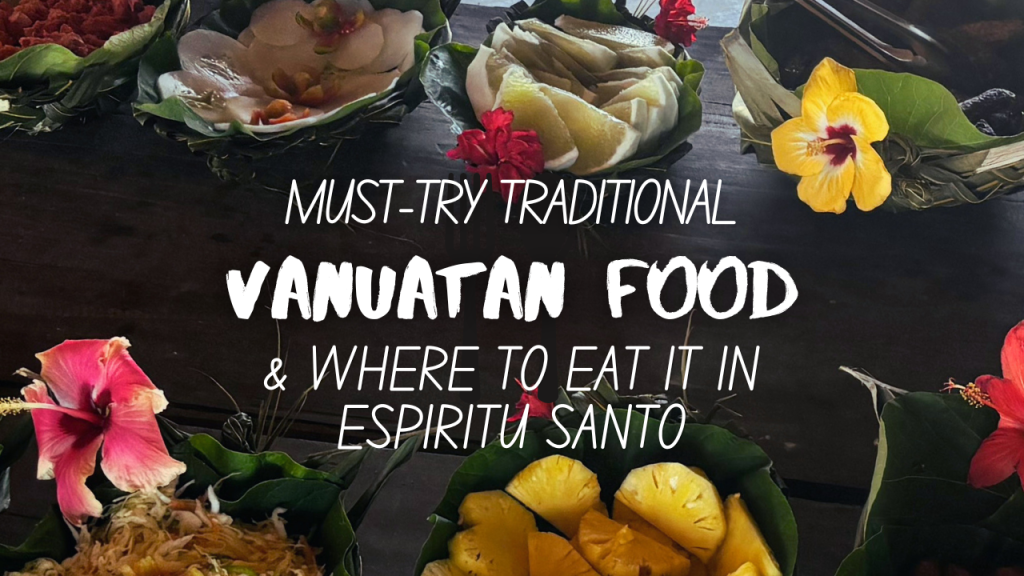
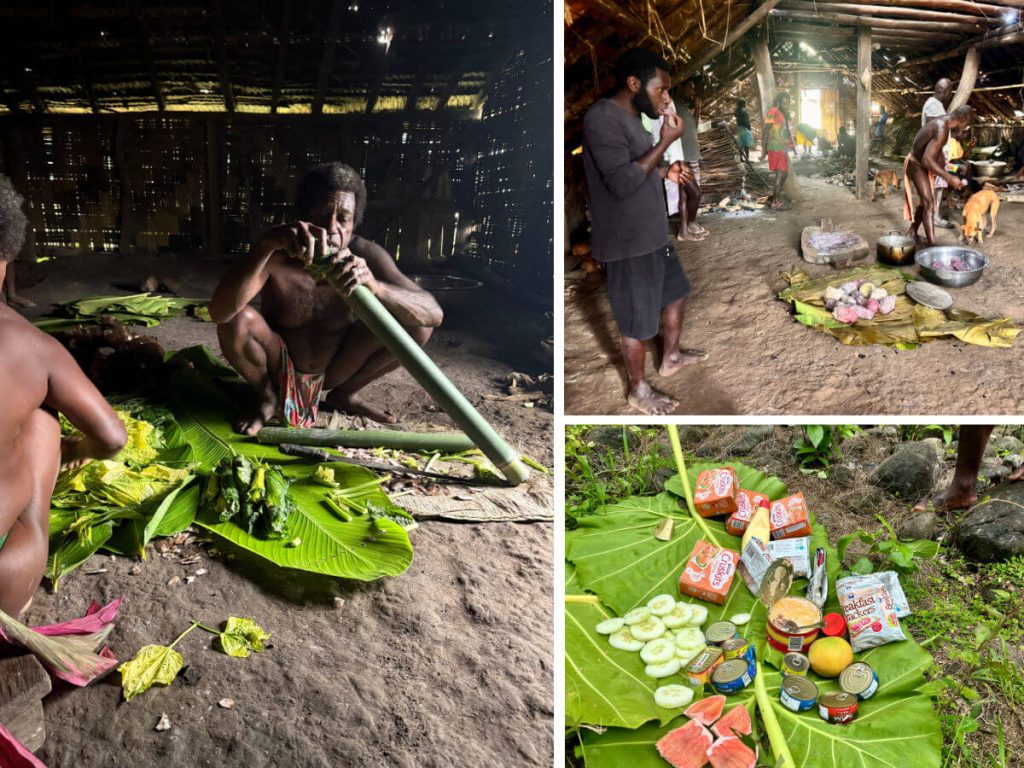
If you’re lucky the villagers will bring out their string band and serenade you with some of their songs. Meanwhile, dinner is being cooked in the nakamal over fire pits and river rocks, so you can watch or ask to help. You’ll usually eat after kava, and it’s local root vegetables like taro or yam with island cabbage. If you’re lucky there might be meat or traditional dishes like lap lap or simboro.
For more information read our other Blog Post: Must-try traditional Vanuatu food.
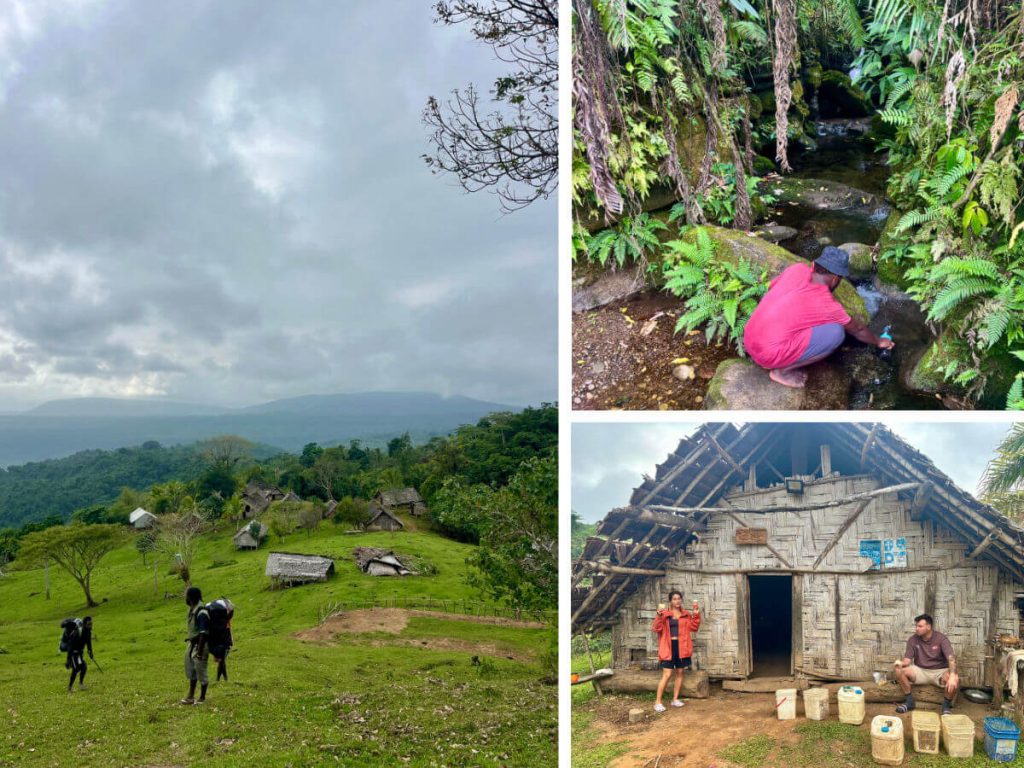
Good to know about Mataibof:
- Power: The villages don’t have power, just a few solar lights after dark.
- Washing and drinking water: There’s a stream running next to the village where you can refill your water bottles, and further down there’s a place to wash.
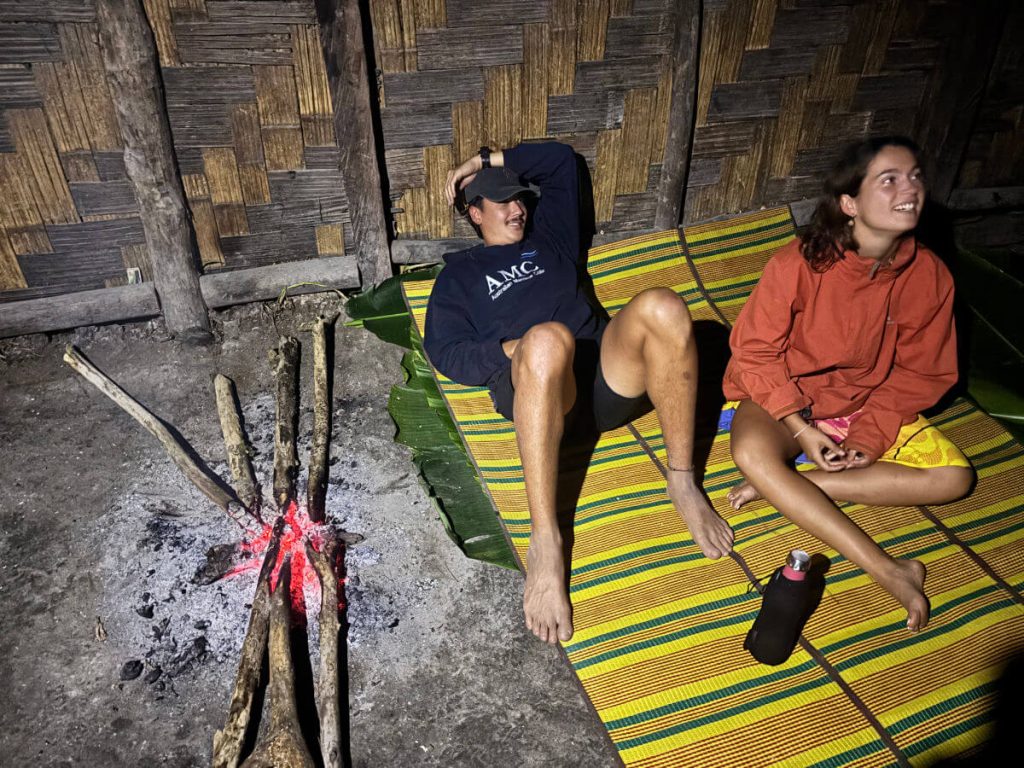
- Sleeping: You’ll sleep in the nakamal, so villagers will probably be coming in and out through the night. Your guide sleeps there too, for a bit of added protection from curious villagers. If you’re a light sleeper, earplugs and a sleeping mask will make your stay much more enjoyable.
- Phone signal: Mataibof has pretty good phone signal if you need to check in with loved ones.
Day 2: Mataibof Village to Voele
In the morning there’s hot water for tea and coffee (bring your own) and you might get taro and fresh fruit for breakfast. There’s a stream running next to Mataibof where you can refill your water bottles, and further down there’s a place to wash. After breakfast you pack up and head off around 8am.
The trail goes uphill through the village to the ridge, then down into the next valley. Day 2 has a lot of downhill and it’s a bit more technical than Day 1. Instead of open fields you’re picking your way through thick jungle, which gets very slippery and muddy if there’s been rain.
Just over halfway there’s another cave. Depending on the rainfall it might be dry, in which case you can climb inside and go see the bats.
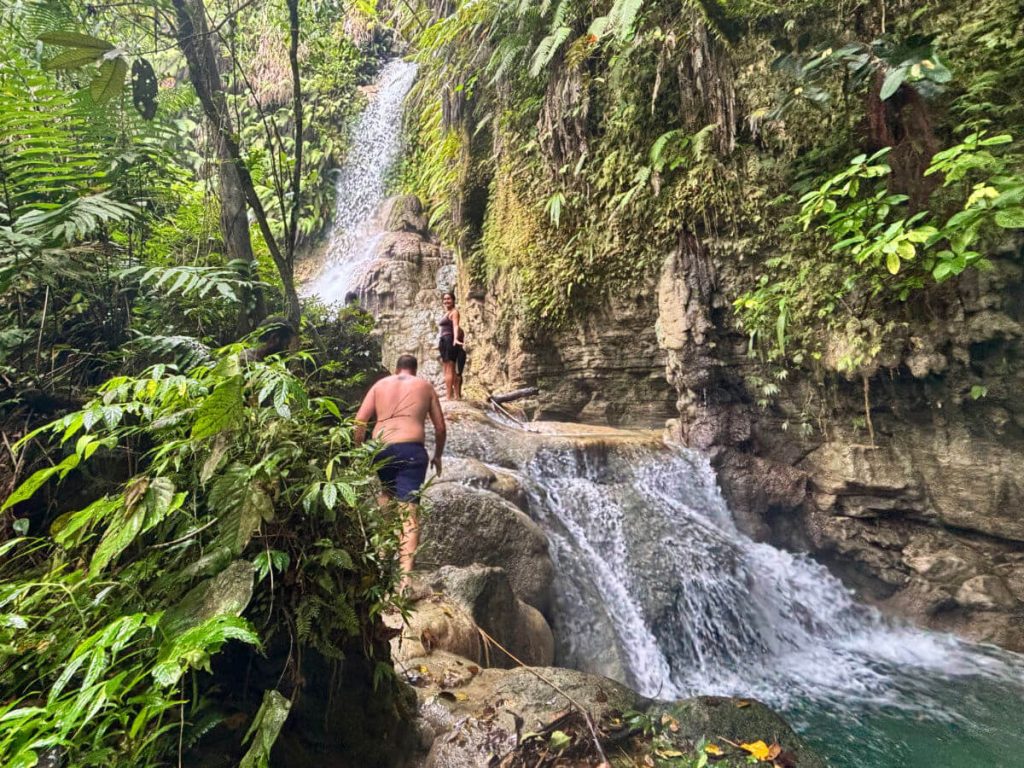
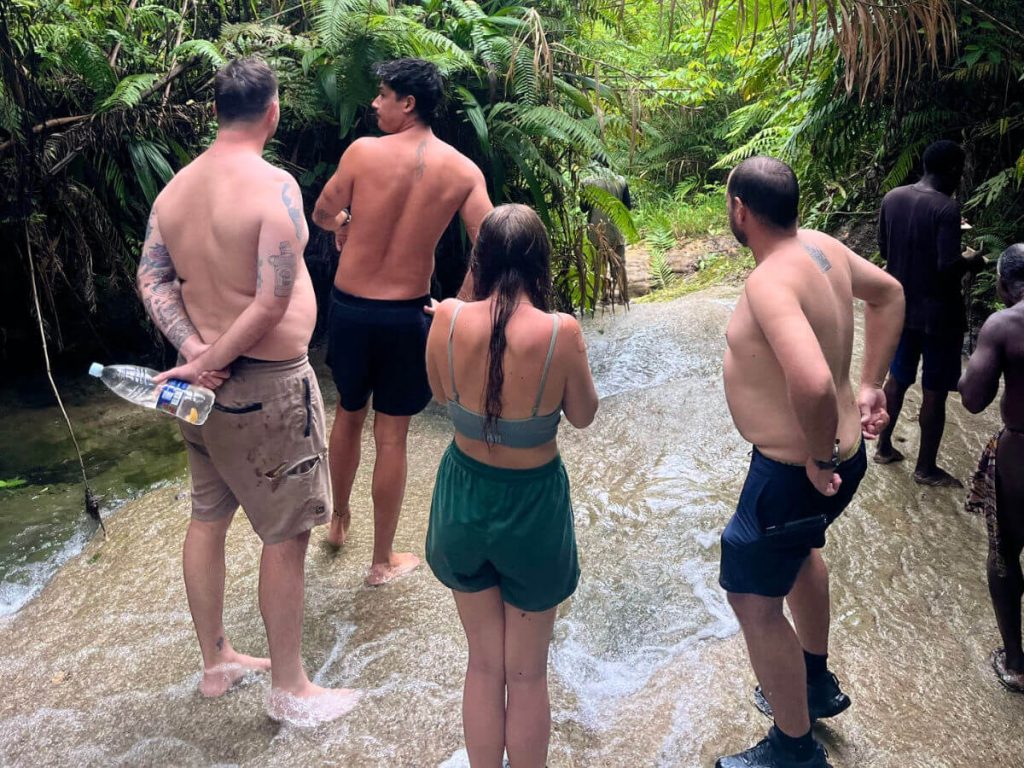
Not long after that you veer off the track to the waterfall, and this is absolutely one of the highlights of the trip. Leave your bags at the bottom of the waterfall or even back on the track, because the path up can be very swampy and slippery. Once you’re up there it’s a series of cascades and pools you can swim in and jump into. We had lunch under the waterfall, which was pretty magical.
From there it’s only about a 15 minute walk down to the next village Voele , where you can change into dry clothes and get unpacked. Again you’ll arrive around midday or early afternoon depending on your pace. Here you may see a traditional kastom dance, get involved with the kava ceremony or help with the cooking, then eat a traditional meal around the fire with the village.
Good to know about Voele :
- Sleeping: You’ll sleep in the nakamal or one of the other village huts if they’re not in use.
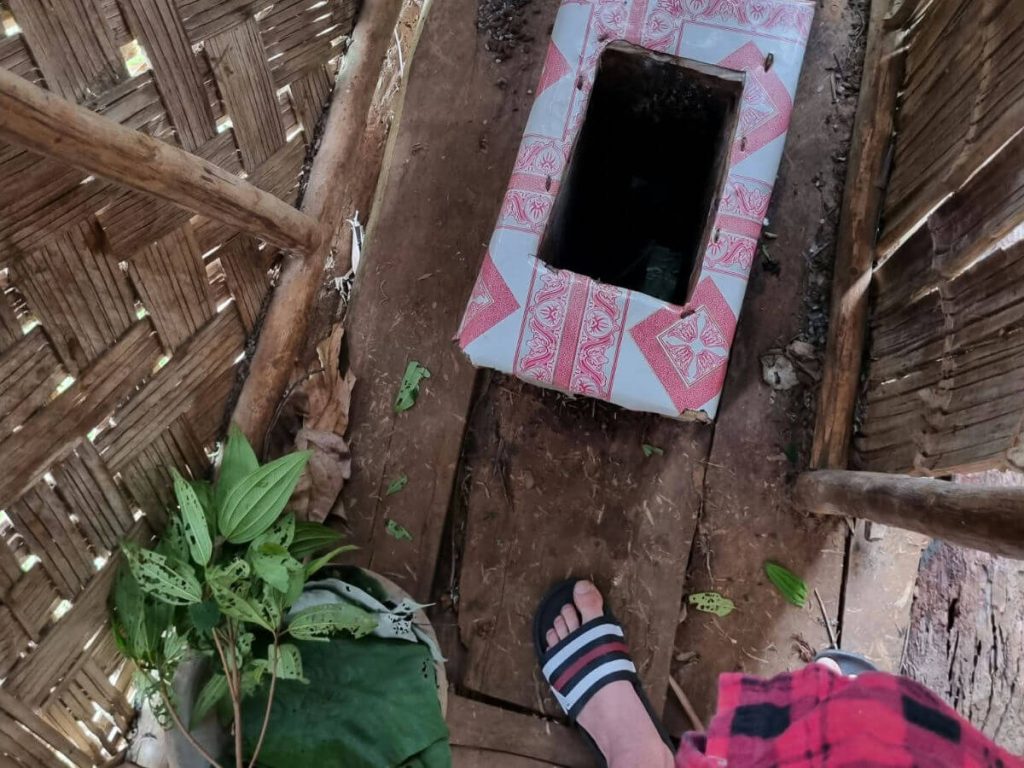
- Toilet: It has arguably the best view in the village, looking out over the valley. It’s right on the edge of a very sheer drop though, so be careful if you go after dark.
- Washing and drinking water: Water is redirected from the river using a large pipe, which you can use for drinking or a flannel wash.
- Phone signal: Not good here. There’s one spot where you might get some bars, but nothing reliable on Day 2.
Day 3: Exit through Jordan River Canyon to Ankoro
Again there’s hot water and some fruit or root vegetables for breakfast, then you pack up and head off around 8am down into the valley.
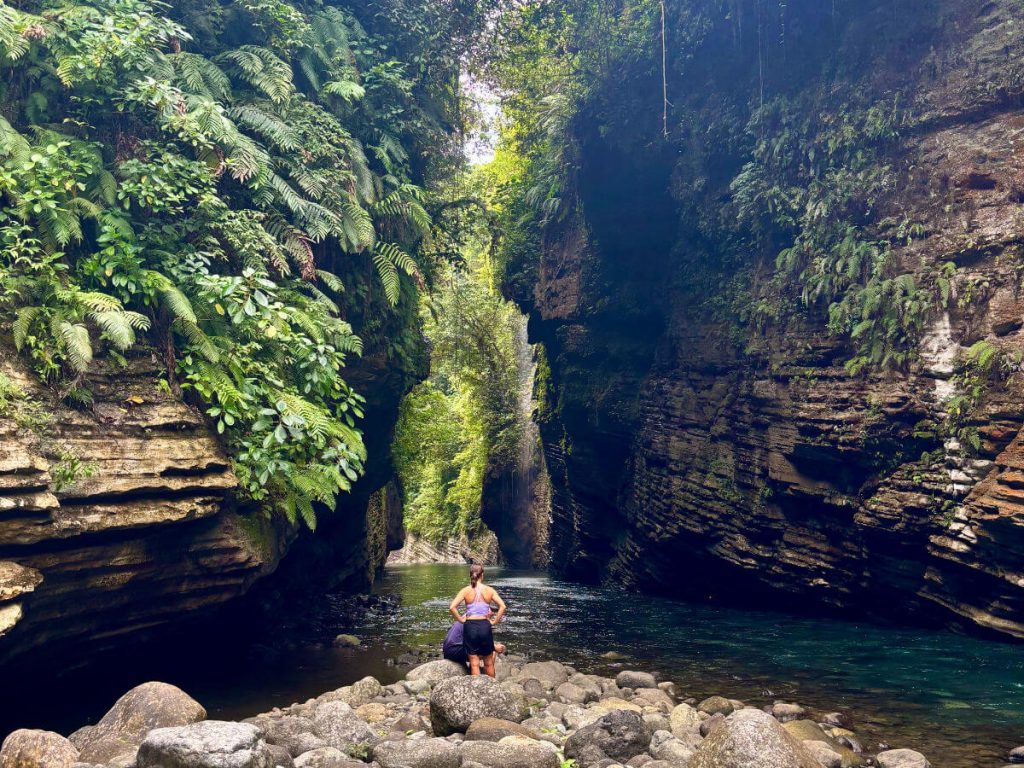
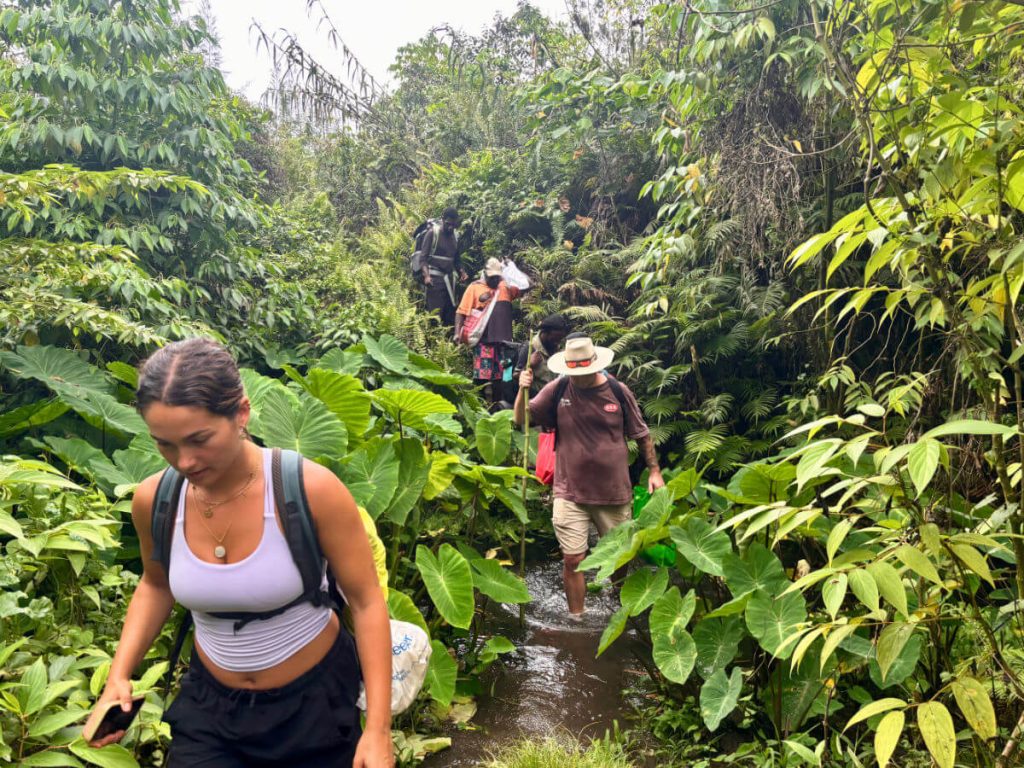
Not long after, you hit the Jordan River. It cuts through the rock and has carved a canyon with walls over 60 metres high, thanks to thousands of years of running water. You’ll cross back and forth over the river following the local paths, and you’ll probably run into other villagers coming up the river the other way, bringing supplies back to their villages.
Depending on how much rain there’s been, the crossings can be ankle deep or chest deep. The current can be strong in places and the rocks are slippery, so go slow and let the guides and porters help where you need it.
Around midday you’ll stop for lunch under Chijala waterfall, where the water cascades down into emerald green pools. Then it’s the final stretch out of the Jordan River, where you say goodbye to your guides and porters. Your transport is waiting around 1 to 2pm for the 3 hour drive back to town, where you can relax and process the phenomenal people and natural beauty of Big Bay Bush.
What to Pack for the Big Bay Bush Hike
Bags
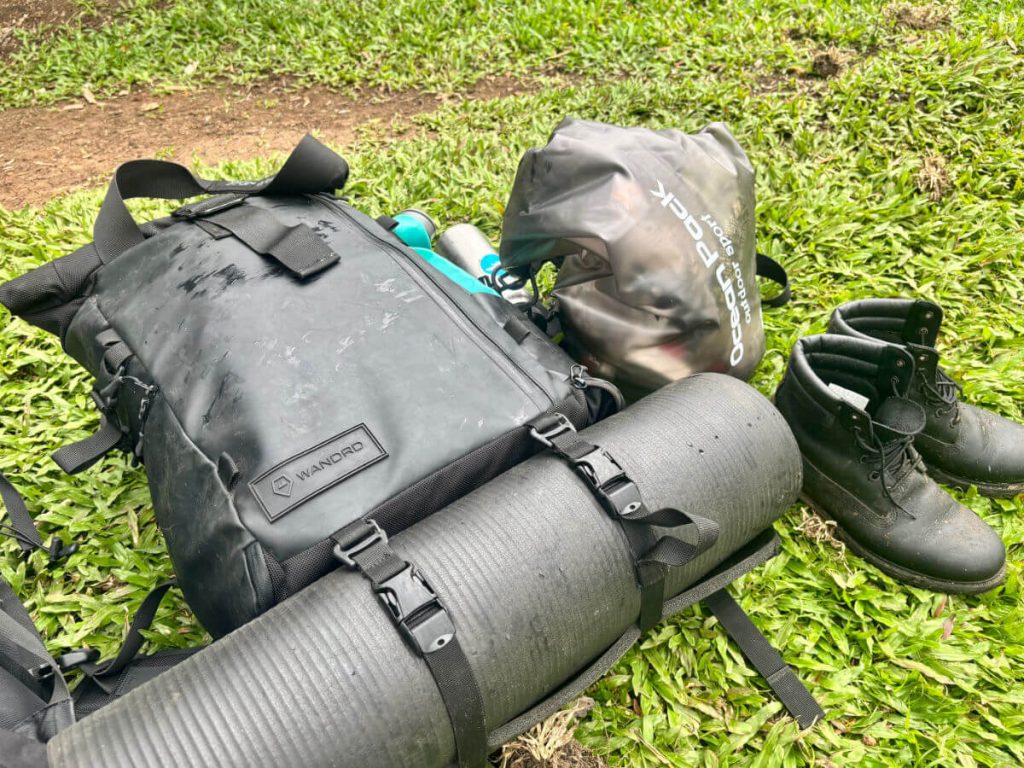
- Daypack (dry bag recommended): Keep your phone, camera, torch, snacks and water within easy reach. Days 2 and 3 involve waterfalls and river crossings, and a dry bag is far more useful than a rain cover, which won’t survive full submersion.
- Main backpack (15 kg max): Carried by the porters. Keep it light.
- Plastic bags: One or two large ones for wet shoes and clothes, and for carrying out all your rubbish.
Clothing and Footwear
- Trekking clothes: One quick-drying set for the day, which you can hang up overnight.
- Dry village clothes: Warm, dry clothes for the evenings. In dry season, bring long pants and a hoodie, as it gets colder at higher altitude.
- Rain jacket or poncho: For rain and drizzle, and wind chill in the high villages.
- Sun hat: Even under the rainforest canopy you can burn. A bucket or wide-brimmed hat covers your ears and neck.
- Walking shoes: Trainers or good walking boots. The trail is slippery and muddy with plenty of ups and downs.
- Sandals, thongs or Crocs: For dry, comfortable evenings, and as water shoes if you’d rather not soak your trainers.
- Small scrub brush: Optional, for muddy shoes (they’ll likely get muddy again).
Clothing advice for women trekking in Big Bay Bush:
Although traditional kastom dress is minimal, women are advised to dress modestly. This isn’t out of fear of causing offence, but to avoid unwanted attention from local men, to whom lighter skin can seem exotic. Avoid leggings, bike shorts and other tight clothing, or carry a sarong to layer over the top. When swimming, stay partially clothed rather than stripping down to underwear or a swimsuit. Otherwise, be prepared for staring or flirting.
Sleep System
You’ll sleep in village buildings, so no tent is needed.
- Sleeping mat: Highly recommended, as nakamal floors are hard and uneven. You can hire one from Wrecks to Rainforest for 500 vatu per day, or buy a small foam mattress in town and leave it as a gift to the village.
- Sleeping bag or blanket: Nights are cooler, so a light sleeping bag is plenty. You can also hire one for 500 vatu per day.
- Air pillow: A small luxury that prevents a sore neck. A rolled-up jumper or an inflated dry bag also works.
- Mosquito net: Mostly unnecessary in dry season but a good idea in wet season.
- Earplugs and eye mask: Nakamals are communal, and chickens and other animals are noisy.
Food, Drink and Snacks
Meals are provided by Wrecks to Rainforest and the villages, but they’re fairly basic. Expect crackers for breakfast, bread or crackers with tuna, corned beef, mayo, cucumber and fresh fruit for lunch, and taro, island cabbage, lap lap and stewed meat for dinner.
- Water: At least 2 litres each, split between your daypack and main bag. You can refill at villages and a few streams along the way.
- Snacks: Bring muesli bars, nuts, biscuits or lollies, plus extras to share with guides, porters and village kids. A big bag of candy goes a long way (ask for the wrappers back so they don’t become litter).
- Coffee, tea, powdered milk and sugar: Not part of village life, so not included. Villages provide hot water in the morning.
- Condiments: A small bottle of hot sauce adds flavour if you have space.
- Tin or plastic cup: For kava in the evening and tea or coffee in the morning.
- Fork and spoon: Optional. Most people eat with their hands (none of us used ours).
Toiletries and Health
- Toiletries: A small bar of soap for washing in village streams, plus deodorant, sunscreen, toothpaste, toothbrush, hairbrush and bug spray. Choose eco-friendly products where you can.
- *Tamanu oil: Many locals use it instead of bug spray, and you can buy it at supermarkets and the mamas’ markets on Espiritu Santo.
- Toilet paper or wet wipes: Village toilets are long drops, and locals use leaves. Pack out all rubbish.
- Small medical kit: Plasters and blister plasters, painkillers, stomach medication, tweezers, scissors, antiseptic, bandages and a foil blanket.
Electrical & Tech
- Phone: Keep it in a waterproof case or your dry daypack. You’ll have good signal at Mataibof on Day 1, and very limited signal after that.
- Battery bank: There are no charging points, so bring enough power for 3 days.
- Camera and spares: Small, waterproof action cameras like the Insta360 or DJI are ideal for waterfalls and river crossings. Bring extra batteries and SD cards.
- Torch or head torch (with spare batteries): Essential for night-time toilet trips and handy in the caves.
- GPS (optional): Nice for tracking your route.
- Multitool or knife: For cutting fruit, rope and other small jobs.
- Paracord or rope: For hanging wet clothes or a mosquito net.
- Entertainment: A Kindle or a pack of cards for quiet evenings, which are great for playing with villagers and fellow trekkers.
Gifts for the Village
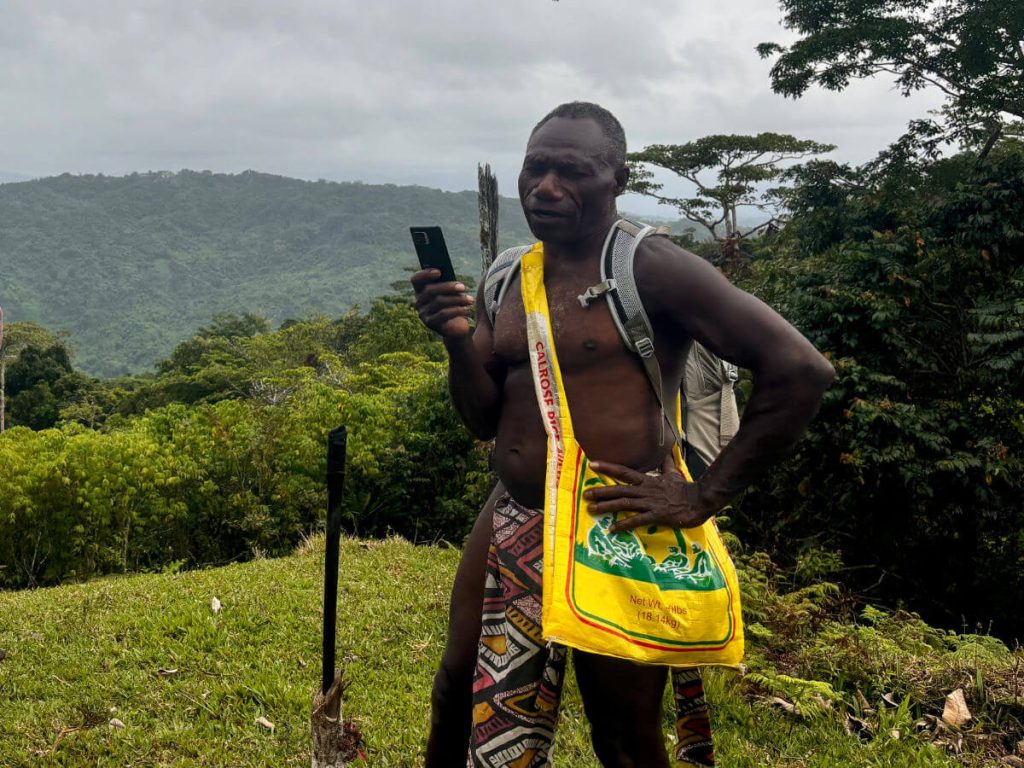
Gifts aren’t mandatory but are appreciated. Choose practical items such as bush knives, hair ties or solar lights.
When to Book Big Bay Bush: Dry Season vs Wet Season
Dry season (roughly May to October) is generally the more comfortable time to go. The trails are less muddy, the river crossings are lower and mosquitoes aren’t really an issue. We did the hike in September and didn’t see a single one. In wet season expect higher rivers, more mud and a need for a mosquito net. It’s more likely to rain up in the mountains whatever the season, and it gets cooler at higher altitude, so bring warm layers.
How to Book Your Big Bay Bush Hike
It might be tempting to try this one on your own, but it’s important to remember that many areas of Vanuatu, although wild, are still owned by different tribes and chiefs. Here’s why a local contact matters:
- Land ownership: To stay in the villages and cross their land, you need the right relationships. Local companies like Wrecks to Rainforest have developed these relationships and negotiated these routes over many years.
- Safety: There aren’t many maps, it’s easy to get lost in the bush, and Vanuatu doesn’t have a reliable search and rescue team.
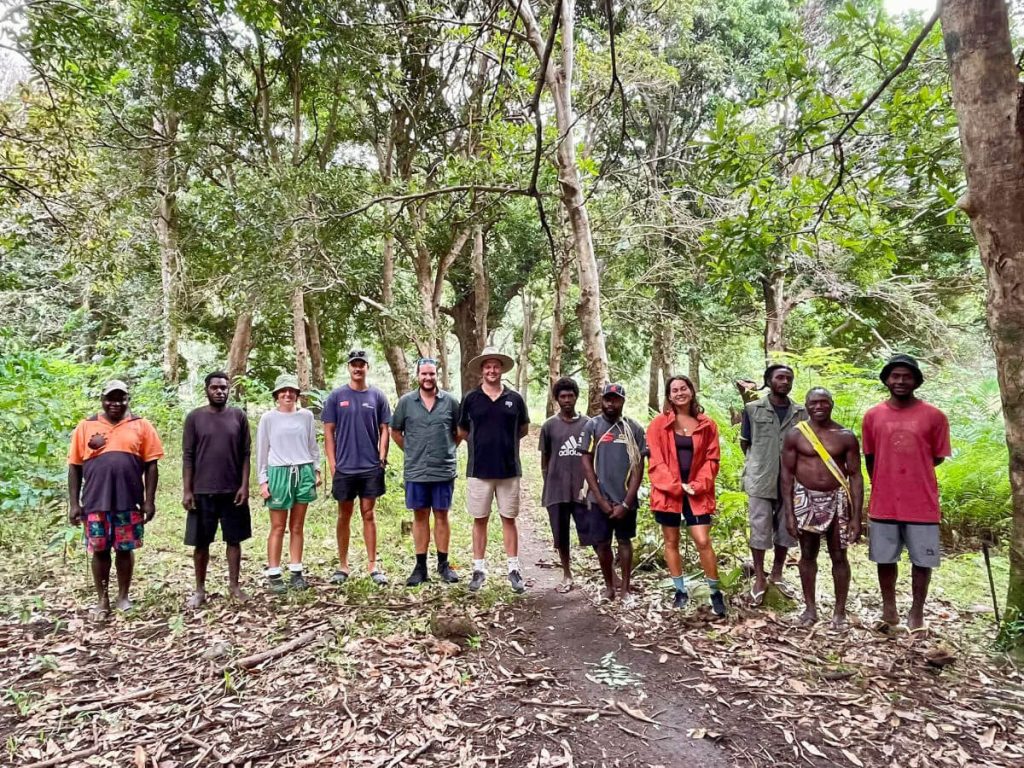
The Big Bay Bush hike is one of the best multi-day adventures in Vanuatu. To book your trek, contact Mayumi Green at Wrecks to Rainforest. They are the only company that arranges this on Espiritu Santo.
Short on Time? Other Treks on Espiritu Santo
Short on time? Then I’d suggest the Millennium Cave day trek instead. But if you can make the time, the Big Bay Bush hike is like Millennium Cave on steroids. Everything is bigger and better.
Read more in our Blog Post: Millennium Cave, A mind-blowing adventure unique to Espiritu Santo.
If you’re fit enough you can squeeze it into 2 days, but 3 days is a much nicer pace and lets you truly take in the beauty and the culture.
Big Bay Bush Hike FAQs
How long is the Big Bay Bush hike?
How long is the Big Bay Bush hike? It’s a 3 day, 2 night trek. Very fit hikers can do it in 2 days, but 3 days gives you time to enjoy the villages and the swimming spots.
How hard is the Big Bay Bush hike? It’s moderately challenging. Day 1 is mostly uphill, Day 2 is slippery, muddy jungle with a lot of downhill, and Day 3 has river crossings that can get deep. You’ll want a decent level of fitness and some sure-footedness, but the porters carry your main pack, which helps a lot. It’s actually easier than the Millennium Cave trek, as there’s less canyoning, and the more challenging parts, like climbing into the caves, are optional.
Where is the Big Bay Bush hike? In the north-west of Espiritu Santo, Vanuatu, about a 3 hour drive from Luganville. The trek starts at Ankoro on the Jordan River.
Can I do the hike without a guide? No. The land is owned by local tribes and chiefs, there aren’t many maps and there’s no reliable search and rescue. Book with Mayumi Green at Wrecks to Rainforest, who has established routes and relationships with the villages.
Where do you sleep on the hike? In traditional village nakamals (community halls), so you don’t need a tent. Bring a sleeping mat and sleeping bag, or hire them from Wrecks to Rainforest.
Is there phone signal or electricity? There’s decent phone signal at Mataibof on Day 1 and very limited signal after that. There’s no power for charging, so bring a battery bank.
Is the Big Bay Bush hike better than Millennium Cave? Millennium Cave is a great day trek if you’re short on time. Big Bay Bush is bigger and better, with more waterfalls, a deeper look at village life and overnight stays in the villages.
What should women wear on the hike? Modest, loose fitting clothing. Avoid leggings and tight shorts, and carry a sarong. Stay partially clothed when swimming.