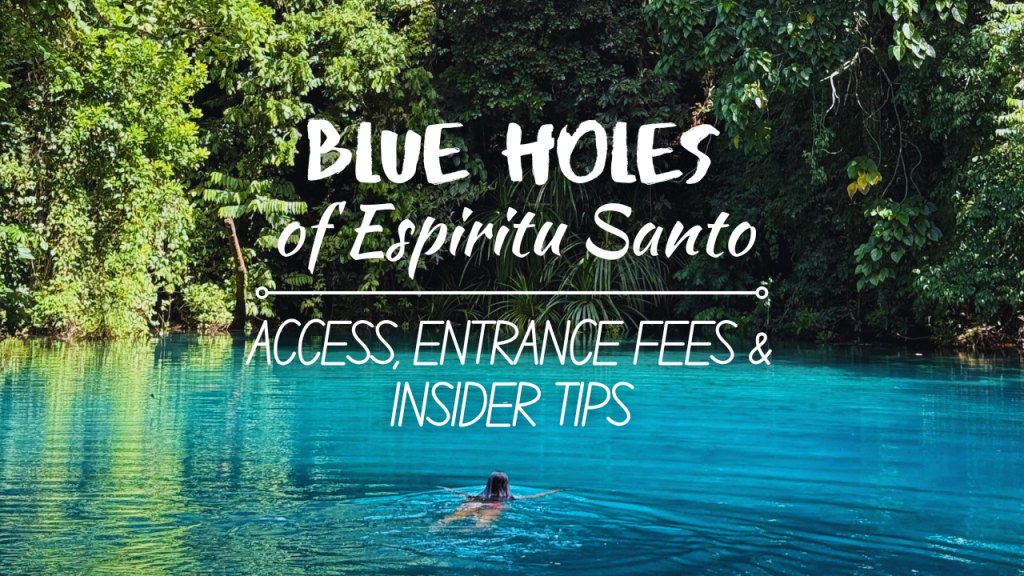
Vanuatu boasts more blue holes than almost anywhere else in the world, and Espiritu Santo has more blue holes than any other island in Vanuatu. So it’s no surprise they’re a must-visit when coming to the island.
With their almost photoshopped blue colour, crystal-clear freshwater, and jungle settings that still feel largely untouched, Santo’s blue holes are something truly unique. Best of all, there are no dangerous marine predators to worry about, making them an easy and enjoyable freshwater experience for most visitors.
But with so many to choose from, it can be hard to know which are worth visiting, how to get there, and what the costs actually are.
So as residents of the island, here is our complete guide to the blue holes of Espiritu Santo.
How Were the Blue Holes in Espiritu Santo Formed?
Vanuatu is one of the most geologically active countries in the world thanks to its position beside a major tectonic plate boundary, where the Australian Plate slowly sinks beneath the Pacific Plate. This movement creates volcanoes, earthquakes, and gradually pushes parts of the land upward over time.
On Espiritu Santo, this uplift exposed bright white limestone that originally formed from ancient coral reefs thousands of years ago. As rainwater and freshwater flowed through the limestone, it slowly dissolved the rock in a process known as karstification, creating underground rivers, caves, springs, and eventually the blue holes.
The blue holes are where these freshwater systems rise to the surface, producing the incredibly clear water and vivid blue colours Santo is famous for.
Espiritu Santo is home to around 10–11 known blue holes. Some are open to the public, while others remain privately owned or difficult to access.
Public Blue Holes of Espiritu Santo
Riri Blue Hole
Often considered the most scenic and picturesque blue holes in Espiritu Santo, RiRi Blue Hole is famous for its peaceful jungle river setting and crystal clear river. It is especially well known for the traditional wooden dugout canoe experience, where locals paddle visitors upriver through the jungle — one of the most unique and memorable ways to reach a blue hole in Espiritu Santo.
Another way to experience the river is to get dropped at the blue hole just after high tide then snorkel, swim and float on the gentle current downstream where your driver can pick you up from the bridge. Takes about an hour.
How to Get to Riri Blue Hole
It takes approximately 30 minutes to reach Riri blue hole by car or taxi from Luganville, depending on road conditions. From the main road, the turn-off is on the left side marked by a sign post, and from there it is accessed via a short dirt road into the jungle.
Many visitors choose to hire a local to take them in a traditional wooden dugout canoe. Canoe operators are usually found near the bridge crossing the RiRi River, and the journey through the jungle is part of the experience.
Cost of Riri Blue Hole
Blue hole entry: 1000 Vatu (adults) / 500 Vatu (children)
Traditional dugout canoe ride: approximately 1500 Vatu per person (subject to local operator)
Matevulu Blue Hole
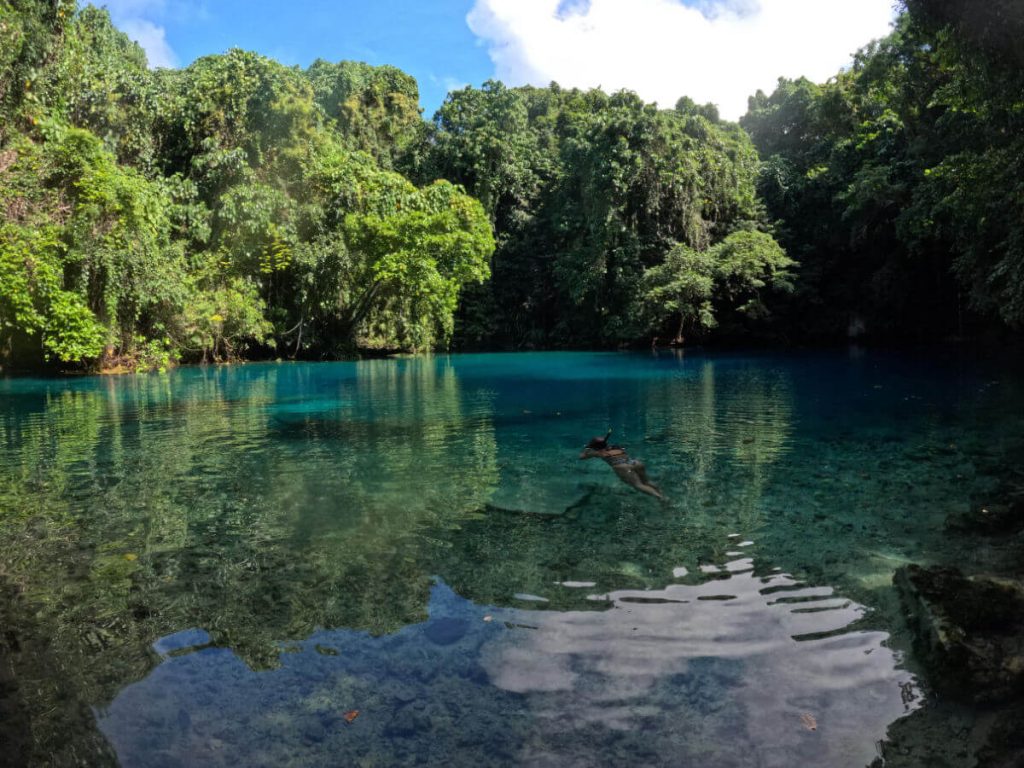
Matevulu Blue Hole is one of the largest and deepest blue holes in Espiritu Santo, reaching depths of around 18 metres. Set in dense jungle and connected to a slow-flowing river, it has a wide, open feel and a more adventurous atmosphere than many of the smaller springs on the island.
It’s a popular spot for swimming, jumping, and spending time in the water, with crystal-clear freshwater that stays cool year-round and excellent visibility in the deeper sections. What makes Matevulu especially fun is the variety of features on site, including multiple rope swings, platforms for jumping, a water slide, and a huge banyan tree providing natural shade over parts of the blue hole. There are concrete steps for access, but entry into the water can still be a bit trickier than at some other blue holes in Espiritu Santo depending on conditions.
How to Get to Matevulu Blue Hole
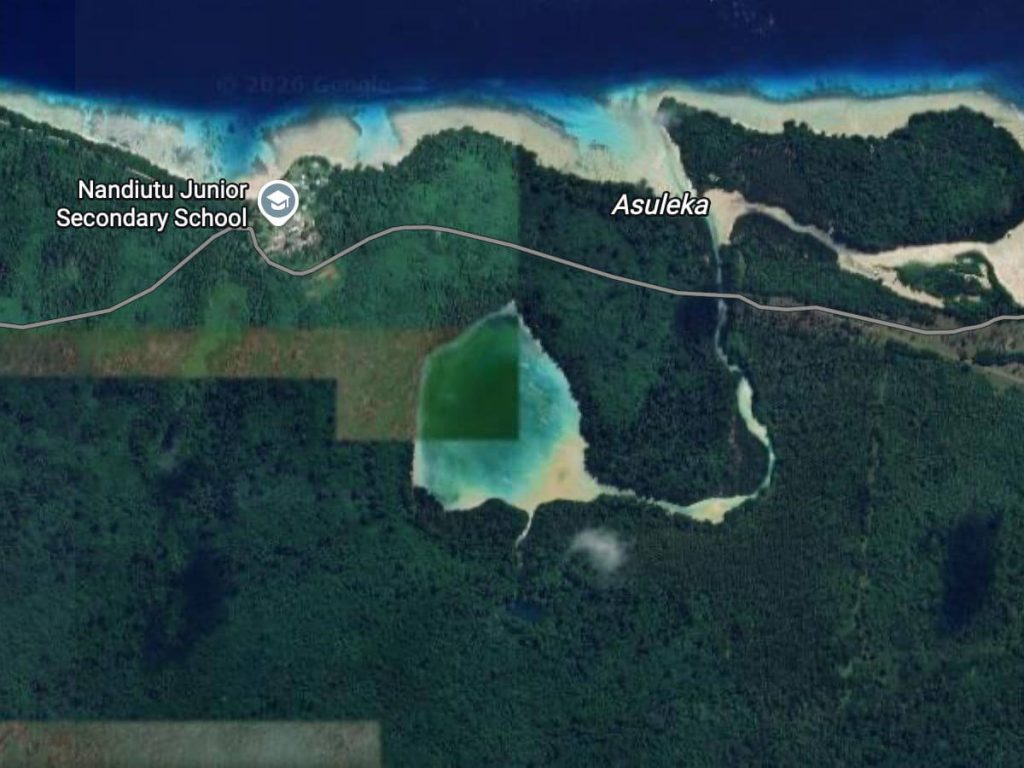
Matevulu is located slightly further north than RiRi Blue Hole along the east coast road. It takes approximately 30–40 minutes to reach by car or taxi from Luganville, depending on road conditions. From the main road, the turn-off is on the left, marked by a wooden sign post, and from there it is accessed via a short dirt road into the jungle.
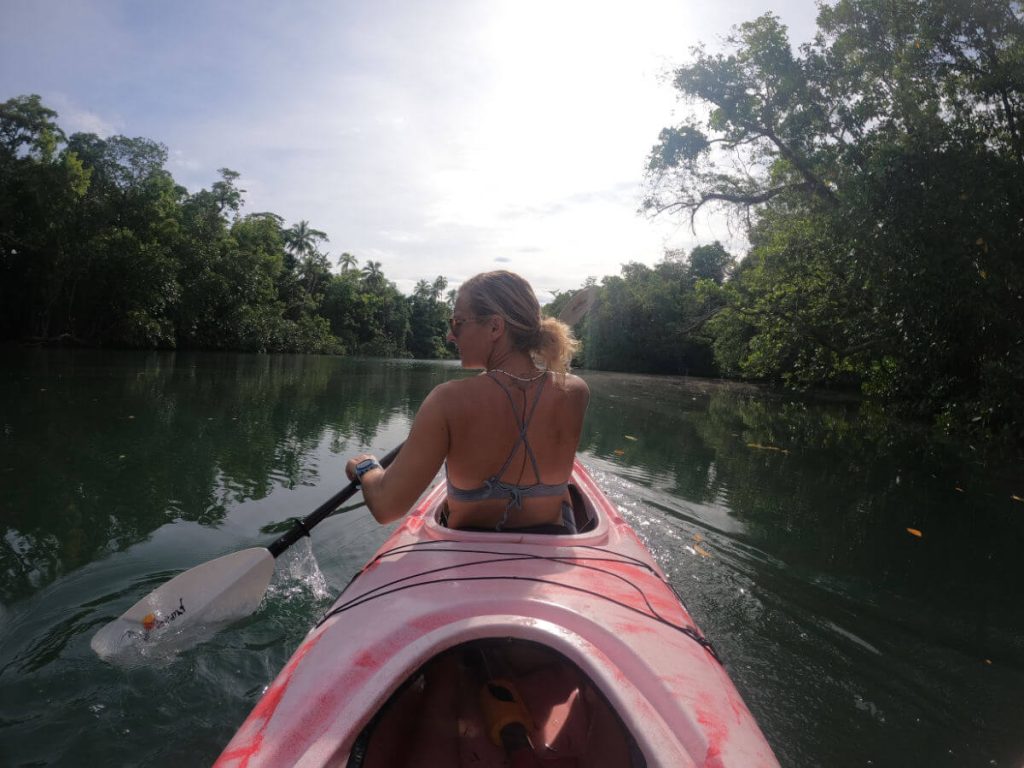
Alternatively, you can hire a kayak from Turtle Bay Lodge (free if your staying at Turtle Bay Beach House) and paddle to Matevulu Blue Hole. From Turtle Bay Lagoon, head south along the right-hand side until you reach the first river mouth. Follow the river all the way inland to reach the blue hole. The paddle takes around one hour each way, not including time spent at the blue hole itself. It’s a really fun and unique way to experience the area and only requires basic kayak skills and physical fitness.
Cost of Matevulu Blue Hole
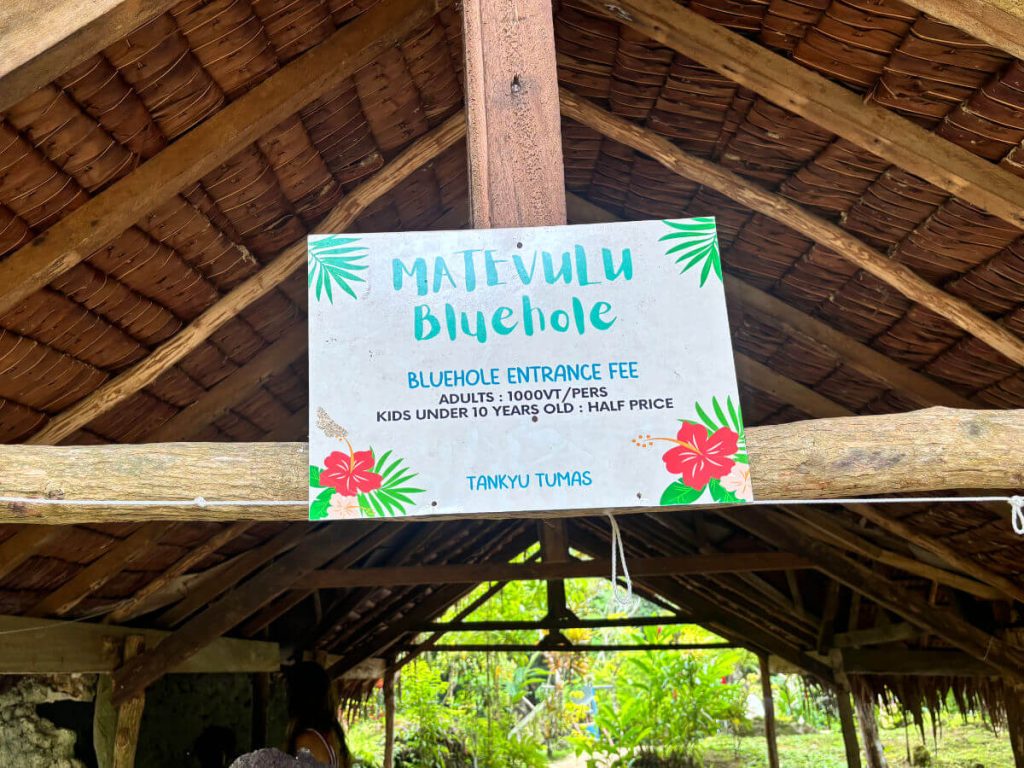
Entry fee: typically around 1000 Vatu per person / 500 Vatu for children under 12
Kayak hire: single kayak 1500 Vatu / double kayak 2500 Vatu
Nanda &/ Jackie’s Blue Hole
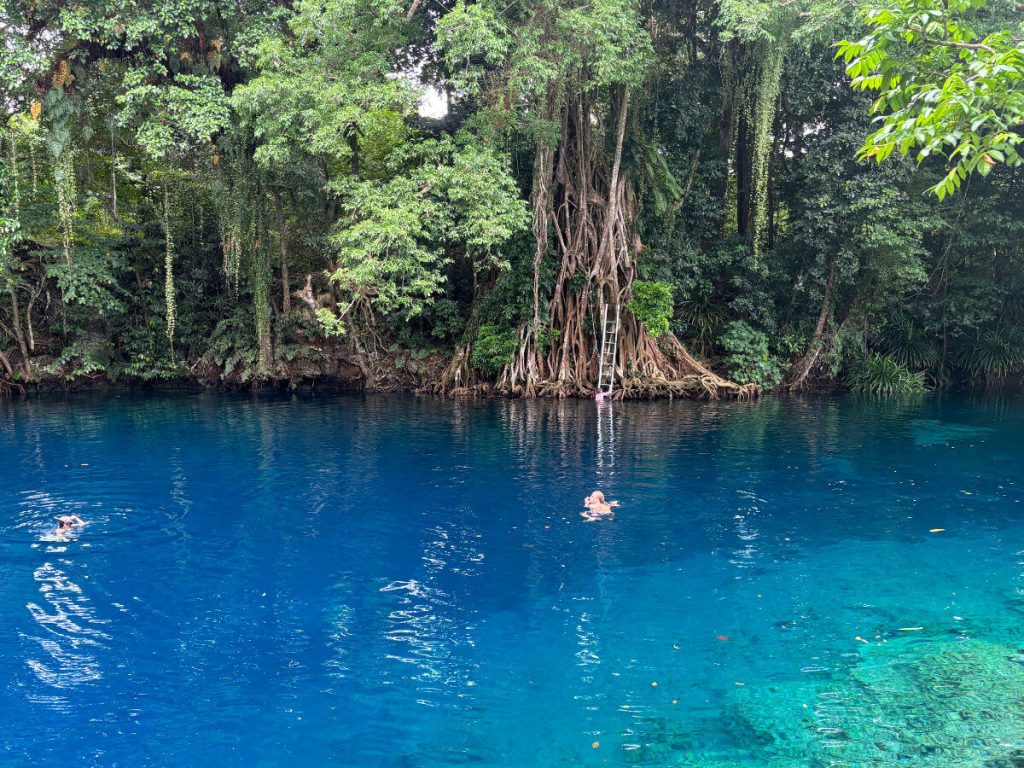
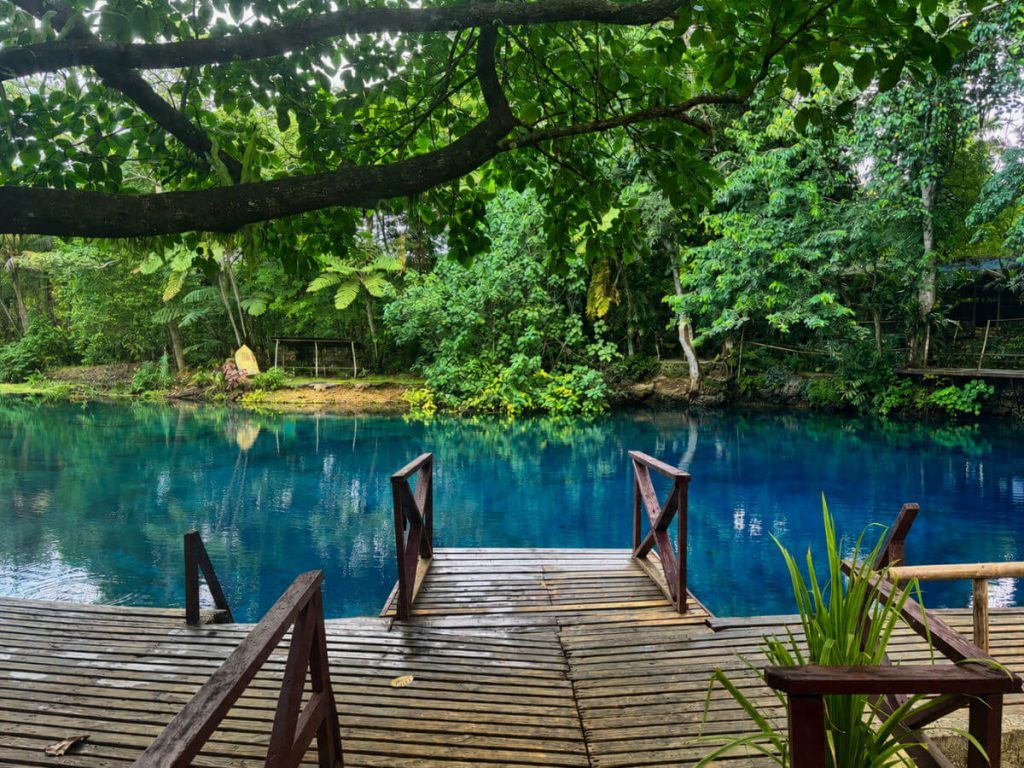
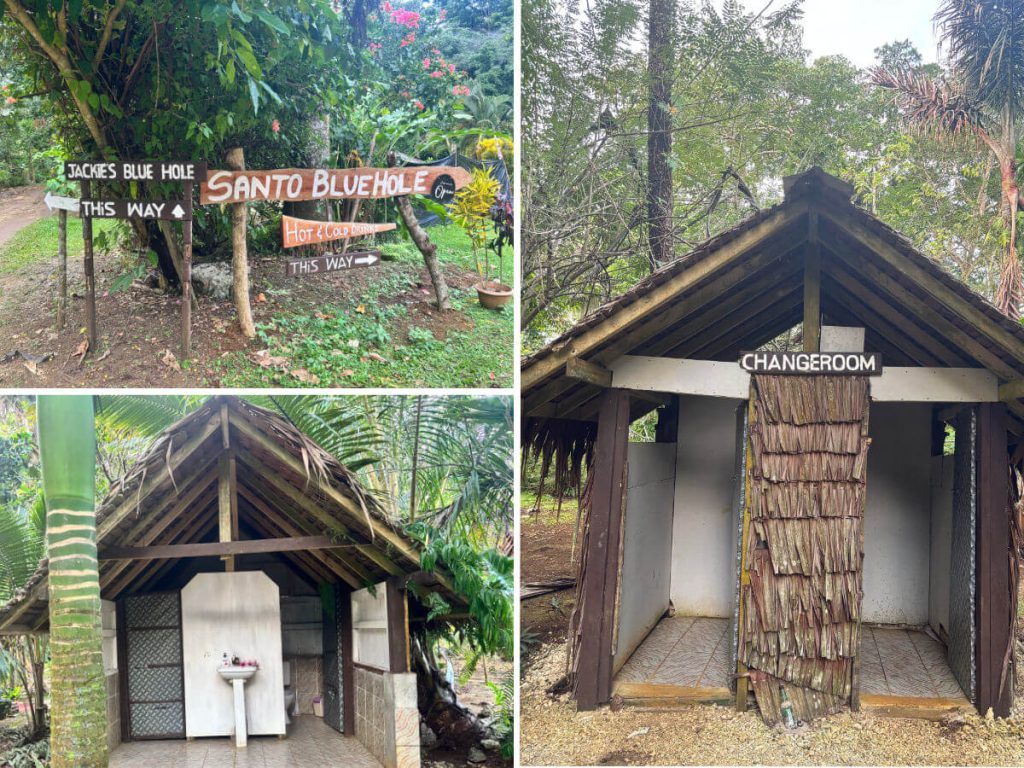
Nanda & Jackie’s Blue Hole are two of the more peaceful and well-kept blue holes in Espiritu Santo. With a wooden deck for easy access into the water and a small café for drinks and snacks.
Technically they are two separate blue holes located next to each other and connected by a small river. Both are clearly marked, but each section is owned and managed separately, so if you move from one into the other via the river you may be asked to pay an additional entrance fee.
How to Get to Nanda and Jackie’s Blue Hole
Nanda & Jackie’s Blue Hole is located on the east coast of Espiritu Santo, approximately a 45–50 minute drive from Luganville. It is on the right-hand side of the road, past Turtle Bay, and is clearly signposted from the main road before a short dirt road into the jungle.
Cost of Nanda or Jackie’s Blue Hole
Entry fee: typically around 1000 Vatu per person (may vary by landowner/operator)
Private Blue Holes of Espiritu Santo
Suranda Blue Hole
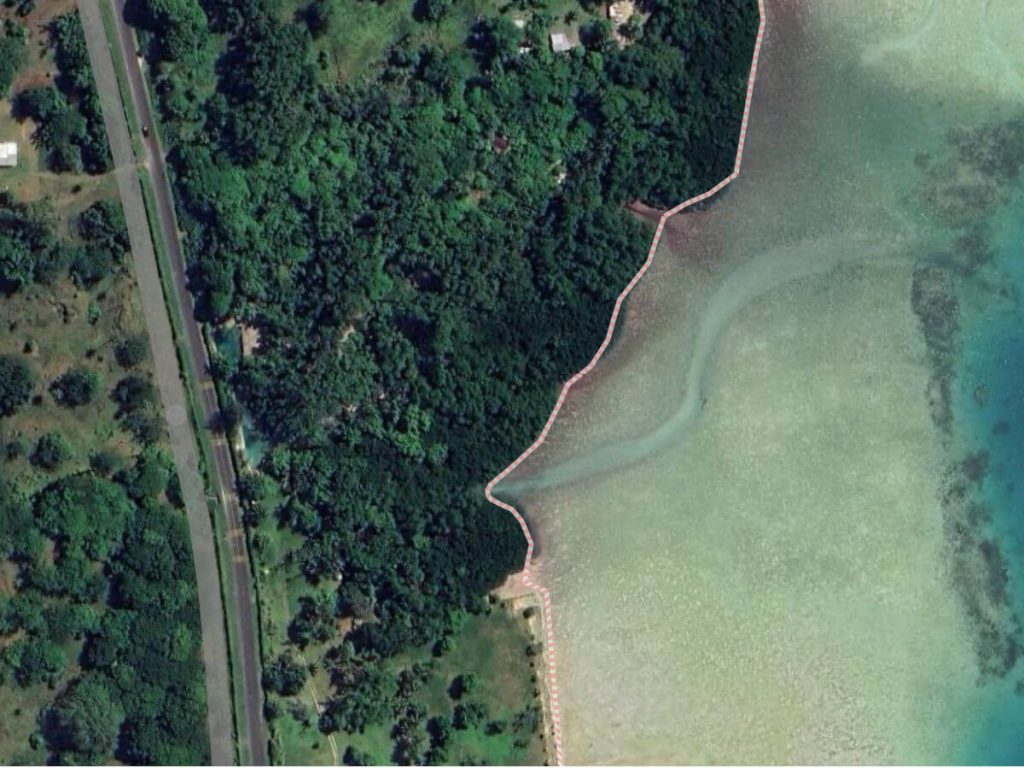
Located in the Suranda area of the east coast, Suranda Blue Hole is on private land and is normally locked, but it can sometimes be hired for exclusive use for the day.
Unlike many of Santo’s more natural blue holes, Suranda has a more structured feel and is partly concreted, giving it a swimming-pool-like setup. It also has a shaded area for relaxing, and a river that flows out towards the ocean, which is well worth exploring with a snorkel or swim.
How to Get to Suranda Blue Hole
Suranda Blue Hole is located about 15 minutes from Luganville on the east coast road. It is on the right-hand side of the road, and if you drive slowly you can spot it through the fence just before the bridge.
Cost of Suranda Blue Hole
Private hire: approximately 5000 Vatu (subject to arrangement with the landowner, often known locally as Awa, who can usually be contacted via the Pacific Petrol Station in Luganville)
Cirad Blue Hole
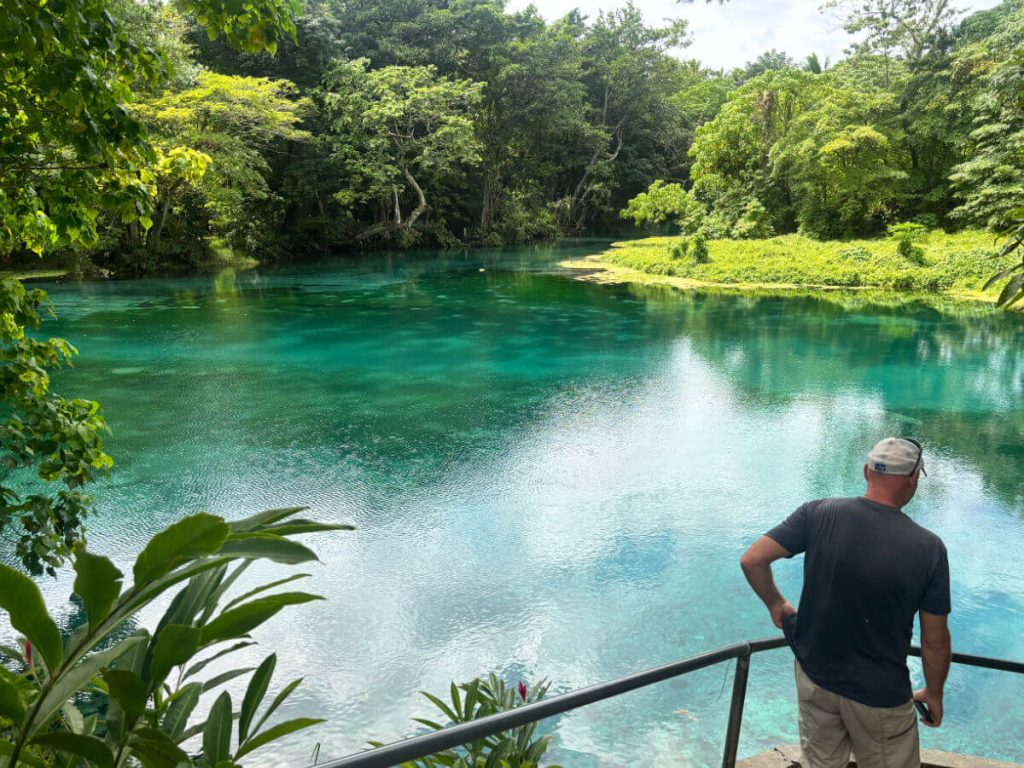
The first river you reach heading north along the east coast road connects to Cirad Blue Hole. It sits within the land of VARTEC (Vanuatu Agricultural Research and Technical Centre) and is not a formal tourist site, although access may be possible by seeking permission from the landowner or VARTEC management.
Compared to some of the larger blue holes in Espiritu Santo, Cirad is smaller and shallower, but still very scenic with clear freshwater and a peaceful river setting. Many locals also swim in the adjoining river near the road bridge.
How to Get to Cirad Blue Hole
Cirad Blue Hole is about a 15-minute drive from Luganville. Turn left into VARTEC (clearly marked with large lettering on a white wall), then follow the track for approximately 500 metres to the main office. The blue hole is located just to the right of the office area.
Cost of Cirad Blue Hole
Access is by permission only, and any contribution or fee should be confirmed directly with VARTEC management on site. Enquiries can be made at the VARTEC office.
Hala Blue Hole
Hala Blue Hole—often referred to as the Secret Blue Hole—is one of the more hidden freshwater spots on northern Espiritu Santo. It feels completely wild and undeveloped, with no infrastructure at all, just a natural lagoon set in the jungle. What makes it especially unique is its direct connection to the ocean, something rarely seen in Santo’s blue holes.
How to Get to Hala Blue Hole
Hala Blue Hole is located about 1.4 km after the turn-off to Champagne Beach along the east coast road. There is no sign—just a small hut and seating area on the right-hand side of the road. The best indicator is a “steep descent” road sign, which marks the area and helps you know where to turn off. From there, you can park the car on the side of the road and follow a small jungle path down to the blue hole.
Cost of Hala Blue Hole
There are currently no official entrance fees due to an ongoing land ownership dispute, but some locals may still attempt to request a payment on site. Because of the lack of formal management, items have been known to go missing in the area, so it’s important to be aware of your belongings and always lock valuables inside your vehicle while swimming.
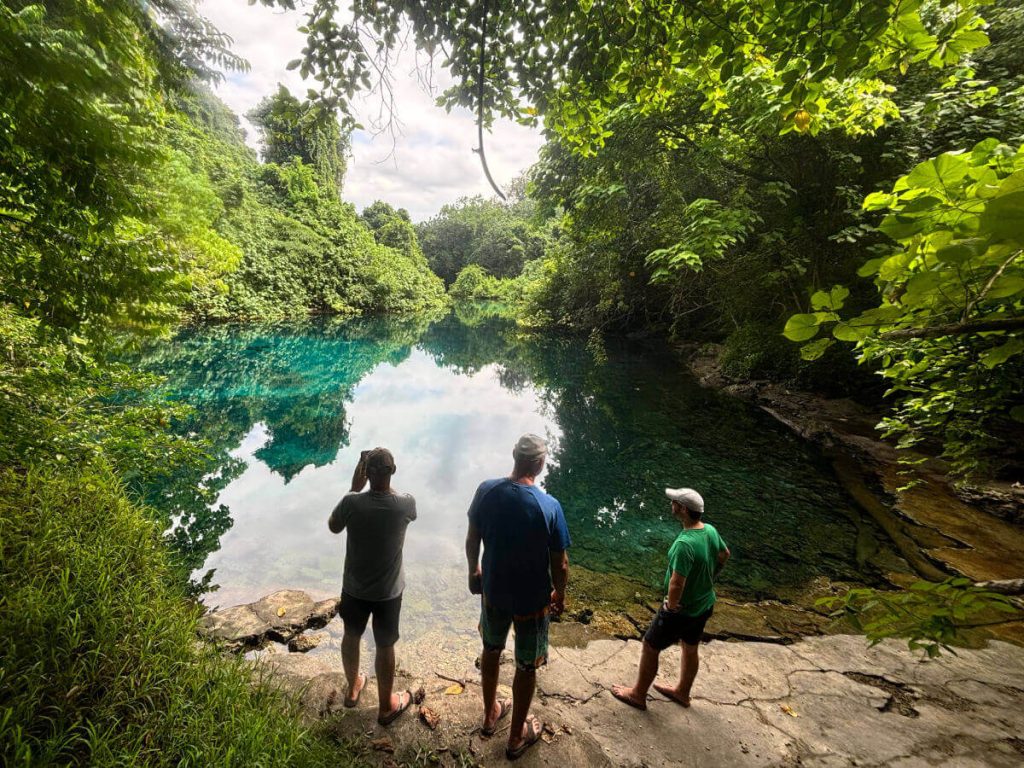
Vatvateur & Vatvatel Blue Holes
More “secret” blue holes can be found just past the village of Port Olry in the far North of Espiritu Santo you can find two more “secret” blue holes Vatvateur and Vatvatel. These are very shallow and less developed than other blue holes on Espiritu Santo, but still offer a quiet and natural freshwater setting.
How to Get to Vatvateur & Vatvatel Blue Holes
Turn left at the T-intersection just past Port Olry village and follow the dirt road for approximately 1.8 km. The road is rough and generally only suitable for 4WD vehicles. The blue holes are also accessible by kayak from Port Olry via the river system.
Cost of Vatvateur & Vatvatel Blue Holes
These blue holes are on private land, so permission from the local landowner is required before swimming. Access arrangements and any fees should be confirmed locally on arrival.
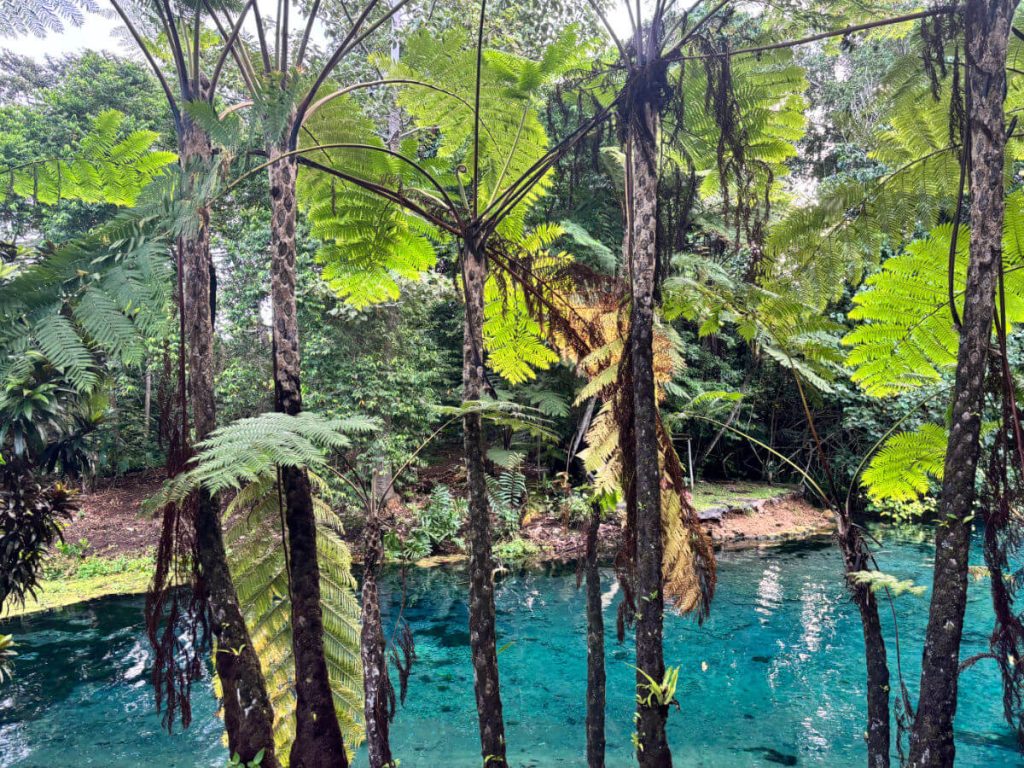
Malo Island Blue Hole
Malo Island Blue Hole is a large, natural blue hole located on the north-facing coastline of Malo Island, directly opposite Aore Island and Ratua Island. It is one of the most untouched blue holes in the region, with cool, refreshing freshwater and a deeper central pool surrounded by lush tropical vegetation.
One of its most beautiful features is the crystal-clear river flowing out from the blue hole into a shallow turquoise lagoon, framed by small islets and dense greenery. The contrast between deep freshwater and bright coastal lagoon makes this one of the most scenic and natural blue hole environments in Santo.
Getting to Malo Island Blue Hole
Access is via boat to Malo Island, followed by local transport across the island, typically with a 4WD driven by a local. Alternatively, guests staying at Ratua Island Resort can arrange guided kayak trips up the river directly to the blue hole.
Cost of Malo Island Blue Hole
There is no fixed entrance fee, but access and transport costs depend on local arrangements, boat transfers, or resort-organised trips.
Must Brings to the Blue Holes of Espiritu Santo
Cash
All blue holes are run by local landowners, so there are no card machines and rarely any change. Most sites (like Matevulu and RiRi) have a single landowner and one entrance fee, but others (like Nanda/Jackie’s) are split between different landowners for different sections, so you need to be mindful to avoid paying twice.
Many of the landowners will accept AUD but be prepared to pay a slightly higher fee.
Insect Repellant
The blue holes are surrounded by dense jungle and can be a hotspot for mosquitoes, especially in shaded areas.
Swimming Costume & Towel
Unless you’re just there for the scenery, you’ll want to swim. The water comes straight from underground springs, so it’s noticeably colder than the sea and very refreshing.
Reef Shoes
While Nanda has easy deck access, many other blue holes can be slippery or uneven underfoot. Matevulu in particular has small sharp freshwater snails that you wouldn’t want to step on.
Mask & Snorkel
There’s not a huge amount of marine life, but the water clarity is exceptional, and snorkelling lets you fully appreciate the underwater scenery. These can usually be rented from resorts or purchased in Luganville.
Lunch & Drinks
Facilities are limited at most sites, so it’s worth bringing a picnic if you plan to spend the day. Alternatively, Turtle Bay Lodge sits conveniently between Nanda and Matevulu and is a good option for food and drinks. Or make a day of it and grab lunch at Champagne Beach or Port Orly.
Final Words of Advice
Although each of Espiritu Santo’s blue holes is spectacular, once you’ve seen one, many of the others can feel quite similar. Because of this — and because the entrance fees can quickly add up — we usually recommend choosing one or two to visit rather than trying to see them all.
You’ll also probably only want to spend an hour or two at each location. While the natural beauty is incredible, once you’re out of the water the jungle environment and limited facilities can make them less comfortable places to relax for long periods.
If possible, avoid visiting on cruise ship days, as the more popular blue holes can become extremely crowded. Interestingly, many cruise visitors also confuse Santo’s blue holes with the Blue Lagoon on Efate — although in our opinion, Santo’s blue holes are far better!
Our personal breakdown:
- RiRi Blue Hole – best if you want the traditional dugout canoe experience or a peaceful river float
- Matevulu Blue Hole – best for jumps, rope swings, water slides, and kayaking
- Nanda & Jackie’s Blue Hole – best for a relaxing and peaceful swim plus some basic creature comforts
Accommodation near The Blue Holes
These three public blue holes are all located in roughly the same area around Turtle Bay, making it a great base for exploring. You could stay nearby at places like Matevulu Lodge, Turtle Bay Beach House, or Turtle Bay Lodge, even if just for a few nights.
Alternatively, hire a car or local driver for the day and explore more of Santo’s east coast while you’re out there.
Transport to The Blue Holes
Although public buses do operate along the east coast road, they are generally travelling south in the mornings and back north in the evenings — the opposite direction most visitors need for blue hole trips. That said, it’s still possible with some planning. (See our Getting Around Santo guide for more information.)
Car Hire
Most visitors choose to hire a car for the day and drive the east coast themselves. The road is relatively straightforward and makes it easy to explore multiple blue holes, beaches, and villages at your own pace. You can read more in our Santo car hire guide.
Taxis & Tours
Another popular option is hiring a taxi or local driver for the day. Many drivers offer dedicated blue hole tours or full east coast road trips, which can be a good option if you don’t want to drive yourself.
Dinghy Access
If you are visiting Santo by yacht, it may also be possible to access some of the blue holes by dinghy — particularly Matevulu, RiRi, and Malo Island Blue Hole. Simply follow the rivers upstream from the ocean to reach the freshwater springs.
For Matevulu and RiRi, you can usually moor in Turtle Bay or near Oyster Island before heading upriver. For Malo Island Blue Hole, yachts commonly moor near Ratua Private Island.
Just be aware that entrance fees may still apply even when arriving by water. It’s also best to avoid busy periods, as it can become hard to avoid swimmers, kayaks, and canoes.