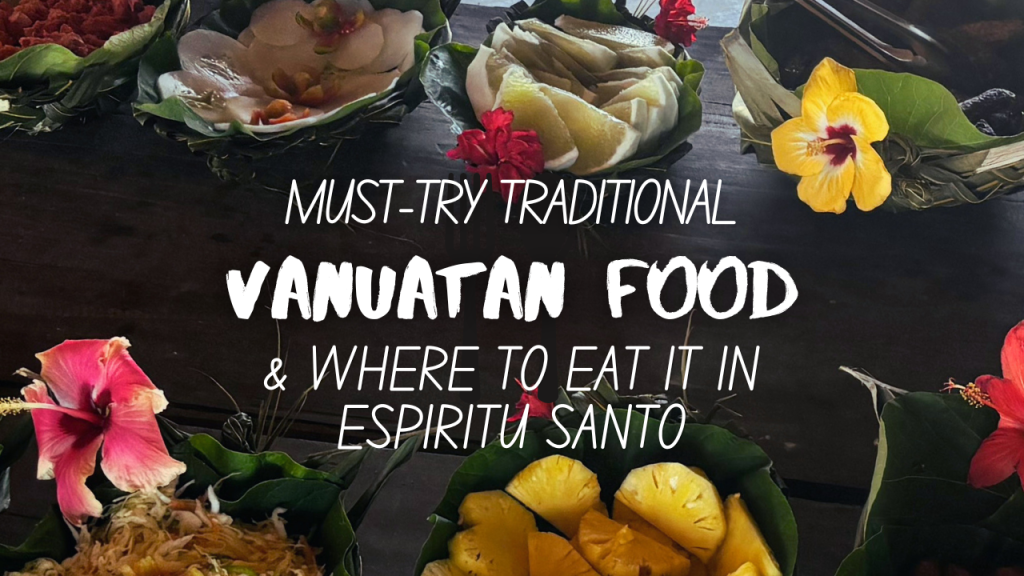
Vanuatu is not especially known for its traditional Vanuatuan food, or “kai kai” as it is called in Bislama, but that doesn’t mean there aren’t some unique dishes and delicacies you should try while visiting.
With rich, fertile soil and a tropical climate, it is easy to grow and source food across the islands. Almost the entire population practices subsistence farming, and many people are also skilled in fishing and spearfishing. In many rural areas — and even some more developed ones — meals are still prepared over open fires or in traditional earth ovens rather than modern stoves.
Because of this, Ni-Vanuatu food and cuisine is simple but deeply connected to the land and sea. Everything is largely organic by default, with little to no use of chemicals in everyday food production, which adds to the natural flavour of the cuisine.
Sadly, there are very few traditional Vanuatuan dishes commonly found day-to-day on the islands, and no real restaurants dedicated solely to Vanuatuan cuisine. However, that doesn’t mean it isn’t worth seeking out and trying the dishes below in this Vanuatu food guide.
Tuluk (Traditional Vanuatuan Street Food)
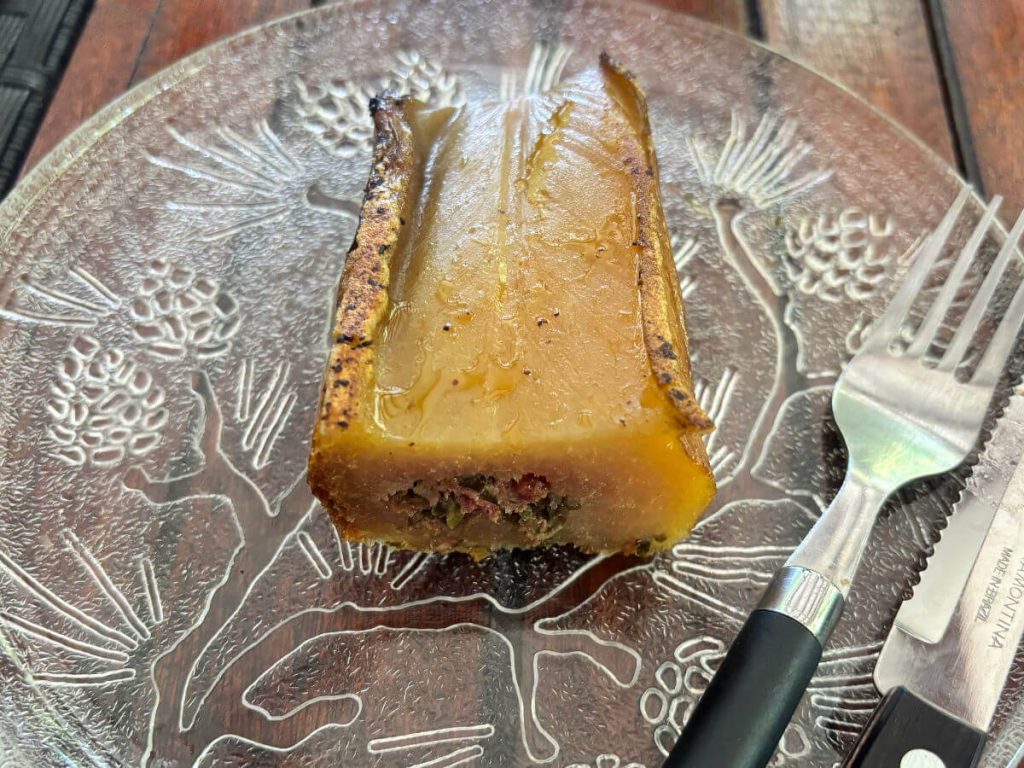
One of my favourite traditional Vanuatuan foods is Tuluk, a local delicacy often described as Vanuatu’s version of a sausage roll.
Tuluk is made from grated cassava, wrapped around a spiced meat filling, then covered in leaves and slowly baked until soft and chewy. The result is a filling and flavourful snack.
It makes a perfect quick bite while exploring Espiritu Santo, although it can sometimes be harder to find than other local foods. You will often see mamas selling it from cooler boxes along the roadside or at markets.
If you are visiting Espiritu Santo, one local mama regularly sells fresh Tuluk each morning near the Banban Vegetable Market. They are extremely popular though, so it is best to arrive early before they sell out.
Simboro (Traditional Vanuatu Side Dish)
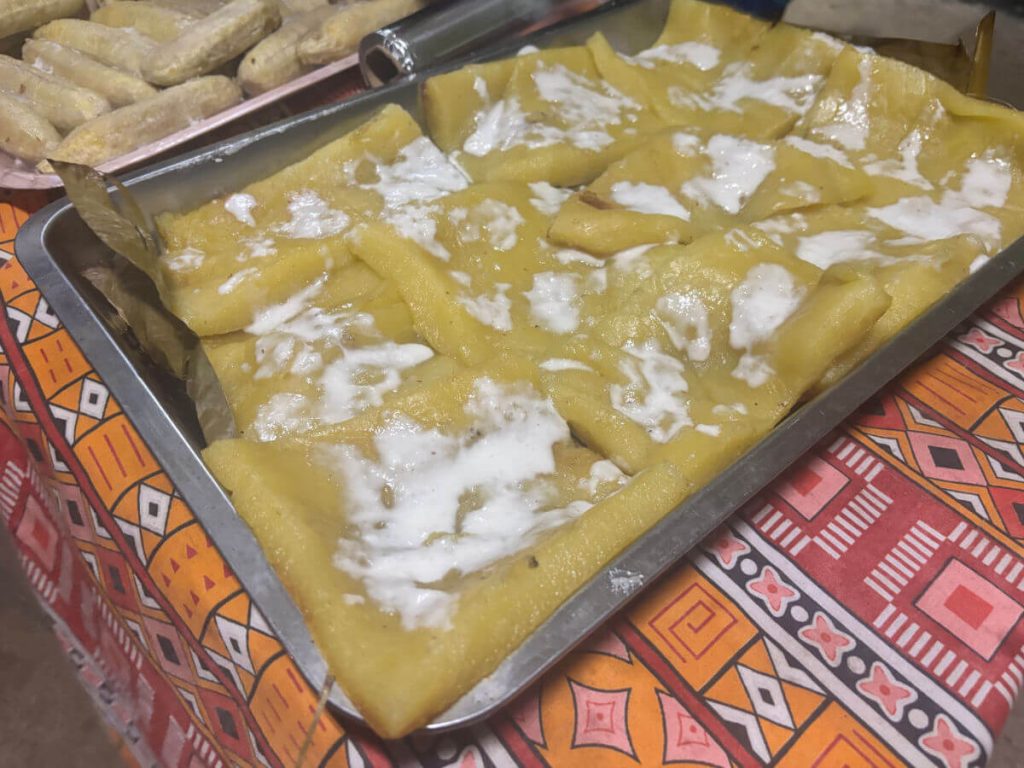
One of the easiest and most delicious traditional foods in Vanuatu cuisine is Simboro.
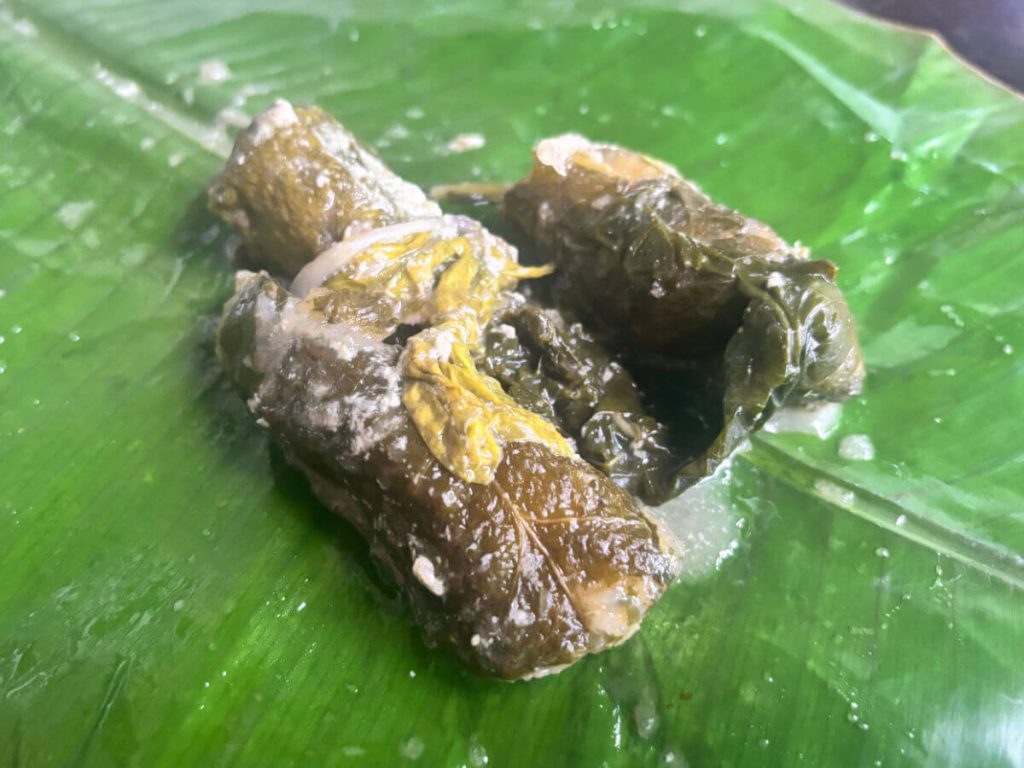
Simboro is made from grated root vegetables such as yam, manioc (cassava), or cooking banana, wrapped in taro leaves or island cabbage, then cooked in fresh coconut cream.
Although Simboro is not much to look at, it is packed with flavour. The mix of soft root vegetables and rich coconut cream creates a simple but satisfying balance of sweet and savoury flavours. It is commonly eaten as a snack or alongside grilled meats and other Ni-Vanuatu food.
You can easily find Simboro at roadside food stalls and local markets around Santo, especially later in the evening near kava bars. One popular street food stall is located opposite the Banban Vegetable Market, while the Chapuis area (uphill from Luganville) is also known for its evening food stalls and kava bars serving local Vanuatuan food.
Laplap (National Dish of Vanuatu)
A staple of traditional Vanuatuan cuisine is Laplap, widely considered the national dish of Vanuatu.
Laplap is made from grated root vegetables mixed with coconut cream, wrapped in banana leaves, and slow-cooked over hot stones in an earth oven. It is commonly prepared for ceremonies, Independence Day, Chiefs Day, weddings, and family gatherings.
Laplap varies depending on location. In towns it is usually made with chicken, beef, or fish, while in more remote areas it may include traditional proteins such as flying fox. It’s always best to ask what type is being served before digging in!
Laplap is best eaten fresh with lots of fresh coconut cream.
You can often find Laplap at local markets, roadside food stalls, village stays, and homestays across Santo.
Poulet Fish (Vanuatu Seafood)
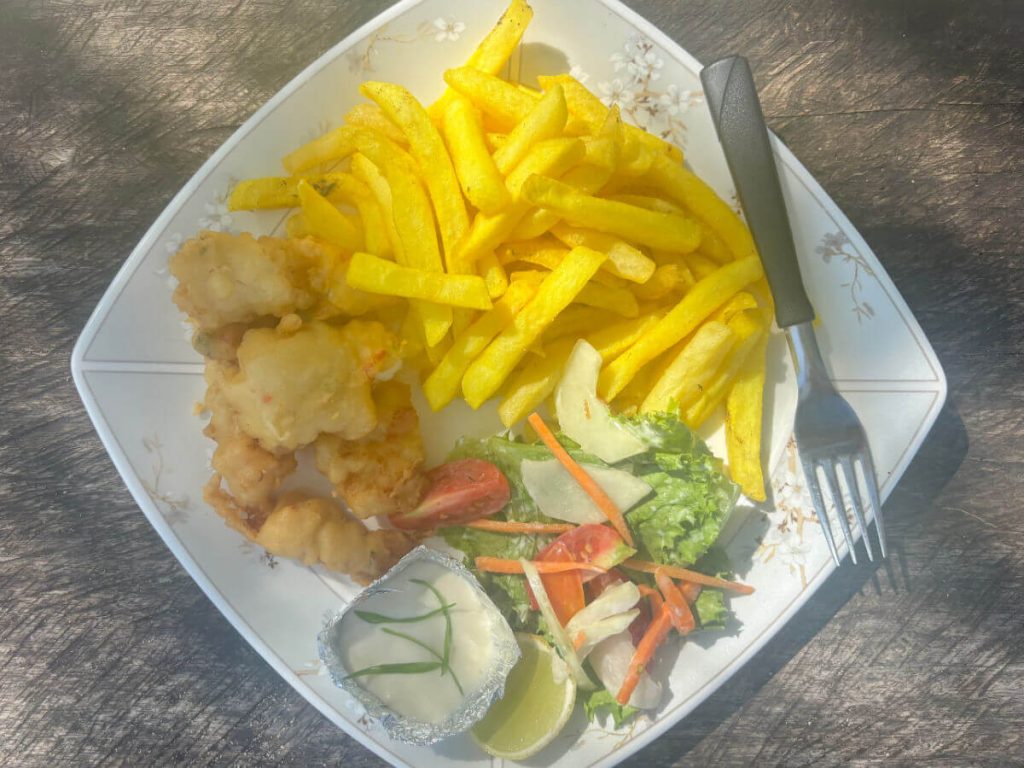
Poulet Fish is the local Vanuatuan name for deep sea snapper. The name comes from the French word poulet, meaning chicken, because the fish has firm, flavourful white meat — although it definitely does not taste like chicken.
Poulet fish is a staple in Vanuatu food and seafood culture and can be found at local markets and restaurants across Santo. Many locals prepare it in a rich fresh coconut curry, which is considered one of the best ways to enjoy it.
If you are looking for great seafood restaurants on Santo, Chez Louis in Port Olry and Bombua Beach House are both well known for serving fresh local seafood, including poulet fish, lobster, and coconut crab.
One of the best things about eating seafood in Vanuatu is that much of it is freshly and locally caught. However, it is best to be cautious when buying unidentified reef fish, as certain species can occasionally cause ciguatera fish poisoning, a naturally occurring form of seafood poisoning found in tropical reef fish.
Santo Beef (Espiritu Santo Speciality)
Although you may have eaten beef in many places around the world, Santo Beef is famous for its melt-in-your-mouth tenderness and rich flavour. Beef from Espiritu Santo is widely considered some of the highest-quality meat in the Pacific region, and there are 3 main reasons why it is a standout in Santo food culture.
- Chemical free farming – Like much of the livestock and agriculture on Santo, the cattle are raised naturally without added hormones, heavy chemical use, or genetic modification. This gives Santo Beef a clean, natural flavour that many visitors immediately notice.
- Naturally free range – Many of Santo’s cattle roam freely across the island’s grasslands, coconut plantations, forests, and coastal areas. Because the animals live in a low-stress natural environment with plenty of space to graze, the meat develops exceptional tenderness.
- A unique coconut diet – One of the things that makes Santo Beef unique is the cattle’s diet. Many graze among the island’s coconut plantations, feeding on fresh grasses as well as fallen coconut and coconut husks. Locals often say this natural diet gives the beef its slightly sweet, rich flavour that is distinctive to Espiritu Santo.
Although you can find Santo Beef served across the island, it is not always labelled as such. It is commonly served as steak with chips, mashed local root vegetables, or fresh vegetables alongside gravy, butter, or sauce. Common places to find it are in western style restaurants like Deco Stop Lodge, Barrier Beach Resort, Turtle Bay Lodge, and Bombua Beach House.
As with any cut of meat, the quality varies between each cut, however you can t go too wrong with a fresh sirloin or scotch fillet steak. If you don’t fancy a restaurant then bbq on the beach.
Nalot (Traditional Ceremonial Cake in Vanuatu)
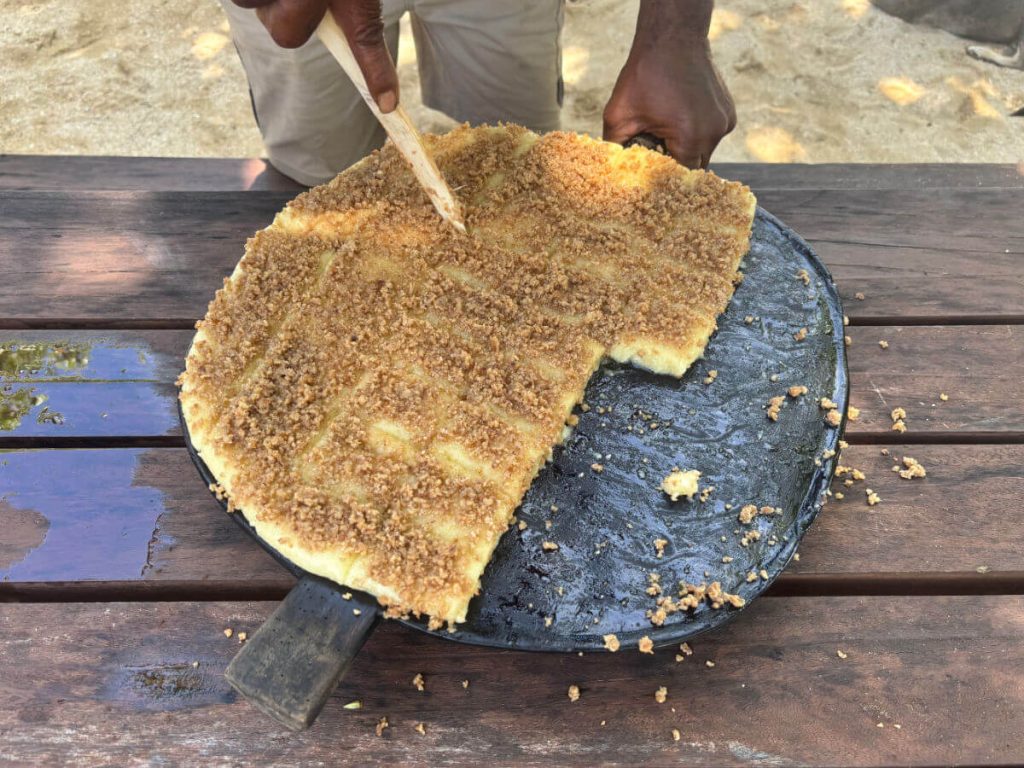
Nalot is a traditional Vanuatu dish made from grated root crops or breadfruit, mashed over a fire and mixed with coconut milk until smooth.
It is usually served on a wooden platter and topped with roasted coconut.
Nalot is not something you will commonly find on a daily basis in Vanuatu, as it is typically reserved for special occasions, ceremonies, and Kastom events. It is often considered the closest equivalent to a traditional “cake” in Ni-Vanuatu cuisine., and is even cut and served using a special wooden tool or stick.
To try Nalot, you usually need to be invited to a custom ceremony or specifically ask a local family if they are preparing it for an event. It is a highly shared and much-loved dish, so you may only get a small taste when it is served to a crowd — but it is absolutely worth trying if you get the chance.
Navara (Unique Vanuatu Food Experience)
Although there is no preparation or cooking required to eat Navara, it has made it onto this list because it is one of the most unusual traditional food experiences I have come across in Vanuatu.
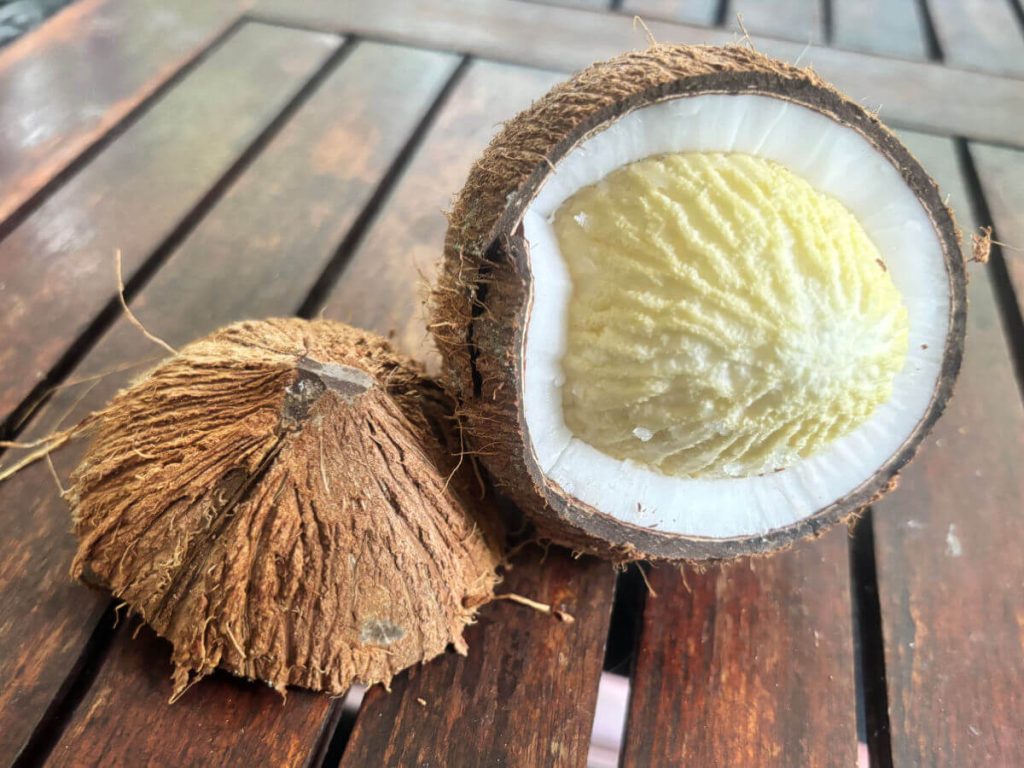
Navara comes from young coconuts that have been left to germinate and begin growing into a small plant. Over time, the coconut water and flesh transform into a soft, creamy, sponge-like texture with a naturally sweet flavour.
You can find Navara at local markets, where it is usually sold whole. To eat it, you simply crack it open like a regular coconut and scoop out the soft interior to enjoy.
It is a simple, natural snack, but unlike anything most visitors will have tried before, and well worth a try.
Kava (Traditional Vanuatu Drink)
If you’ve travelled around the Pacific, from Fiji to Hawaii, you may already be familiar with Kava, a traditional drink that is central to social life in Vanuatu.
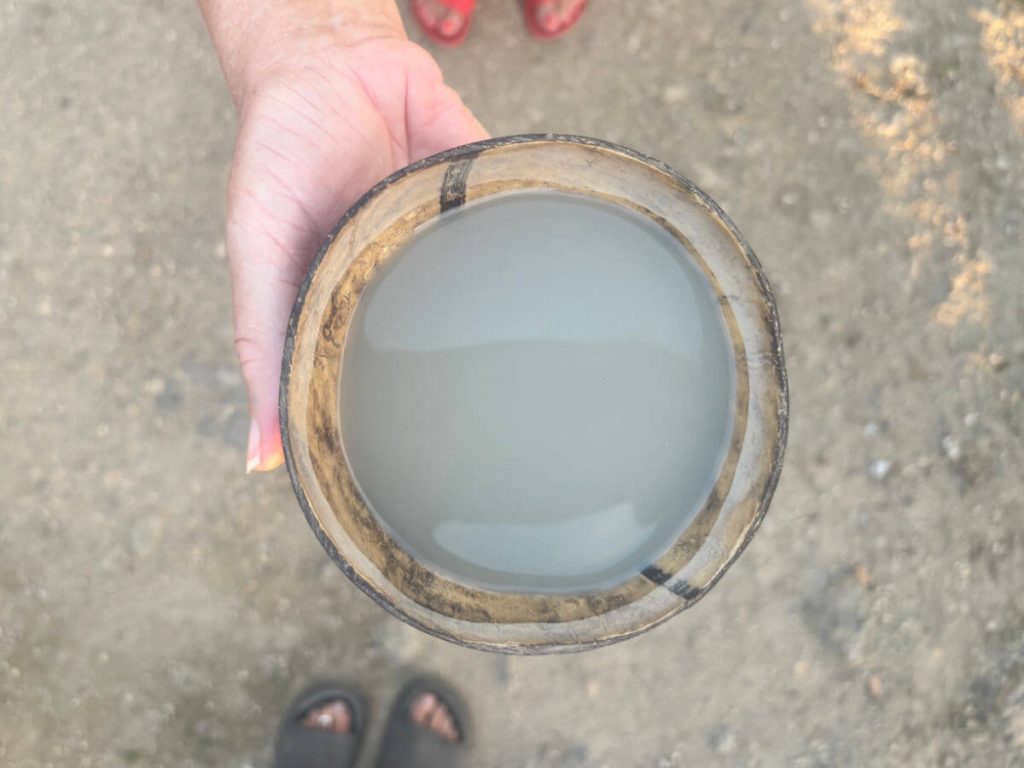
Kava is made from the ground root of the kava plant and produces a relaxing, mildly sedative effect when consumed. In Vanuatu, it is a key part of everyday culture and is often enjoyed in the same way people elsewhere might gather at a bar or café to socialise.
It is not particularly known for its flavour — kava is earthy, bitter, and slightly muddy — but its value lies in the calming effect and the communal experience that comes with drinking it.
Kava bars can be found throughout Santo and across Vanuatu, usually identified by a small coloured light outside. Inside, they are typically quiet and dimly lit, creating a relaxed atmosphere for conversation and winding down in the evening.
These bars are also a good place to find simple snacks, often referred to as “washemouth” in Bislama — small bites like sweets or fried banana chips that help clear the taste of kava afterwards.
If you want to go deeper into the experience, including how kava is prepared, pricing, etiquette, and what to expect on your first visit, you can read more in this complete guide to drinking Kava in Vanuatu.
Vanuatu Food Guide Overview
Vanuatu is a deeply traditional place, with many communities still closely connected to tribal customs and ways of life. Much of the food culture in this Vanuatu food guide centres around grated root vegetables such as yam, manioc (cassava), taro, kumala (sweet potato), island cabbage, and coconut cream.
Many of these are among the only reliable non-seasonal crops on the islands. Other produce such as avocados, pineapple, pawpaw (papaya), oranges, mangoes, pampelmous (pomelo), tomatoes, and nakavika (tropical apple) are seasonal and vary throughout the year.
Visiting mamas markets is one of the best ways to see what is available locally.
The best way to experience traditional Vanuatuan food is through homestays or local families. Many are happy to share meals if you help with ingredients or a market trip, making it far more authentic than eating in a restaurant.
Seeing coconut milk made from scratch by hand is a highlight you won’t experience in many other places in the world.
If there’s a dish or delicacy missing from this Vanuatu food guide, let me know in the comments — and happy hunting!