
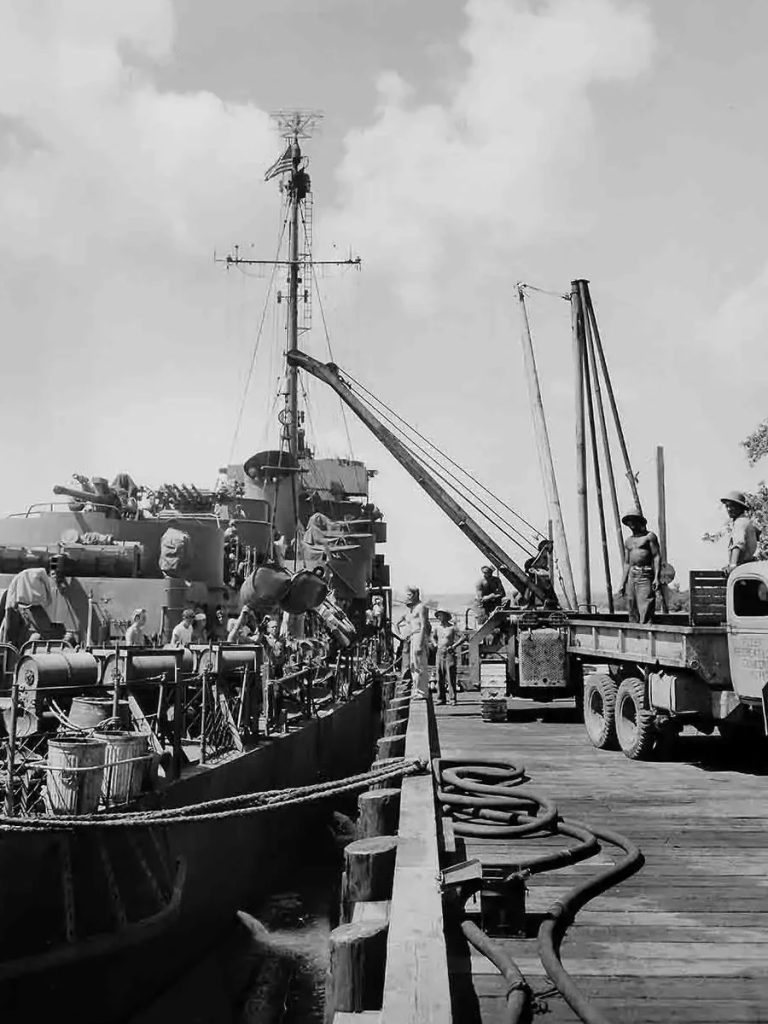
During World War II, the island of Espiritu Santo, Vanuatu, was home to one of the largest Allied military bases in the South Pacific. Over the course of the war, the U.S. military transformed the island from dense jungle into a bustling wartime hub complete with hospitals, roads, supply depots, and four operational airfields.
When the war ended in 1945, the Americans were left with a huge amount of surplus equipment including trucks, tractors, cranes, and other heavy machinery. Shipping it all back to the United States was not feasible, so they attempted to sell the equipment to the colonial governing authorities of the New Hebrides — the British and the French.
The offer was declined, reportedly because the colonial administrations believed the Americans would simply leave the equipment behind when they departed.
Instead, the U.S. military used bulldozers to push everything — and we mean everything — off a pier into the ocean. Trucks, bulldozers, forklifts, and construction equipment were all sent tumbling into the sea. The pier was then destroyed, creating what is now known as the Million Dollar Point dive site.
Read about the full history right here.
Every dive at Million Dollar Point is planned according to the diver’s certification, experience, gas supply and the conditions on the day. The following describes a typical guided route, but the exact route, depth and highlights may vary depending on the divers and conditions.
Million Dollar Point is predominantly a shore dive. At Triton Explorers, we gear up at the dive centre and walk down the shoreline, taking care to step carefully over the wreckage as we make our way to the water.
Even before entering the deeper water, the history of the site is visible. In the shallows, you’ll begin to find large quantities of glass and other wartime remains, including intact 1940s Coca-Cola bottles.
Once we reach deeper water, we put on our fins and masks and swim out to the sandy patch where we begin our descent. This area is only around 2–5 metres deep, making it a useful reference point for starting the dive.
From the sandy patch, we gradually follow the slope down towards our planned maximum depth, depending on certification and experience. We usually spend most of the dive around 18–20 metres, giving us plenty of no-decompression time while helping conserve air.
This deeper section is also where we are most likely to encounter the resident green sea turtles.
As we follow the slope, the amount of WWII machinery and wreckage begins to increase. Excavators, vehicles, equipment and other remains are scattered across the seabed, creating an artificial reef unlike almost anywhere else.
With so much to see, it can sometimes be difficult to appreciate the scale of the site from directly on top of the wreckage. When conditions and the route allow, moving a little further away from the remains gives you a much better perspective of just how extensive Million Dollar Point really is.
If there is sufficient air and no-decompression time remaining, the route can include a short swim-through of the Deedle shipwreck.
From here, we gradually follow the slope back up towards the shallower sections of the site.
Around 5 metres, another shipwreck can be found among the shallower remains. These upper sections are also where we are more likely to encounter schooling reef fish and large anemones inhabited by clownfish.
We then begin making our way back along the same route towards our exit point.
We will usually have completed our safety stop before heading back to the exit point. Once we reach the shallows, we remove our fins and walk carefully back out along the shoreline, taking care around the wreckage.
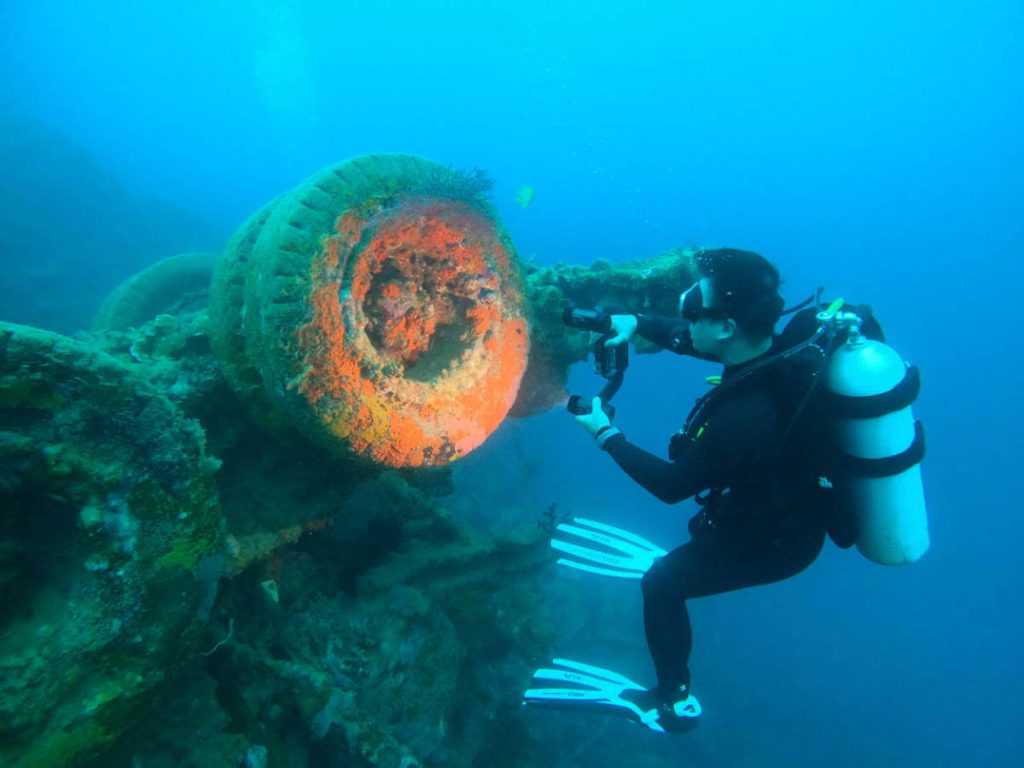
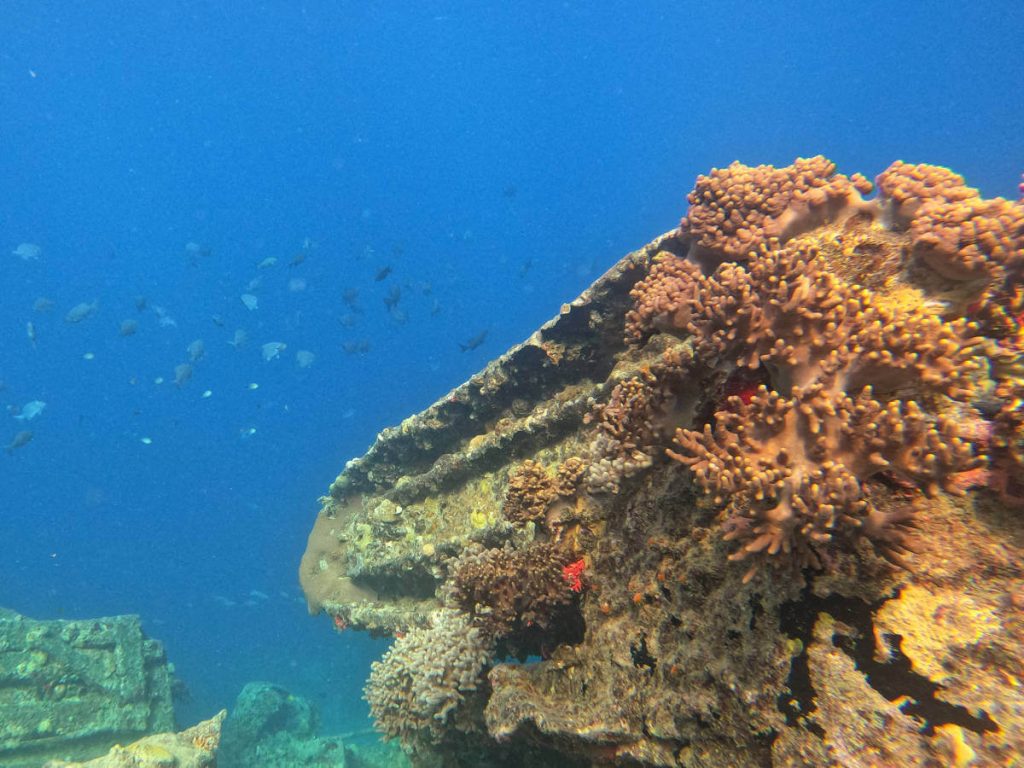
There are three ways to experience Million Dollar Point, depending on your experience and how much of the underwater site you want to explore:
Snorkelling
Explore the shallow areas directly from the beach, where WWII machinery, bottles and marine life can be seen close to shore.
Discovery Scuba Diving
No diving experience? Our Discovery Dive lets you explore the underwater remains of Million Dollar Point with an instructor — no certification required.
Guided Scuba Diving
Certified divers can explore the wider site on a guided dive, with depths ranging from around 5 metres to approximately 40 metres and plenty of WWII wreckage and marine life to discover.


