History of Cargo Hold 1 on the SS President Coolidge
Located in the bow of the SS President Coolidge, Cargo Hold 1 is the shallowest of the ship’s seven cargo holds. Originally built to carry mail, luggage, freight and provisions during the ship’s years as a luxury ocean liner, it was later repurposed to transport military vehicles, aircraft equipment, ammunition, medical supplies and personal equipment after the Coolidge was converted into a World War II troop transport.
Unlike many other areas of the wreck, Cargo Hold 1 remained largely untouched by salvage operations. Today, it is one of the best-preserved cargo spaces on the SS President Coolidge, offering divers a remarkable snapshot of the ship’s final wartime mission.
Every dive through Cargo Hold 1 is planned according to the divers’ certification, experience, gas supply and the conditions on the day. The following describes a typical guided route through one of the SS President Coolidge’s most iconic cargo spaces.
Entry
The dive begins with a descent down the bow mooring line to the forward section of the wreck. Depending on the dive plan, entry into Cargo Hold 1 is made either through the main cargo hatch or via the forward salvager’s cut near the bow.
Flat-Packed Jeeps
The first stop is the aft (stern-side) compartment of Cargo Hold 1, where divers encounter one of the SS President Coolidge’s most famous sights: the flat-packed Willys MB Jeeps.
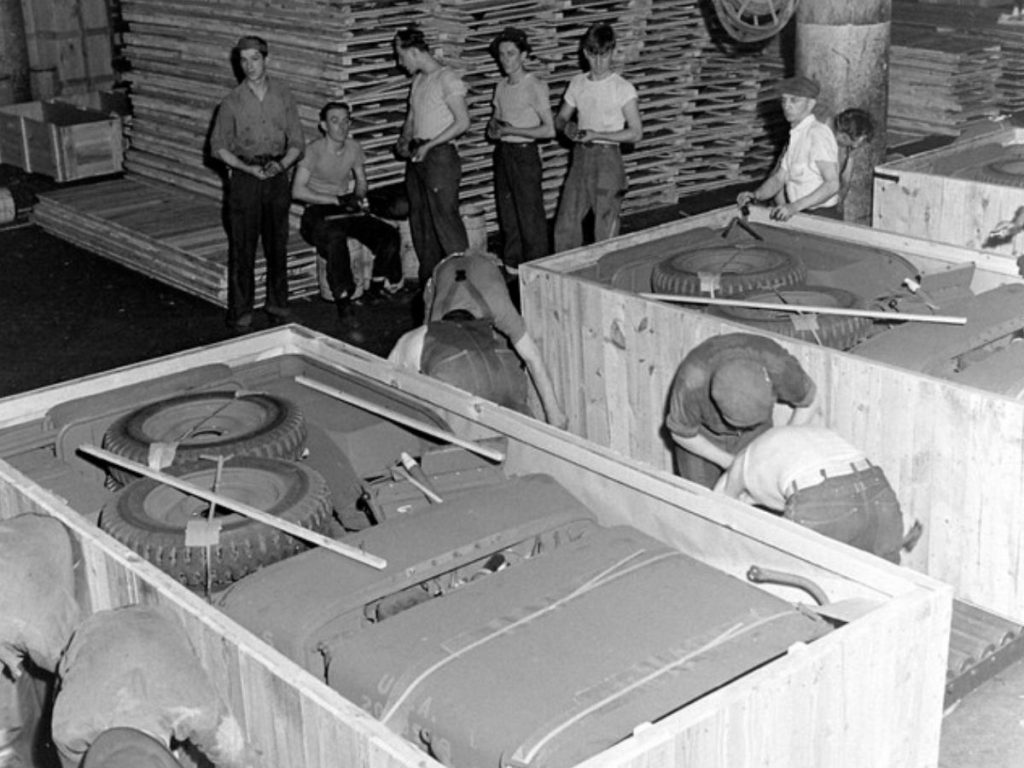
During World War II, these vehicles were prepared for transport by removing components such as their wheels and body panels, allowing them to be packed efficiently into wooden crates and loaded into the cargo hold. After more than 80 years underwater, the wooden crates have deteriorated, revealing the unmistakable shapes of the jeeps that remain inside.
Divers swim above the vehicles, looking down to appreciate how they were packed for transport and the remarkable preservation of this wartime cargo.
Wartime Cargo
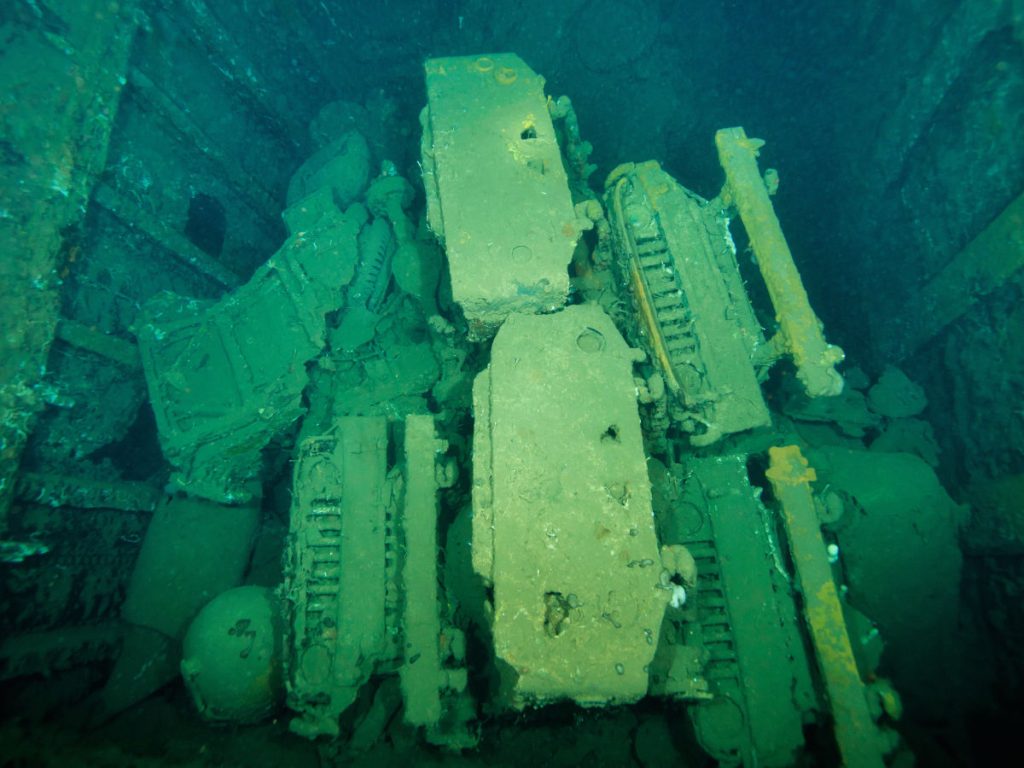
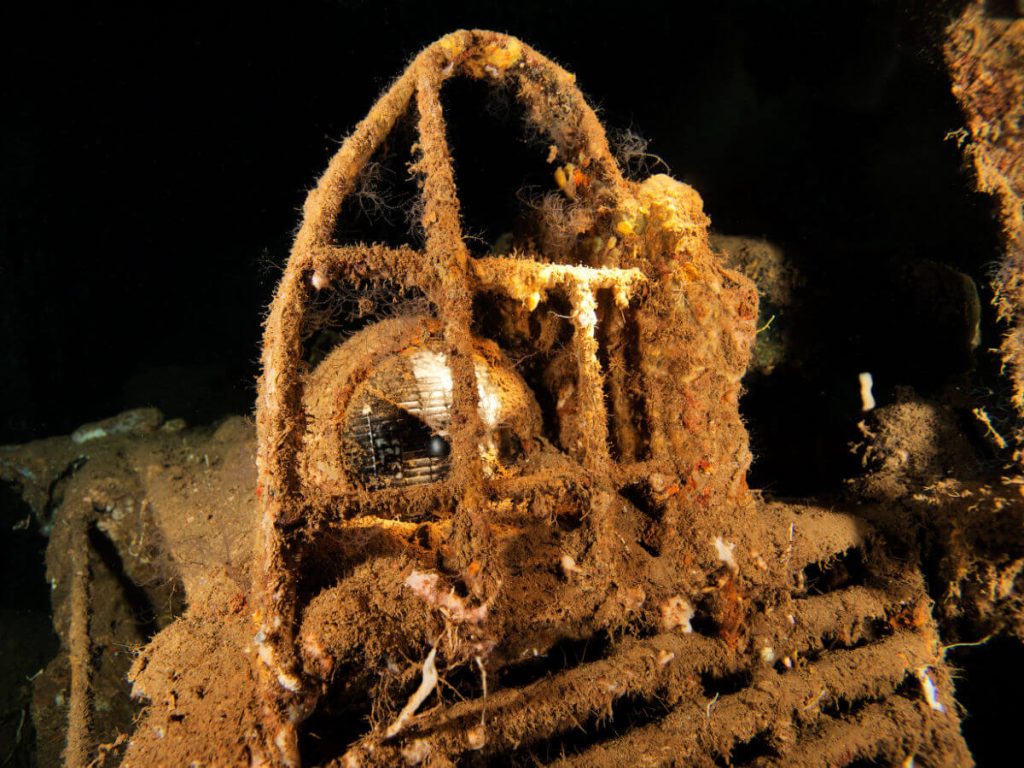
Continuing through the cargo hold towards the bow reveals further remnants of the equipment carried aboard the Coolidge during her final voyage. Among the scattered remains are military vehicles, aircraft drop tanks and other supplies that provide a glimpse into the scale of the operation taking place aboard the ship in 1942.
Stewards' Sinks
Leaving Cargo Hold 1, the route continues through the ship’s framework onto C Deck before entering the former stewards’ washroom.
While the Coolidge was originally built as a luxury ocean liner, this area offers a rare glimpse into the daily lives of the crew who worked aboard her. Rows of original porcelain sinks remain visible through the doorway, remarkably preserved despite decades underwater.
Chain Locker Exit (Conditions Permitting)
If gas reserves, no-decompression limits and diver comfort allow, the route may continue upwards towards B Deck and through the original anchor chain locker on the starboard side of the bow.
Emerging beneath the bow through this historic section of the ship is one of the most memorable moments of the dive, transitioning from the enclosed spaces of the wreck back into the open Pacific Ocean.
Exit
Depending on gas reserves and no-decompression limits, the remaining bottom time is typically spent exploring the starboard side of the bow before beginning the ascent. Divers can return via the bow mooring line or follow the sandy slope towards the coral gardens, where the safety stop is completed in shallow water.
How to Get Started ...
Ready to Dive this Site With Triton Explorers?
If you’d like to dive this site with Triton Explorers, get in touch with your preferred dates and the dives you’d like to do. If you don’t yet have the certification required for a particular dive, let us know — we can advise you on your options and, where possible, arrange the training you need.
Once we’ve confirmed your dives and availability, we’ll send you a digital check-in to complete before your arrival. A 50% deposit secures your dive slots, with the remaining balance payable before or on your arrival.
Then, all that’s left to do is turn up, gear up and go diving.
Explore More
Dive Plans on the ss president coolidge
Dive the Medical Supplies area on the SS President Coolidge and discover bottles, equipment, and fascinating WWII artifacts.
Dive Cargo Hold 2 on the SS President Coolidge and discover the barber’s chair, doctor’s office, and iconic WWII wreck artifacts.
Explore Cargo Hold 1 on the SS President Coolidge. Discover trucks, wartime supplies, and one of Vanuatu’s best wreck dives.