A good dive briefing can make the difference between a smooth, enjoyable dive and a confusing experience underwater. Whether you’re a Divemaster, instructor, or an experienced diver leading a group, delivering a professional dive briefing helps everyone understand the plan, stay organized, and dive safely.
As certified divers, we are all responsible for planning and executing our own dives. However, when diving with a group, one person usually takes on the leadership role — often the Divemaster.
This person brings valuable experience, professional training, and local knowledge of the dive site, marine life, and conditions. Before anyone enters the water, the entire team should understand what to expect. That is exactly why an effective dive briefing is so important.
A successful dive briefing should cover three main areas:
- Team: introductions, roles, and questions
- Site: location, route, entry and exit procedures, environment
- Safety: dive procedures, signals, and emergency plans
Here are the 10 key points every professional dive briefing should include.
1) Introduce Yourself
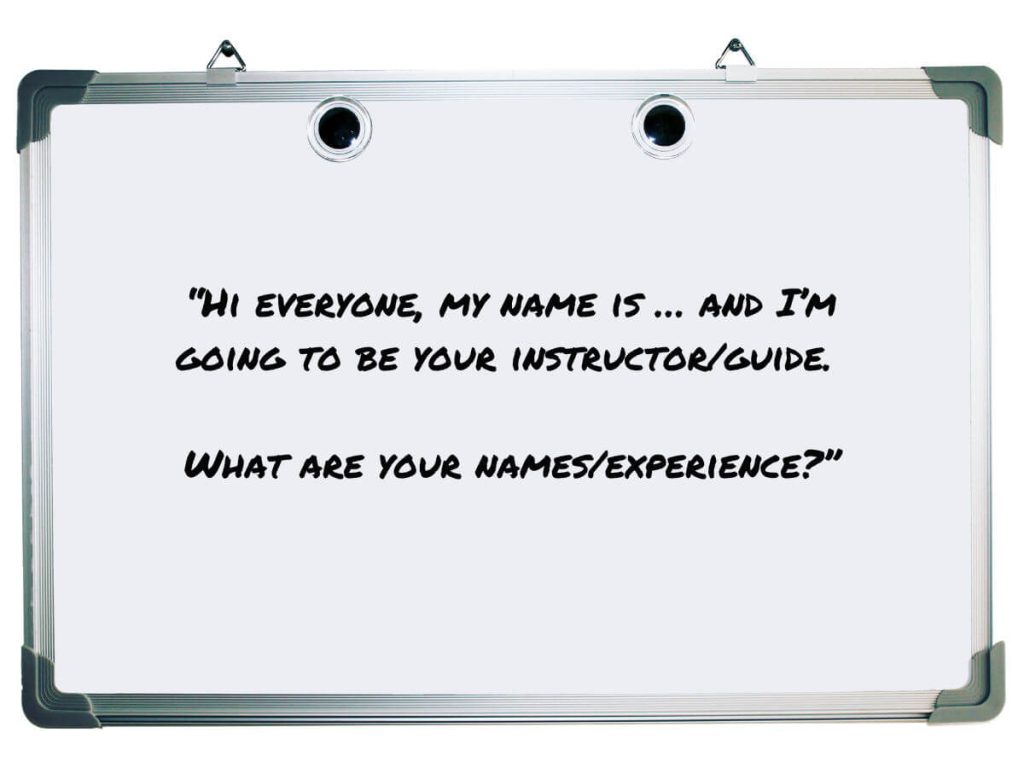
Most of the divers in your group may be complete strangers when they first arrive.
Start your dive briefing by introducing yourself. Include your role and, if appropriate, mention your experience or familiarity with the dive site.
This immediately helps break the ice, build trust and create confidence in the group.
If they haven’t already done so, get your divers to also introduce themselves. This also gives you a good gauge of their comfort and experience.
2) Location & Logistics
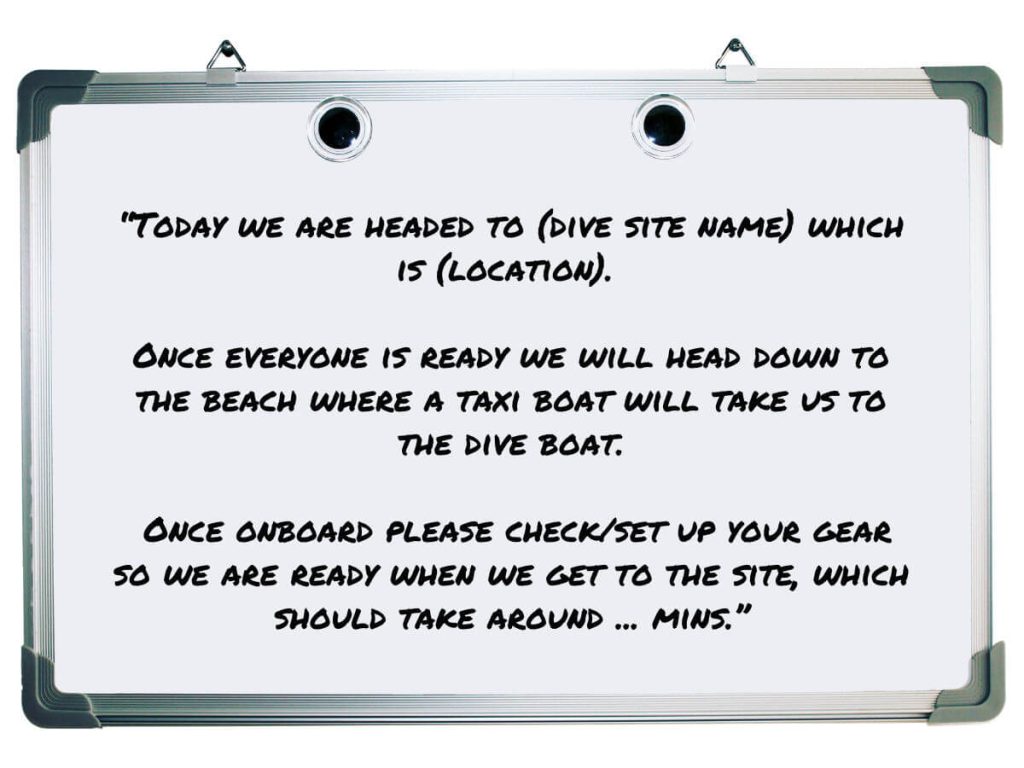
Next, tell everyone where they are going.
If you have maps or site diagrams, use them. Visual aids make a dive briefing more engaging and easier to understand.
This is also a good time to explain logistics, like how you will get to the site (boat, car, walking, etc) and the journey time.
3) Entry & Exit Procedure
A professional dive briefing should clearly explain how divers will enter and exit the water.
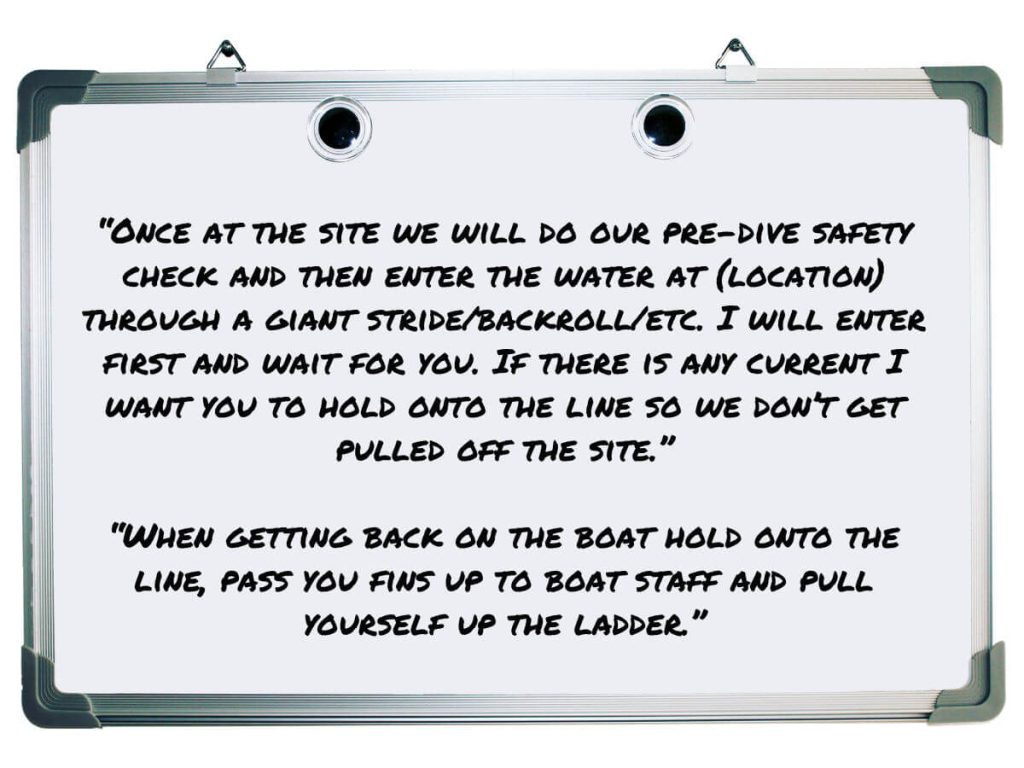
Describe whether the group will be using a giant stride, backward roll, shore entry, or another method.
This is also a good time to warn divers about potential hazards such as currents, waves, boat traffic, or marine life. Helping divers with tips on how to deal with them, for example using descent/trail lines, negative entry, spotting and having all equipment secured.
Either describe exit procedure at this time as well or wait until the end of the briefing. Will you need to make your way back to a fixed mooring or shore entry, or will the boat pick-you up?
4) Signals
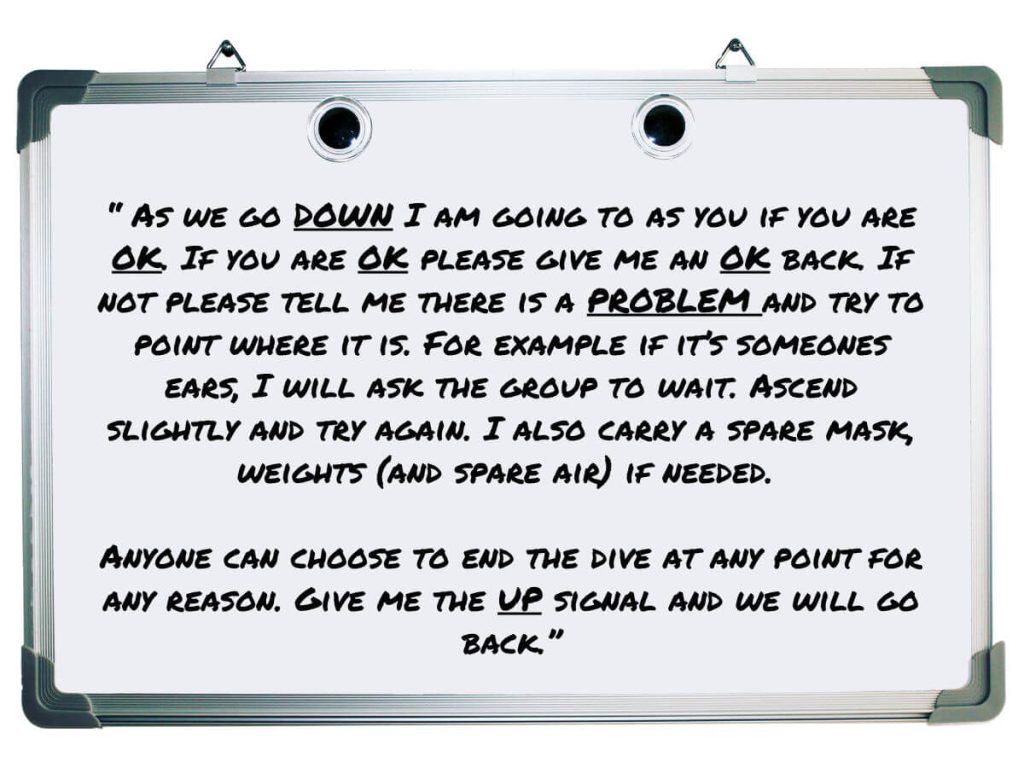
Underwater we can’t communicate as we would on the surface. So it’s important that divers are on the same page when it comes to signals like:
- OK
- Problem
- Up/Down
- Air
- NDLs
- Marine Life
There is nothing more confusing than when someone starts making gestures you don’t understand. Like one diver who saw and octopus and put up 8 fingers (trying to show the legs) and gave me a shock thinking they were already low on air!
I like to intersperse mine as I give the briefing to help it flow. Talking with my hands as I go. In the script these are all outlined in CAPS. Conversely make it fun by quizzing your divers.
5) Route
One of the most important parts of a dive briefing is explaining where the dive will actually take place underwater. Make sure to include:
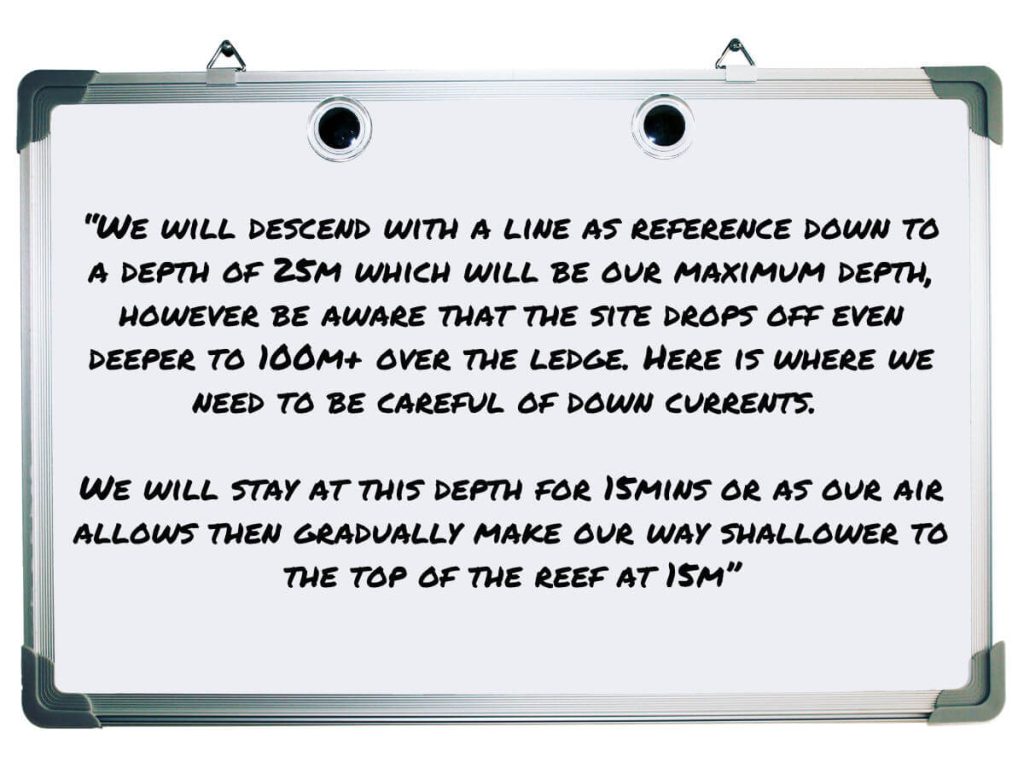
- Topography – What can we see as we descend? Blue, sloping bottom, pinnacle, etc?
- Depth – How deep is the site? How deep are we going? What are our limitations (gas consumption / certification / comfort / dive time/ etc)
- Conditions – Where are the hazards? What are the conditions (temperature, current, visibility, etc) like?
Maps are especially useful here because they help divers create a mental picture of the dive before entering the water.
6) Environment
Divers always want to know what they might see underwater, so this is often one of the most enjoyable parts of a dive briefing.
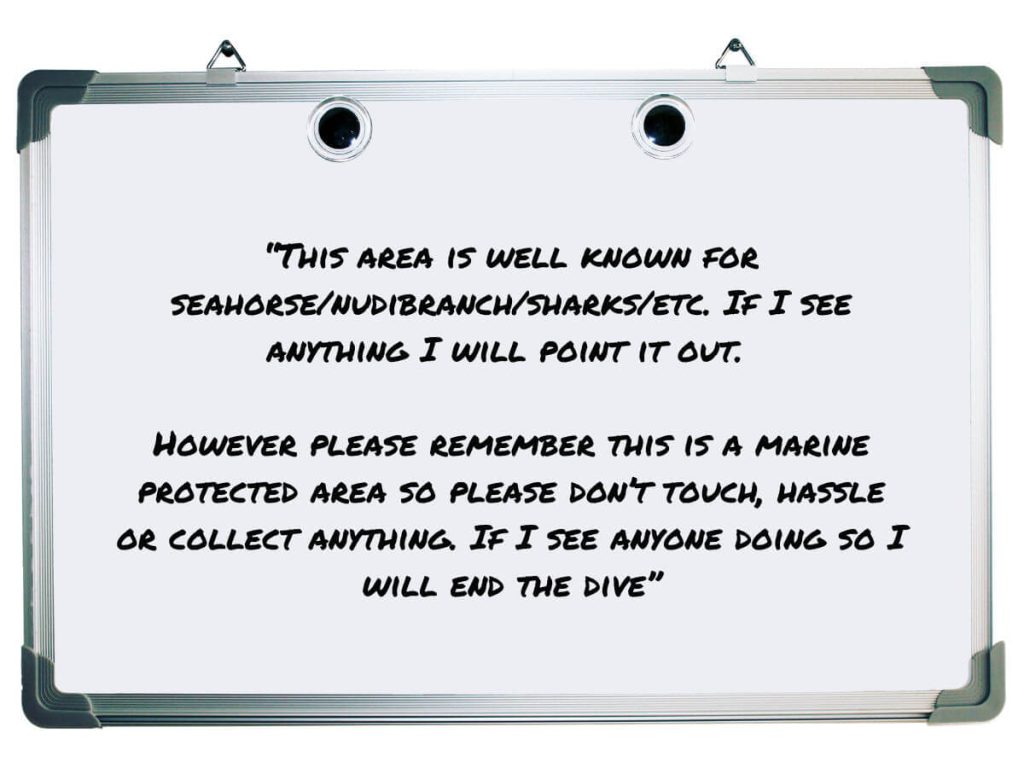
Explain any interesting marine life that may be present and whether divers should expect larger species, reef life, or small macro subjects.
It is also important to include conservation reminders such as maintaining buoyancy, avoiding contact with marine life, and following local environmental guidelines.
7) Dive Procedures
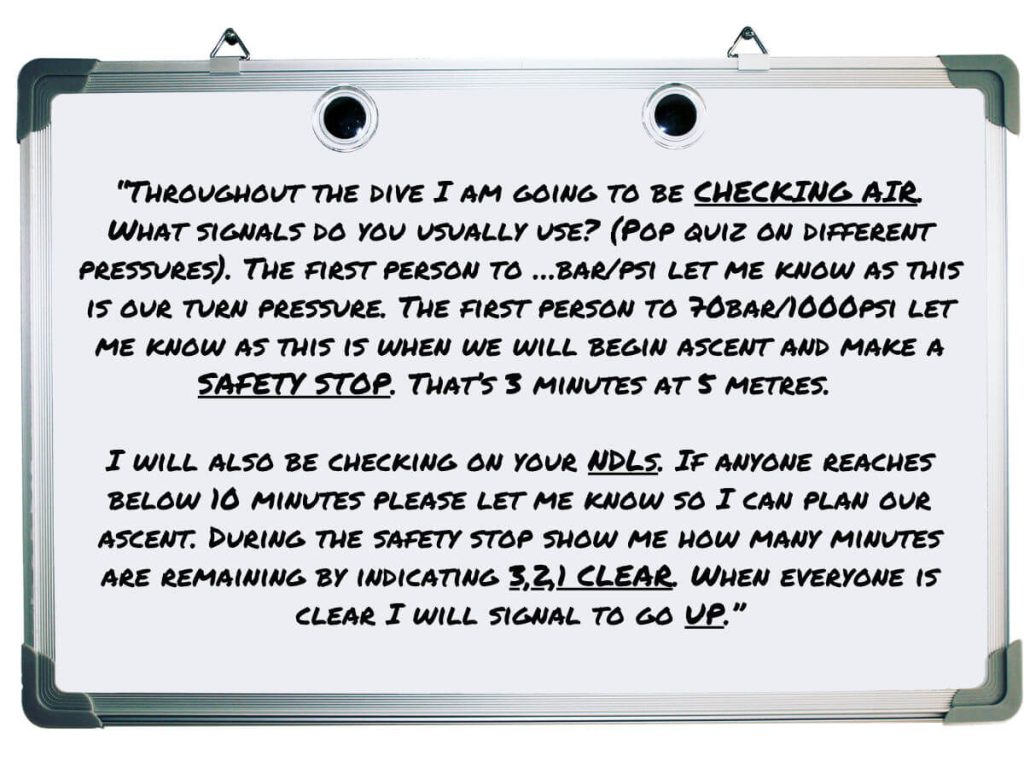
Although you are leading the dive, every diver remains responsible for monitoring their own safety. Remind divers to be responsible for monitoring their own:
- Air – Are divers using bar/psi? What signals do they use to communicate this?
- No Decompression Limits – Are divers using a computer or gauge and tables?
It’s usually a good idea to encourage divers to stay on or slightly above your level. That way their NDLs and air consumption should be roughly the same if not more than yours. Although that is not always the case.
8) Roles
Make sure you know how many divers are in your group before you go down. Many larger dive shops/boats will use a roster system to ensure safety.
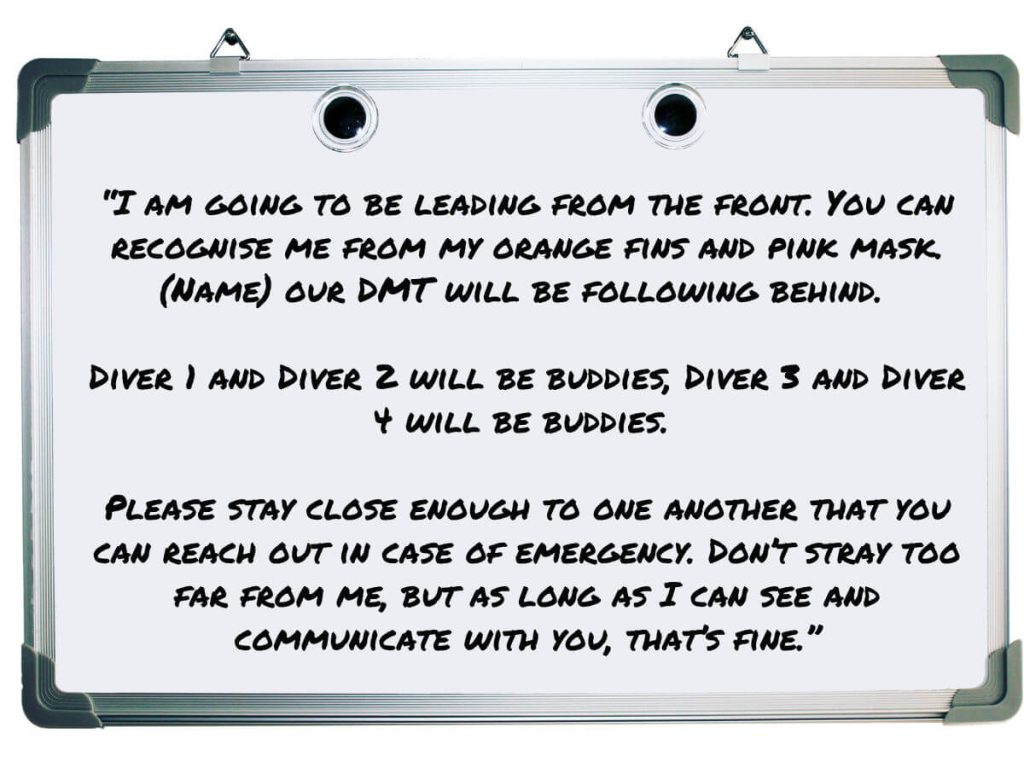
Assign buddy teams. It’s best to do this based on certification level, experience, comfort and your own judgement. Keep those who are more unsure close by to help if needed.
Let divers know where you and any other staff will be and what you look like underwater. Trust me it’s easy to get confused when everyone is geared up!
Let divers know where you expect them to be. Every guide has different preferences when it comes to formation and distance. Encourage buddies to discuss with each other recognisable features and their own positioning preferences.
Lastly let them know how you will get their attention. Or how they can get you attention. Some people use rattles, LPI alarms, or something metal to bang on the tank. Personally I prefer to make noises in the reg or wave as this is less scary (and irritating) to local marine life.
9) Emergency Procedures
Necessary but something you hope you will never need : emergency procedures.
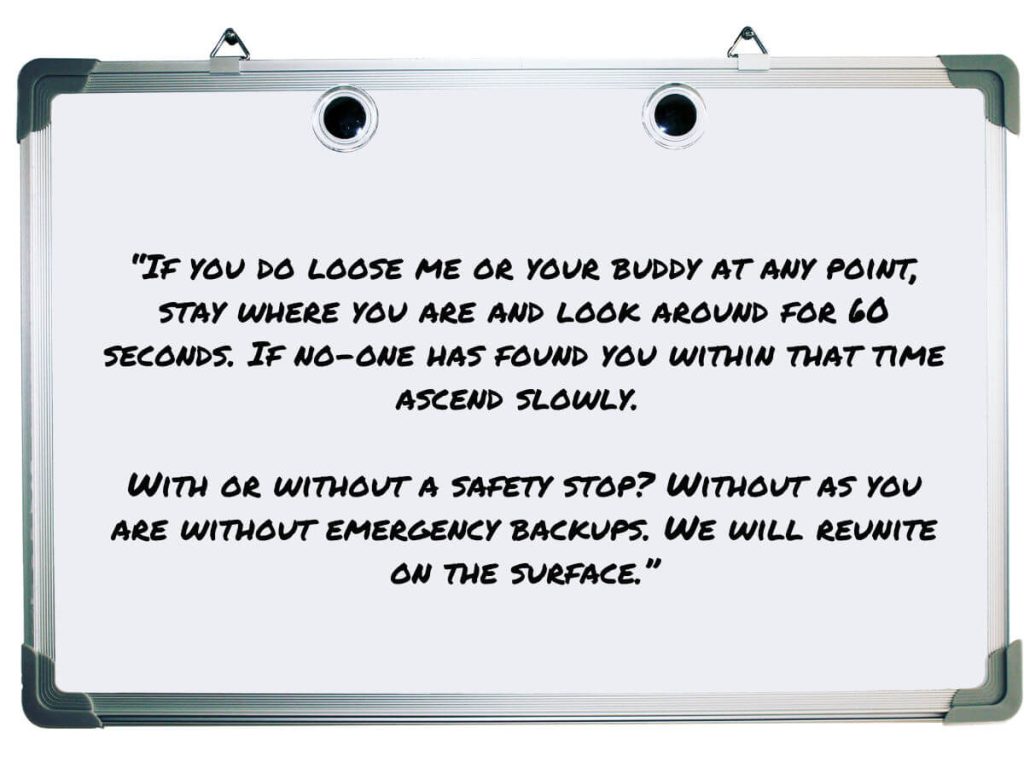
A good time to get divers involved in the briefing and make it more interesting for those who have done it a million times before. Have a little quiz on what to do in out of air scenarios or with a lost buddy.
Some dives may be planned that you start off as a group then separate into buddy teams. This is popular amongst photographers, but should be discussed beforehand.
10) Any Questions?
Although we should have everything covered already it never hurts to get your audiences opinion.
After all we are only human. There may have been something we missed or that needs clarification. So it’s always important to make sure that everyone is on the same page before we jump in!
To Sum It All Up …
- Before giving the briefing find a quiet spot with limited distractions. It’s best when divers are not under stress or uncomfortable (eg. wearing heavy equipment or standing in the heat)
- Keep it brief! Attention spans are short. Try to keep your briefing under 10 minutes. That is unless conducting serious cave, wreck or tech diving.
- Be confident and firm in your convictions. Weather you are just starting out or have been doing this for years. You will lead someone who has (or think they have) more experience than you do. Remember its ok to take suggestions but at the end of the day your decisions are final. Those who don’t like that can dive with someone else.
- Find your flow. The easiest way to to make your briefing flow is by ‘thinking through your dive’. Start from the beginning and hit the points as you go. Don’t feel that you have to follow this exact order if it doesn’t feel right.
Dive briefings will evolve with time. The experiences you and your divers have shaping what gets included and what doesn’t. So be patient with yourself and practise, practise, practise!
Join us at Triton Explorers where we can help you prefect your dive briefings during your divemaster.