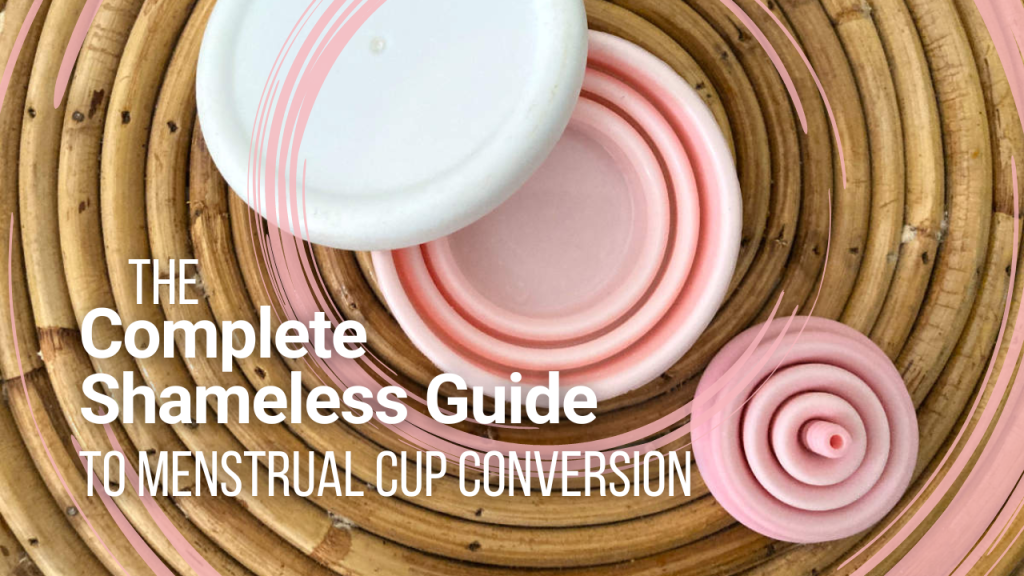
Ever heard of a ‘clam dam’? How about a ‘vampire shotglass’? Or maybe even a ‘poon spittoon’? These are just some of the colourful nicknames given to my favourite feminine hygiene product: the menstrual cup.
Made from rubber or silicone, these flexible funnel-shaped cups are designed to be inserted into the vagina to collect your period. Then removed, washed and reused at the wearers discretion.
Undeniably this may sound a little daunting. Immediately your mind goes to horror stories of the cup getting stuck, or lost, or leaking all down your legs In a public place. Agh! Not to mention the inevitable crime scene that would be created from sticking your hand up your honey pot right as the crimson tides are in.

So it’s not really a surprise that even though the invention of the menstrual cup was way back in 1937 (by an actress no less), it’s only been in the past decade that people have actually been giving them a shot. And boy do we wish we had sooner!
Not only are they convenient, cost-effective and compact but they are saving the planet from plastic pollution in the process. No wonder women around the world are converting. If you don’t believe me then go ahead, read why you could be missing out on this mini miracle.
But if you are ready to follow the rest of us bleeders and become a menstrual cup convert then read on to find out how to purchase, use and stay safe whilst using one.
Step 1: Purchasing a Menstrual Cup
Not all vaginas are made the same. So it’s fitting that menstrual cups come in a range of different sizes any styles to suit everyone. Even teens as young as 12 can use them.
However unlike clothes we can’t just try before we buy. Most companies offer a no-refund policy and rightly so. Yet Menstrual cups are by no means cheap, therefore before you commit you might just want to consider your options.
Menstrual Cup Size
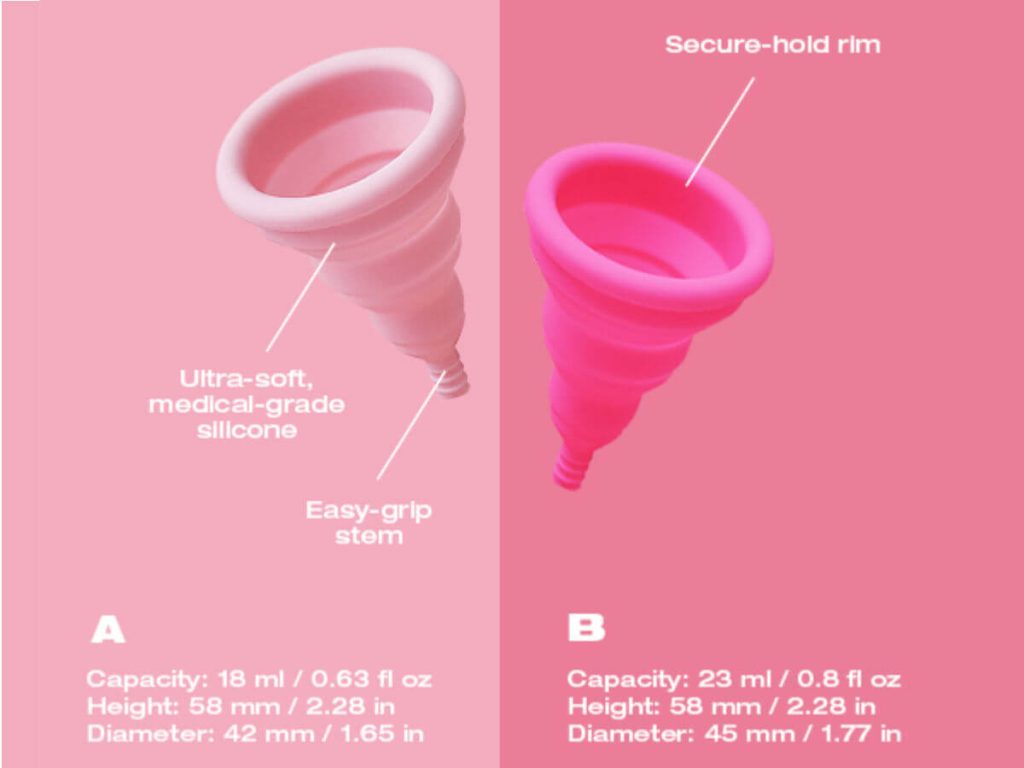
Luckily finding your fit is really not as complicated as it sounds. Most menstrual cups come in two sizes: (A/1) a smaller version for those with light/medium flow or (B/2) a bigger version for those with medium/heavy flow, are older than 30 or have given birth vaginally.
Although this sizing guide works for most people we understand if you’re not entirely confident with an estimate. But before you go and try to shove a tape measure up there talk to your doctor or gynaecologist and they should be able to give you a more tailored recommendation.
Menstrual Cup Style
It’s a similar story with the styles. Popular brands like Lunette, Luna, OriganiCup, Saalt, Keeper, Mooncup and DivaCup don’t really differ too much in design. The only big difference being with brands like Nixit which is more of a shallow disc or Lily that has collapsible folds which the traveller in me absolutely loves. In fact I have managed to fit my Lily cup compact into its own collapsible steriliser cup which all fits in my pocket!
However good thing to note is that the transparent/clear cups do tend to discolour over time so if that’s a concern then opt for one of the solid shades.
If this all seems little too much then Putacupinit have a 9 step quiz to find your perfect fit.

Step 2: Using a Menstrual Cup
This is where we start getting our hands dirty. But in all honesty we are women on our periods, we will have to one way or another.

1. Wash

Since most people only use their menstrual cup once a month, chances are it has been rolling around in the bottom of our bags or tucked away in a drawer somewhere gathering dust. But before we put anything inside our bodies we want it to be clean. To do this we can wash both it and our hands with mild, water-based, unscented soaps or speciality wash. Cleansers made for infants are often a good option. You can also soak it in boiling water at this stage to sterilise.
2. Fold
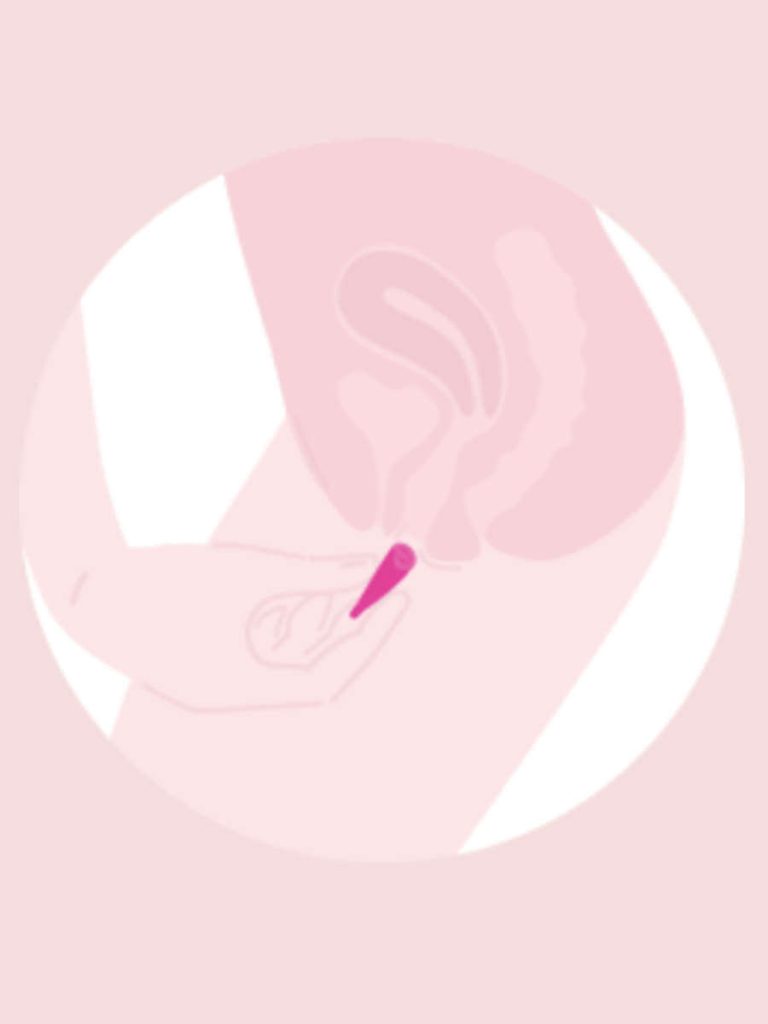
There are various different ways to fold a menstrual cup for insertion. Now I know you never signed up for an origami lesson but they are really relatively simple. The main aim being to squash all the air out and get it small enough to slide in easily. There is no ‘best method’ just whatever you like most. You may need to do a little experimenting to find out what that is. Here are some examples.
3. Insert

Now for the fun bit. Seat yourself over a toilet with your legs wide and lean forward or optionally stand whilst bearing down. With the rim of the cup facing up, hold the fold at the base and insert into your vagina. Similar to the way you would a tampon. Stop once the stem is inside you comfortably (you may need to trim this if it’s too long). Some people apply a water-based lubricant to help this process especially if they are just starting out.
4. Open

Once in place let go of your fold so the cup can pop open. You may need to rotate, push or pull it a little to get it in the right spot. To make sure it is properly sealed, feel around the bottom for any dents or creases. If it’s not try sliding a finger between the rim and wall of your vagina to let a little more air in. Alternatively remove, rinse and retry until you get it right. Although this may take some getting used to the more you practise and get familiar with your body the easier this gets.
5. Wear

Now go about your day! Walk, run, jump, sit, do yoga, swim or even scuba with your menstrual cup in. It’s your choice. Change it at least every 12 hours or more frequently if you have a particularly heavy flow. Wear it for longer than that, let it get too full or don’t insert it properly and that’s where you will start experiencing leaks.
6. Remove
When the time comes to remove your menstrual cup get into one of the same positions you did to insert it. Locate the tab or loop and gently pull it out. Make sure you have a firm grip so you don’t spill or drop it, then empty into the toilet.
7. Rinse & Repeat

This is certainly easier if you are using a toilet with a sink nearby however is still entirely possible if you don’t have easy access to running water. Simply wipe it with a piece of toilet paper or if you’re feeling fancy some special menstrual cup wipes. Once cleaned up to a reasonable degree, re-insert and carry on with your day.
8. Aftercare
Once aunt flow has moved on we can pack our cup away. Let the cup sit in boiling water and add a few drops of hydrogen peroxide if looking a little discoloured. Dry and store until next time.
Travel Tip: Sterilising your menstrual cup is an important step however when you’re on the road it can be hard to get your hands on a discreet container to place it in. Invest in one of these collapsible cups so you can clean on the go and keep your cup out of sight of strangers.
Step 3: Menstrual Cup Safety
Generally menstrual cups are considered safe. However if not used correctly there are risks associated with using a menstrual cup you should know about before you completely convert.
Irritation
Using a cup that is the wrong size, inserting or moving it aggressively, not washing properly and not using water-based lube are all things that can cause irritation. Luckily they are all preventable. Just be careful with your bits.
Infection
Infections like bacterial vaginosis and yeast infections are a rare complication of using a menstrual cup but can still happen. Most likely from not washing your hands or the cup properly.

Toxic Shock Syndrome (TSS)
Ever heard of Toxic Shock Syndrome (TSS)? Well if you haven’t I’m about to make the hypochondriac in you start squirming. TSS is a life-threatening (but rare) complication that results from naturally occurring bacteria on our skin, nose or mouth (Staphylococcus or Streptococcus) infiltrating our body. Once inside it releases toxins into the bloodstream which can quickly lead to tissue damage, organ failure and death.
TSS is most commonly associated with the use of tampons with NORD estimating that of these women 1 in 100,000 will get it. However in reality it can affect anyone. Especially if you use an IUD/IUS, intra-vaginal contraception and yes, menstrual cups.
Basically if you leave anything in your vagina too long it allows bacteria to build up and can cause an infection.
Again preventable if you, repeat after me … wash your hands!

IUD Complications
Studies have found that some menstrual cup users may run the risk of dislodging an IUD due to suction. This is a fairly new concern which warrants further research but doctors encourage patients to check their IUD after cup removal to make sure.

Sex
Just in case it wasn’t clear menstrual cups are not contraception. They also shouldn’t be used whilst engaging in penetrative sex. They are designed to sit lower in the vaginal canal and with penetration you run the risk of the cup getting pushed further up making them difficult to remove.
The one exception to this is something called a cervical cup with is designed to sit further up by the cervix. These are often designed with a smooth bottom to make it more comfortable for the male member. So yes mess free period sex is still possible just make sure you have the right equipment first.

Final Considerations
We know that there is a bit of a learning curve when it comes to menstrual cups but in the end it is so worth it which why many women are becoming complete converts.
So if I could give you one last piece of advice it’s stick it out. Take your time with it. Practise and have patience. If you’re worried about leaks give yourself peace of mind by using period pants or a reusable pad. In the end your hard work will pay off.