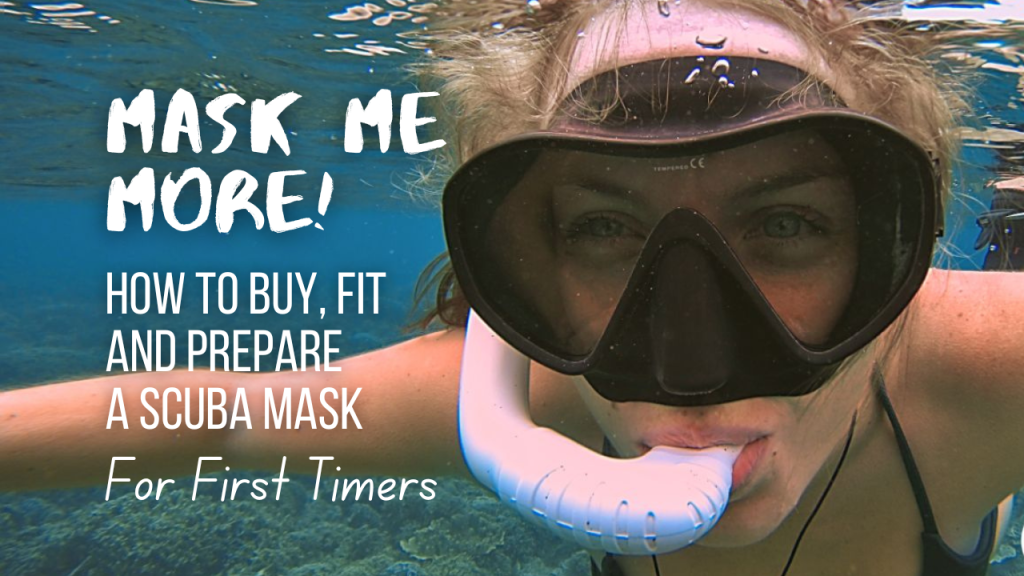
As land mammals, human eyes are not designed for life underwater. So it makes sense that things get a little blurry when we stick our heads under the surface. In order to see clearly we need to add air back into the equation. We do this by wearing a scuba mask.
As most divers first purchase on their beginners scuba shopping list it may seem simple. But if you don’t get it right it could really ruin your dive. So why not get it right.
Buying a Scuba Mask
Snorkel and scuba masks may look similar but it is important that if you are going diving you get one suited for this activity.
What makes a mask good for diving is that it needs tempered glass to withstand high water pressure without breaking. It must also have an enclosed nose pocket for equalizing.
You can still use a diving mask to snorkel. So if you plan to do both it’s worth while investing in one for diving and using it for snorkelling and not the other way around.
Below is a list of the main style options. What you end up choosing will come down to personal preference but remember comfort and fit comes above fashion!
Volume of Scuba Masks
Mask volume refers to the airspace inside the mask, of which it can be considered high or low.

High-Volume
- Give a sense of openness and wider vision
- Clearing water requires more effort
- Some find them more comfortable and easier to achieve a seal

Low-Volume
- Sit closer to your face
- Easier to equalize
- Provides wider field of vision
Lenses of Scuba Masks
Lenses are the most important part of our diving mask as it is the part we actually see out of.
For those with visual impairments there are also various solutions for diving either using contact lenses with a normal mask or by using bonded or stick-on prescription lenses on the glass.

Single Lens
- Wide Uninterrupted View
- Slightly easier defogging
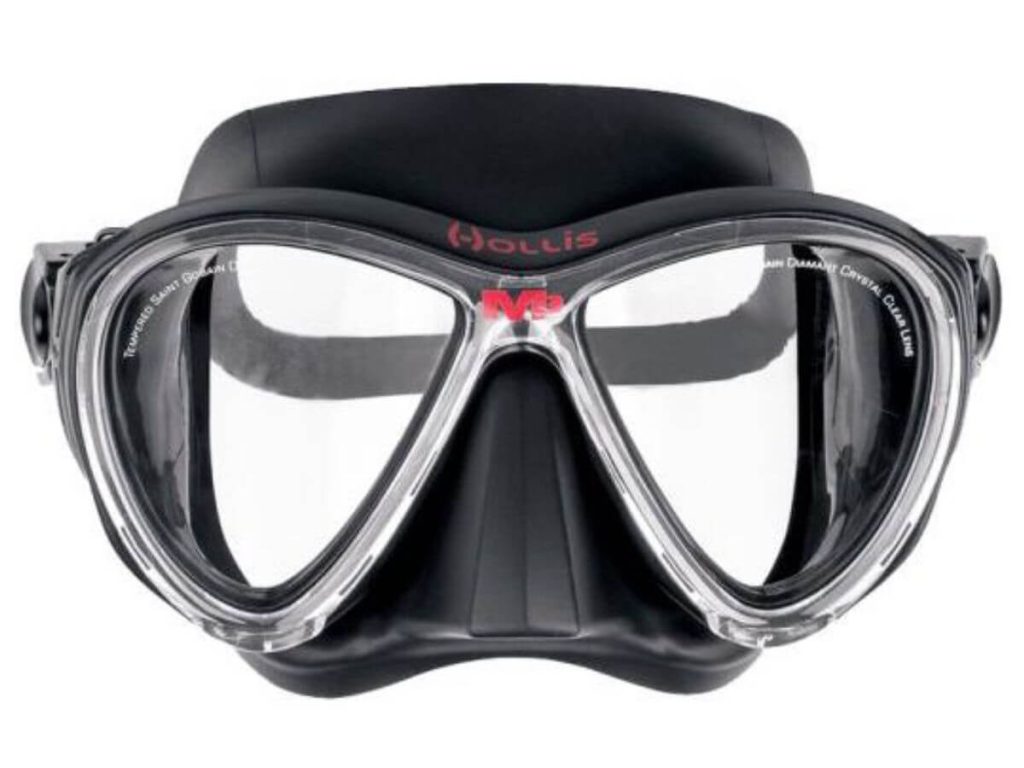
Double Lens
- Lower volume so easier to clear water
- Customizable to prescription lenses
- Greater downward view (some model)

Multiple Lenses
- Allows broader field of view
- Periphery view takes some getting used to (can see fins kicking!)

Full-Face
- Talk with others underwater
- Expensive
- Requires training to operate
Full face masks are very uncommon in recreational divers. They are mostly used in commercial or even technical divers where basic hand signals are not enough or you are not in direct line of sight. They have also been used in documentary film making for commentary.
Lens Coatings on Scuba Masks
Some higher end masks also come with special coatings and tints. All of which are designed to help improve optical clarity, reduce glare and/or protect your eyes.
However there are drawbacks. The main one being that these coatings tend to be advantageous in certain conditions but not all. For example the Apex VX1 has a yellow UV protection coating which is great if you spend a lot of time teaching on the surface like me but once underwater, does make things appear slightly greener than usual.

Tinted Lens
- Color correction can make things appear clearer and more ‘true to life’
- Reduced glare
- Reduced light/visibility
- Limited applicability

Mirrored Lens
- Reduced glare & UV protection
- Privacy (although also makes it hard to communicate and gauge reactions)
- Limited low-light visibility
- Shine can be attractive to marine predators
- Scratches are more noticeable
Frame of Scuba Masks
Where the sense attaches to the skirt is called the frame. Some masks this comprises of a rigid piece of plastic (framed) where in others the silicone it attached directly to the glass.

Framed
- Stronger
- More reliable seal
- Can be disassembled (easier to clean and replace parts)
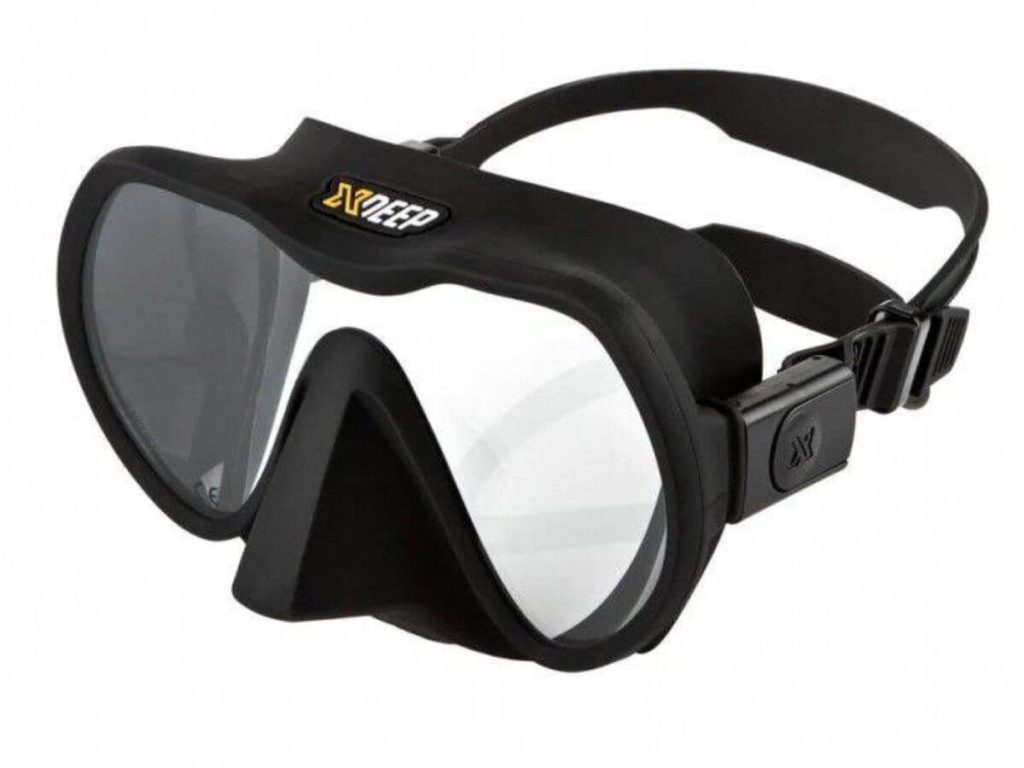
Frameless
- Softer & more flexible (good for storing as a backup)
- Shorter longevity
Skirts of Scuba Masks
The skirt is the silicone around the glass which seals the mask to your face. You can get them in various styles from clear to colorful, each with their own pros and cons.
When looking at the skirt it is also worth taking note of how the strap attaches to the mask. An attachment on the frame is a lot stronger than directly to the silicone which sometimes wears through in which case the silicone may have to be replaced or the whole mask changed.

Clear Skirts
- Face more visible for clearer photos
- Lets more light in
- Ages & yellows more over time
- Mold is more visible

Coloured Skirts
- More focused view
- More personalization/recognizable
- Colors don’t fade
- Mould more easily hidden
Straps of Scuba Masks

Silicone Strap
- Cheap & Readily available
- Easy to adjust
- Stretchy
- Snap easily
- Tangles in hair (use a neoprene mask cover)

Velcro Strap
- Less hair tangling
- Less stretchy
- Harder to adjust

Elastic Strap
- Easy to adjust
- Minimal to no tangling
- More expensive
- Require specific attachments
- Elastic looses it’s stretch over time
Fitting a Scuba Mask
Many first time divers are told to “suck the mask onto your face” the first time they try one on, but all this really does is create an artificial seal which is easily broken when you wear it normally.
So although divers bulging eyes and duck lips do make me smile, why not make life easy for yourself and learn to fit it right in the first place?
1) Place scuba mask gently on face and tilt head back so it stays.
2) Run your fingers around the edges making sure the skirt touches your face at all points. Ask for a mirror or for someone else to double-check if you are unsure. Obvious gaps will usually appear around the cheeks and nose.
3) Place the strap over your head and tighten enough that you are still able to gently pull the mask away from your face. Check again that the skirt seals the whole way around. DO NOT pull the straps too much. Contrary to popular belief this doesn’t prevent leaking, in fact it makes it worse as now every movement in your muscles will let water in.
For Those With Facial Hair …
When actually wearing a scuba mask any debris or hair caught in between the seal can cause it to leak. So make sure to clear your face before you fit it.
For those with beards and mustaches this is not as simple but there are a few tips to help you through:
- Buy a mask with a longer skirt under the nose
- Apply Shea/cocoa butter or beeswax to the hair (avoid petroleum based products like Vaseline which can degrade the silicone)
- Shave it off (or at least immediately under the nose)
Preparing a Scuba Mask
Last but not least, prepping your scuba mask for diving. This step is incredibly important if you are going to be using a brand new mask.
New masks come with a thin silicone layer on the glass. This helps protect it from scratching however it will also cause your mask to fog up if not removed.
The 2 methods to do this are:
Method 1: Toothpaste
Apply a thin layer of toothpaste (avoid gel kinds) and rub around on the inside of the lens for a few minutes. Personally I also add a little sugar which acts as a bit of a scrubber but if you are worried about scratching the glass then its fine to leave this out. Then leave the mask overnight. In the morning rinse out the toothpaste or use a toothbrush to get all the residue out.
You may have to repeat this method if it doesn’t work the first time.
Method 2: Fire!
Now important note I only recommend this as a last-minute option if you desperately can’t dive with any other mask. Hopefully, if you have read this post beforehand you will already be prepared so it will not be necessary. It also only works if you have the tempered glass, NO PLASTIC!
In a protected area away from wind or flammables hold a lighter under the lens and move it around until it blackens (this will be the residue burning away). Be careful with getting too near the silicone edges, not to burn your fingers on the lighter and make sure you don’t focus on one spot for too long. Once finished set aside to cool, Putting it in water or suddenly changing the temperature may cause to the glass to shatter. Once cool wash out with baby shampoo, toothpaste or water until clean.
If you are nervous or unsure about this method then as a dive pro. Most will be more than happy to help.
Final Words of Advice
Hopefully you now know how to buy, fit and prepare your first scuba mask. Now all you need to do is look after it! Make sure to store it correctly. On the boat by clipping it to your chest strap or tucking it into your fin pocket if you can. Or by keeping it in a scuba mask case. Most come with one of these if you buy it new.